
Polypharmacy Risk Calculator
This tool helps you assess your risk of medication-related side effects and frailty progression based on your current medication regimen and frailty indicators.
Risk Assessment Results
Risk level:
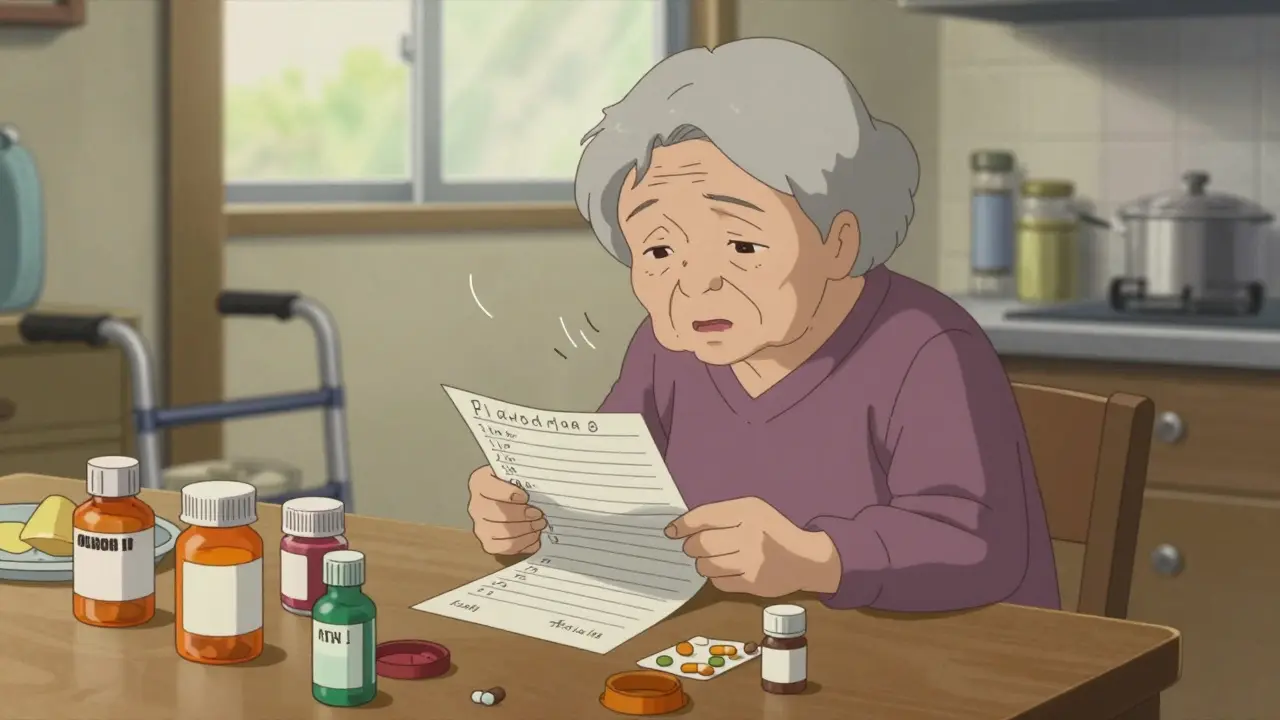
When an older adult takes five or more medications every day, it’s not just a numbers game-it’s a ticking time bomb for their health. This is called polypharmacy, and when it meets frailty, the risks multiply fast. Frailty isn’t just being weak or old. It’s a measurable condition: unintentional weight loss, constant tiredness, slow walking, weak grip, and low activity. If three or more of these are present, the body is struggling to keep up. And when that fragile state collides with too many pills, the results are dangerous-dizziness, falls, confusion, hospital stays, even death.
Here’s the hard truth: 75% of older adults on five or more medications are either pre-frail or frail. And it’s not just that frail people end up on more drugs-taking more drugs actually makes you more likely to become frail. A study tracking people over eight years found those taking seven or more medications were 2.5 times more likely to develop frailty. Each extra pill increases the risk by 12%. This isn’t coincidence. It’s a cycle: more drugs → more side effects → less movement → more weakness → more prescriptions.
Why So Many Pills? The System Isn’t Broken-It’s Designed This Way
Why do older adults end up on so many medications? It’s not because they’re overmedicated by accident. It’s because the system works in silos. A cardiologist prescribes blood pressure meds. A rheumatologist adds arthritis drugs. A neurologist adds something for memory. A primary care doctor adds a statin. No one looks at the full list. And no one asks: Is this still helping?
Studies show that 67% of older adults on polypharmacy see multiple specialists, and only 38% of U.S. hospitals have electronic alerts that flag dangerous drug combinations. The result? A 70-year-old woman might be on 12 medications-some for high blood pressure, some for osteoporosis, some for acid reflux, some for sleep, some for depression. Each one has side effects. Some interact. Some make her dizzy. Some cause constipation. Some make her forget to take them.
And here’s the kicker: 42% of older adults on five or more meds admit they skip doses because the regimen is too confusing. They’re not being lazy. They’re overwhelmed.
The Real Culprits: Medications That Shouldn’t Be There
Not all medications are created equal. Some are outdated, unnecessary, or outright risky for older bodies. The American Geriatrics Society updates the Beers Criteria every few years to list drugs that are dangerous for seniors. These include:
- Long-acting benzodiazepines (like Valium) for sleep-high risk of falls and confusion
- Anticholinergics (like diphenhydramine in Benadryl) for allergies or sleep-linked to dementia
- Nonsteroidal anti-inflammatories (like ibuprofen) for chronic pain-can cause stomach bleeds and kidney damage
- Some diabetes drugs that cause low blood sugar-dangerous if you’re already unsteady
But here’s what most doctors don’t tell you: the problem isn’t just the drugs themselves-it’s the lack of review. A 2023 survey found that 61% of primary care physicians rarely check medication lists for deprescribing. Why? Time. They have 15 minutes per visit. And no one has trained them to ask the right questions.
Deprescribing: Taking Pills Away Can Save Lives
Deprescribing isn’t stopping meds cold turkey. It’s a careful, patient-led process of reducing or stopping drugs that no longer help-or hurt more than they help.
The 3-Step Method developed by Dr. Cynthia Boyd at Johns Hopkins works like this:
- Review (10-15 minutes): Go through every pill, one by one. Ask: Why was this prescribed? Is it still needed? What’s the goal?
- Discuss (20-30 minutes): Talk to the patient. What are their goals? Do they want to feel less dizzy? Walk without help? Sleep better? Avoid hospital trips?
- Monitor (5-10 minutes): Set up a plan to watch for changes. If a sleep med is stopped, check for rebound insomnia. If a blood pressure pill is lowered, watch for dizziness.
In trials, this method reduced inappropriate medications by 28% in six months-with 92% of patients sticking to the plan. And the best part? 76% of people in the EMPOWER trial who stopped one or more unnecessary meds reported a 32% improvement in quality of life. No new pills. Just fewer.
Who Can Help? The Unsung Heroes of Medication Safety
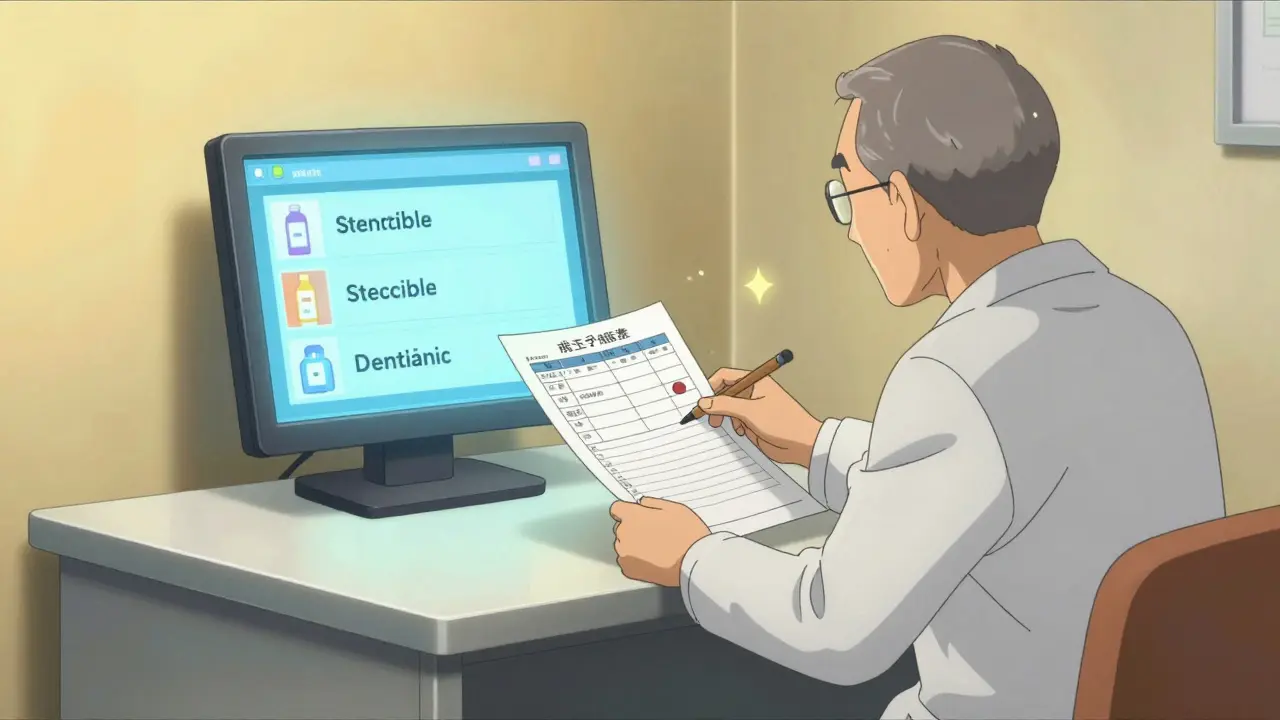
You don’t have to do this alone. Pharmacists are the quiet champions of deprescribing. In academic hospitals, 72% have geriatric pharmacists on staff who specialize in reviewing complex regimens. In community clinics? Only 28% do.
Pharmacist-led medication reviews reduce adverse events by 34%. They spot interactions doctors miss. They know which drugs are outdated. They can call the prescribing specialist and say, “This patient is frail. Is this drug still necessary?” And they do it without waiting for a referral.
Comprehensive Geriatric Assessment (CGA) clinics-where doctors, nurses, pharmacists, and therapists all see the patient together-reduce polypharmacy by 22% in just 12 months. They don’t just look at pills. They look at walking speed, grip strength, nutrition, and social support. Because frailty isn’t just about meds. It’s about the whole person.
Tools and Tech Are Finally Catching Up
In January 2024, the FDA approved the first AI-powered deprescribing tool: MedWise Risk Score. It analyzes a patient’s full medication list, lab results, age, and frailty markers to predict which drugs are most likely to cause harm. In trials, it cut adverse drug events by 37%.
Meanwhile, the American Geriatrics Society’s Age-Friendly Health Systems initiative-now active in 2,850 U.S. hospitals-is pushing the 4Ms Framework:
- What Matters: What are the patient’s goals? Living independently? Playing with grandkids?
- Medication: Are the right drugs being used? Are any unnecessary?
- Mentation: Are there signs of dementia or depression?
- Mobility: Can they walk safely? Are they at risk of falling?
Since 2023, this approach has reduced inappropriate polypharmacy by 24%.

What You Can Do Right Now
If you or someone you care for is on five or more medications, here’s what to do:
- Make a full list. Include prescriptions, over-the-counter pills, vitamins, and supplements. Write down why each one was prescribed.
- Ask the doctor: “Is there a medication here that might be doing more harm than good?”
- Ask the pharmacist. Most pharmacies offer free medication reviews. Use them.
- Track side effects. Dizziness? Constipation? Confusion? Write them down. Bring them to the next visit.
- Start small. Don’t try to stop everything at once. Focus on one high-risk drug first-maybe a sleep aid or an old painkiller.
Don’t wait for a crisis. Frailty doesn’t come on overnight. Neither does recovery. But every pill you stop that isn’t needed is one less step toward a fall, a hospital bed, or worse.
It’s Not About Cutting Pills-It’s About Living Better
The goal isn’t to be on zero meds. The goal is to be on the right meds. For a frail older adult, that might mean fewer drugs, better sleep, stronger legs, and fewer trips to the ER. It might mean being able to walk to the mailbox again. Or eat a meal without feeling bloated. Or remember to take their own pills.
Medications aren’t the enemy. But too many, without review, become a burden. And for someone already struggling to stay steady, that burden can be crushing.
Change is possible. It’s already happening-in clinics, in pharmacies, in homes where families are asking the right questions. The science is clear. The tools are here. What’s missing is the courage to ask: Do we really need all of this?
What is considered polypharmacy in older adults?
Polypharmacy is defined as taking five or more medications daily. When someone takes ten or more, it’s called hyper-polypharmacy. These numbers aren’t arbitrary-they’re based on research showing that risk of side effects, falls, and hospitalization rises sharply after five medications. For frail older adults, even four or five can be too many, especially if some are high-risk drugs like benzodiazepines or anticholinergics.
Can reducing medications make someone weaker?
No-reducing the wrong medications often makes people stronger. Many drugs prescribed to older adults cause fatigue, dizziness, or muscle weakness. Stopping a sleep aid like benzodiazepine or an antihistamine like diphenhydramine can improve alertness and balance. In clinical trials, patients who underwent careful deprescribing reported better energy, fewer falls, and improved mobility. The key is doing it slowly and with monitoring, not stopping abruptly.
How do I know if a medication is no longer needed?
Ask three questions: Why was this prescribed? Has the condition it was treating changed? Is the benefit still greater than the risk? For example, a statin prescribed for high cholesterol 10 years ago might not be needed if the person is now frail, has limited life expectancy, or is experiencing muscle pain. Tools like the Beers Criteria and STOPP/START guidelines help identify drugs that are risky or unnecessary for seniors. A pharmacist or geriatric specialist can review the list with you.
Is deprescribing safe?
Yes, when done properly. Deprescribing is not stopping all meds at once. It’s a planned, step-by-step process with close monitoring. Studies show that over 75% of deprescribing attempts in frail older adults succeed without negative effects. In fact, many patients feel better afterward-less drowsy, less constipated, more alert. The risk comes from doing nothing. Unnecessary medications are a leading cause of hospitalization in older adults.
What should I do if my doctor won’t consider stopping a medication?
Ask for a referral to a geriatrician or a clinical pharmacist who specializes in medication reviews. Many hospitals and community health centers offer these services. You can also request a Comprehensive Geriatric Assessment (CGA), which looks at the whole person-not just one organ or condition. Bring your full medication list, a list of side effects, and your goals for health. If your doctor resists, ask: “What’s the evidence that this drug is still helping someone with my condition and frailty?”
Are there apps or tools to help manage medications?
Yes. Apps like Medisafe and Round Health help track pills, set reminders, and flag potential interactions. Some newer tools, like MedWise Risk Score (FDA-approved in 2024), analyze your full medication list and predict which drugs are most likely to cause harm based on your age, frailty, and other health factors. These aren’t replacements for professional advice, but they’re powerful tools to prepare for discussions with your doctor or pharmacist.
What Comes Next? The Future Is Personalized
The NIH is funding a $15 million trial called FRAIL-PHARM, running from 2024 to 2027, testing a pharmacist-led program to reduce polypharmacy in frail older adults. The WHO is pushing for a 50% reduction in severe medication-related harm by 2030. And AI tools are getting smarter-predicting side effects with 89% accuracy.
But the biggest change won’t come from tech. It’ll come from asking better questions. From families saying, “We don’t want more pills-we want more life.” From doctors listening. From pharmacists stepping in. From systems that see the person, not just the prescriptions.
Frailty and polypharmacy aren’t inevitable. They’re a signal. A sign that something in the system needs to change. And change starts with one conversation. One list. One pill taken off.
Graham Holborn
Hi, I'm Caspian Osterholm, a pharmaceutical expert with a passion for writing about medication and diseases. Through years of experience in the industry, I've developed a comprehensive understanding of various medications and their impact on health. I enjoy researching and sharing my knowledge with others, aiming to inform and educate people on the importance of pharmaceuticals in managing and treating different health conditions. My ultimate goal is to help people make informed decisions about their health and well-being.