
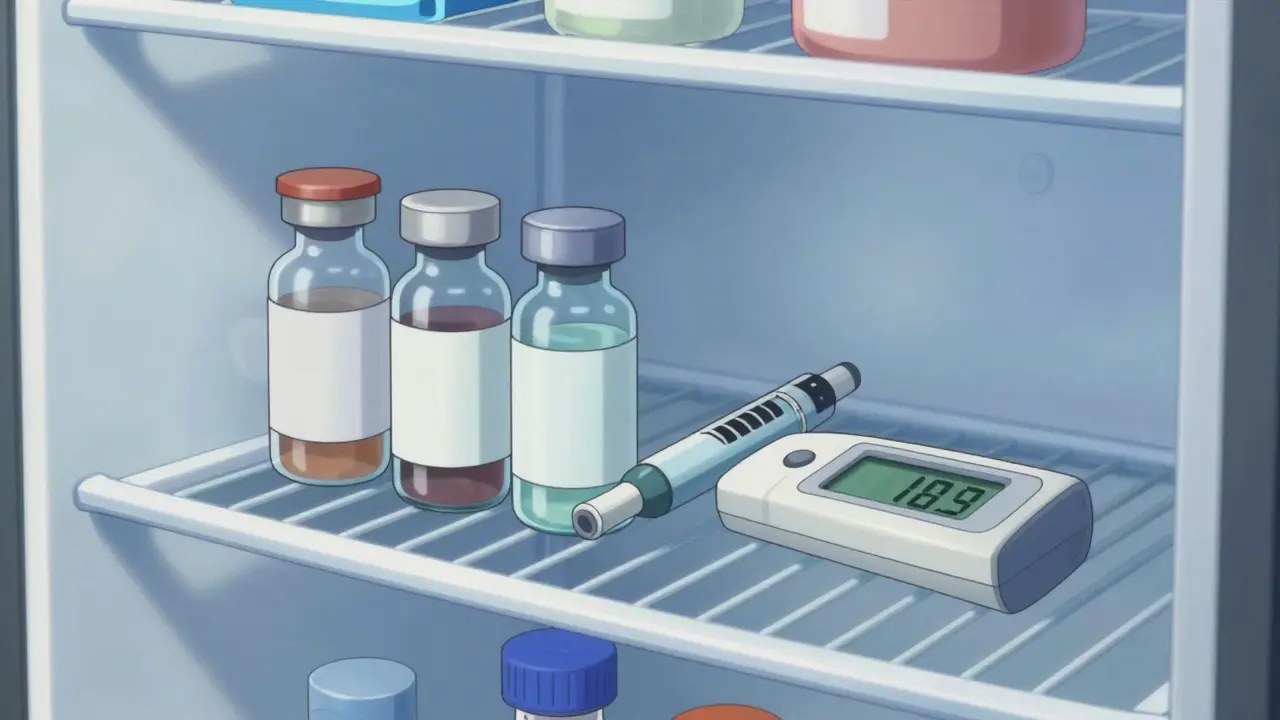
Imagine waking up to find your daily medication has turned cloudy or separated after being left out overnight. For millions of people managing chronic conditions, this isn't just about wasted money-it's about safety. Refrigerated medications are drugs that must stay cool to work. If you store them wrong, they stop working, sometimes without any visible change. In 2023, data showed that roughly 15 to 20 percent of commonly prescribed drugs need cold storage. As treatments for diabetes and autoimmune diseases grow more complex, knowing how to handle these sensitive medicines becomes essential.
The Critical Temperature Range
You cannot guess the right temperature when dealing with these drugs. Precision matters. According to USP Chapter <1079>, the standard for pharmaceutical storage defines the safe zone between 2°C and 8°C (36°F to 46°F). This range exists for a reason. Chemical breakdown slows down at colder temperatures, but freezing causes irreversible damage to protein structures. Most household refrigerators struggle to maintain this exact consistency. A 2022 study found that average kitchen fridges fluctuate widely, often dipping near freezing or rising too high depending on the door seal quality or how full the unit is.
USP Standards are formal guidelines adopted by health agencies to ensure drug stability and patient safety through controlled environments. Following these standards ensures that the medication retains its chemical properties until the expiration date. When temperatures creep above 8°C, degradation accelerates rapidly. Some biologic compounds lose half their potency in just 24 hours at room temperature. Conversely, if the temperature drops below 2°C, crystals form within the liquid, destroying the molecular integrity permanently.
Common Medications That Need Cooling
Not every pill bottle belongs in the fridge. Identifying which drugs require refrigeration starts with reading the label or consulting your pharmacist. Here are the most frequent categories:
- Insulin products: Unopened vials and pens usually need the fridge. Once opened, many can stay out for 28 days. Brands like Lantus® specify strict limits, while others vary.
- Biotherapeutics: Drugs treating Crohn's disease or rheumatoid arthritis often contain monoclonal antibodies. Examples include Remicade® (infliximab) and Humira®. These are unstable proteins.
- Vaccines: Most immunizations require constant refrigeration from manufacture until administration.
- Certain Antibiotics: Liquid formulations of antibiotics, like Amoxicillin suspension, often need cooling after mixing to prevent rapid bacterial growth.
It is easy to confuse "store at room temperature" with "store anywhere." Room temperature for medicine means between 15°C and 25°C, distinct from the cool of a pantry in summer. Confusion here leads to what experts call a Temperature Excursion, defined as a period where medication is exposed to temperatures outside its approved storage range. Even brief exposure during a power outage or a summer road trip can trigger this event.
Setting Up Your Home Storage System
Your standard kitchen fridge is often okay, but it requires monitoring. Place your meds in the middle shelf, not the door. Door shelves swing open frequently, subjecting contents to warm air spikes. Lower back corners tend to be coldest and risk freezing. Studies show door shelves average 11.3°C, which is unsafe for sensitive biologics.
If you have multiple critical doses, consider a dedicated unit. A Medical Refrigerator is a specialized appliance designed to maintain precise pharmaceutical temperatures with alarms and monitoring. These units cost between $150 and $2,500 depending on features. They include forced-air circulation to prevent cold spots and digital loggers that record min/max temperatures automatically. While expensive, they eliminate the anxiety of guessing whether your insulin survived a heatwave.
Regardless of the fridge type, you need a way to verify the temperature. A basic thermometer works, but a digital data logger provides better proof. Devices range from $25 to $75. Set alarms to notify you if the unit drifts even slightly outside the target band. Consistency beats convenience. A survey noted that over half of patients reported unreliable temperature control in their home setups simply because they lacked proper monitoring tools.
Traveling with Sensitive Meds
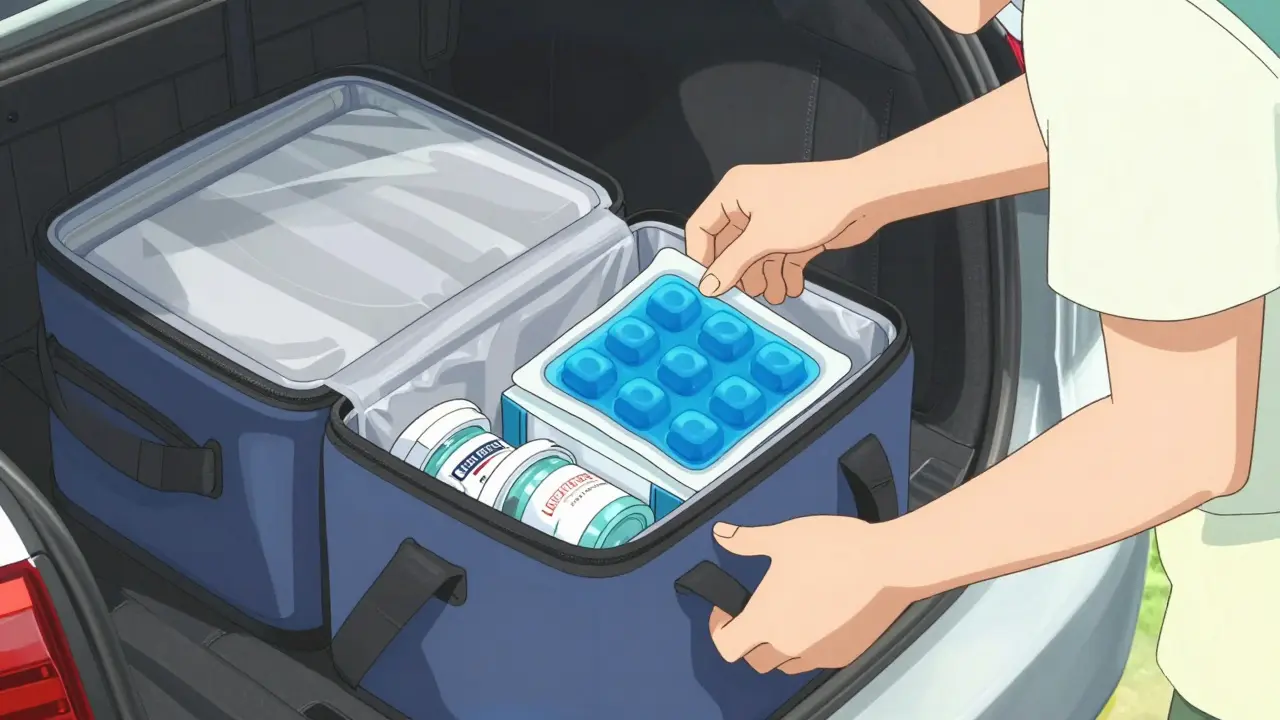
Moving from your home environment introduces significant risk. You cannot rely on checked luggage or overhead bins on a plane; cargo holds lack climate control and freeze bags of ice melt unpredictably. Use insulated travel cases with phase-change material. These packs maintain temperatures for 48 hours without freezing the contents directly against the container.
Keep medications in your carry-on bag. Airline pressure changes are negligible for liquids, but X-ray scanners do not harm injectable drugs. However, never let them sit in the car trunk or on the dash while parking. One documented case involved an insulin pump reservoir failing after two hours in a hot car, spiking blood sugar dangerously high. Always test your cooler kit before a trip by leaving it in the sun for a few minutes to see how well it holds temperature.
Signs Your Medicine Has Gone Bad
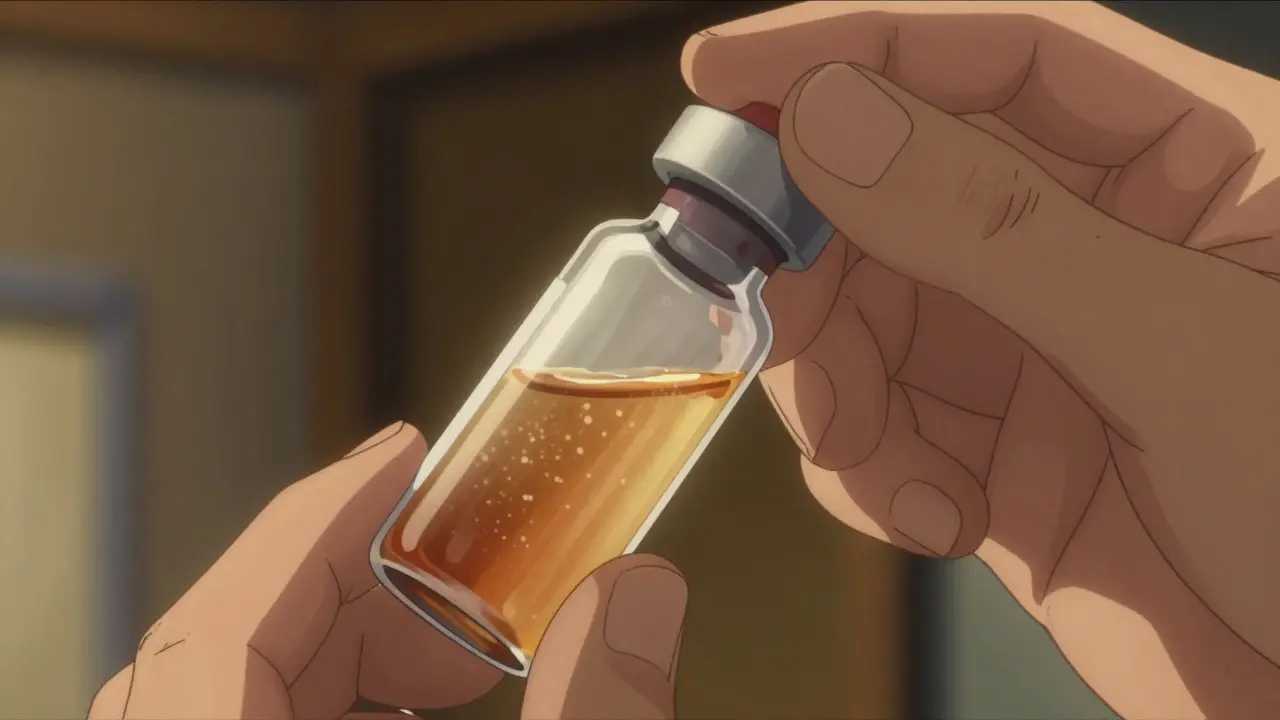
Sometimes visual cues tell you something is wrong. Look closely at the liquid before using it. Cloudiness, clumping, or particles floating in a solution that was previously clear indicate degradation. Color changes are another major red flag. Insulin that turns yellow or brown is compromised. Never try to filter out the particles and continue using it.
If you suspect a dose has been exposed to extreme heat or freezing, throw it away immediately. The risk of treatment failure outweighs the cost of a new prescription. Diabetes complications like ketoacidosis can occur silently if the insulin fails to regulate glucose. Safety protocols dictate that uncertainty equals disposal. Contact your pharmacy to replace it, and ask if they can document the incident for manufacturer reports.
Disposal and Documentation
When a medication expires or fails due to temperature issues, do not flush it down the toilet. Many active ingredients enter the water supply and cause environmental harm. Take damaged stock to a pharmacy take-back program or authorized disposal site. Documenting these incidents helps regulators track storage problems across the population.
Regulatory bodies like the FDA monitor adverse events linked to storage failures. Recent guidance emphasizes that storing off-label-meaning outside the stated range-is technically unapproved use. Manufacturers err on the side of caution to avoid liability, but the underlying chemistry supports strict adherence to these labels. Maintaining records of temperature checks builds a habit that protects your health over years of treatment.
Can I put insulin in the freezer?
No. Freezing damages the protein structure of insulin permanently. Once frozen, even if thawed, the medication loses efficacy and should be discarded.
How long can refrigerated meds stay out during travel?
Most can last 24-48 hours in a validated cooler, but check the specific product insert. Some may degrade in less than 24 hours without constant cooling.
Where is the safest spot in the fridge?
Place meds on a middle shelf toward the back. Avoid the door and the bottom crisper drawer, as temperatures fluctuate the most in those zones.
What should I do if the power goes out?
Keep the doors closed. A full fridge stays cold for about 4 hours if sealed. Use a thermometer to confirm temps haven't exceeded 8°C before deciding to save them.
Does a standard kitchen fridge work?
It can work if monitored closely. However, they often lack the precision of medical units. Use a separate thermometer to verify daily.
| Type | Temp Stability | Cost Estimate | Risk Level |
|---|---|---|---|
| Kitchen Fridge | Variable | $0 (Existing) | Moderate |
| Medical Unit | Precise (±1°C) | $150 - $500 | Low |
| Travel Cooler | Time-limited | $30 - $120 | High (if unplanned) |
Final Thoughts on Safety
Keeping these drugs cold is not optional maintenance; it is part of the treatment itself. The rise in biologic therapies means more prescriptions fall into this category annually. Investing in the right equipment and habits prevents costly medical emergencies later. Always prioritize the printed instructions on the packaging over general advice, as stability profiles differ between brands and formulations.


Graham Holborn
Hi, I'm Caspian Osterholm, a pharmaceutical expert with a passion for writing about medication and diseases. Through years of experience in the industry, I've developed a comprehensive understanding of various medications and their impact on health. I enjoy researching and sharing my knowledge with others, aiming to inform and educate people on the importance of pharmaceuticals in managing and treating different health conditions. My ultimate goal is to help people make informed decisions about their health and well-being.