
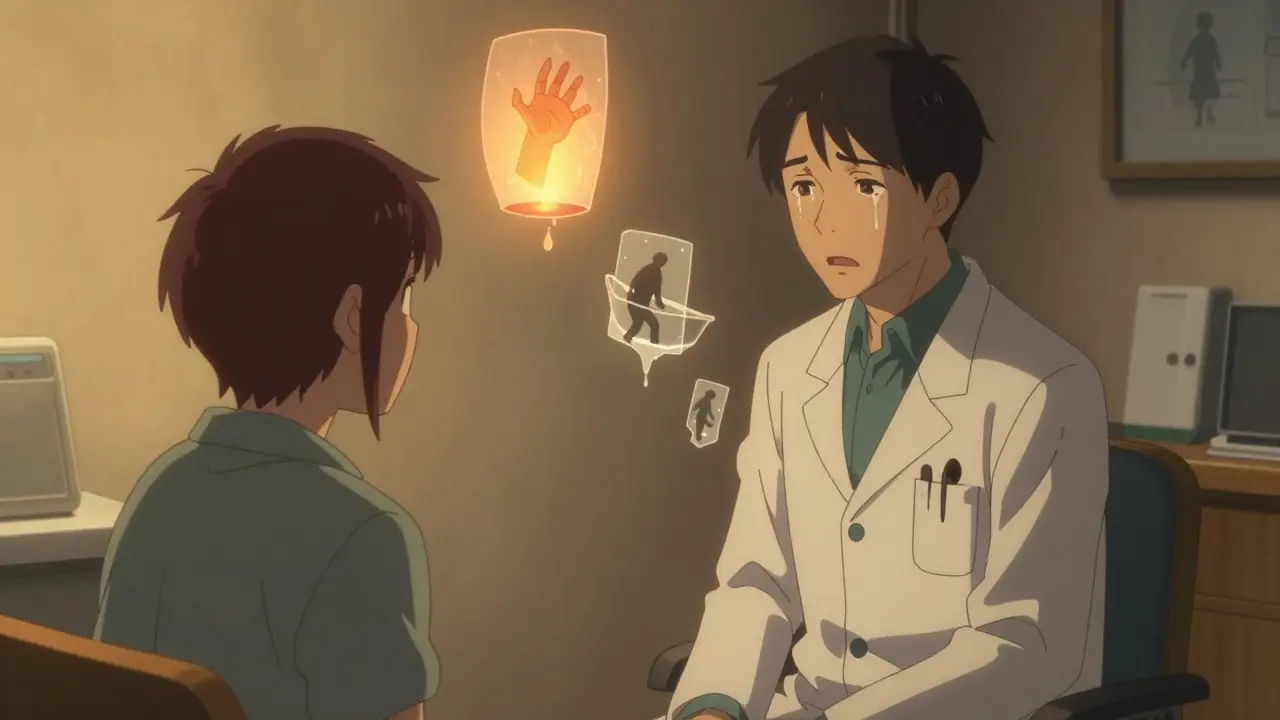
When you’re told you have diabetes, or your child is diagnosed with asthma, or you’re facing a chronic pain condition - what do you really hear? Is it just the clinical facts? Or does something deeper slip in - a feeling of isolation, fear, or confusion that no lab report can capture?
That’s where narrative medicine comes in. It’s not a new drug. It’s not a fancy device. It’s a simple, powerful shift: listening to the story behind the diagnosis.
Back in 1996, Dr. Rita Charon, a physician and literary scholar at Columbia University, noticed something missing in how doctors treated patients. Clinicians were trained to spot symptoms, order tests, and prescribe treatments. But they rarely paused to ask: What does this illness feel like to you? Charon saw that patients weren’t just carrying diseases - they were carrying stories. And those stories shaped whether they accepted treatment, stuck with it, or walked away.
What narrative medicine really means
Narrative medicine isn’t about writing poetry in a hospital room. It’s about training healthcare providers to listen with full attention - not just to what’s said, but to what’s left unsaid. It’s about noticing the tremble in a voice, the silence after a diagnosis, the metaphor a patient uses: “My body feels like a leaking boat.”
Charon defined it in 2001 as “narrative competence” - the ability to acknowledge, absorb, interpret, and act on the stories of others. That’s the core. It’s not optional. It’s not extra. She called it a “basic science mandatory for medical practice.”
Think of it this way: two patients get the same prescription for high blood pressure. One takes it every day. The other stops after a week. Why? One sees the pill as a lifeline. The other sees it as a symbol of failure - “I’m not strong enough to fix this myself.” The difference isn’t in the medicine. It’s in the story.
How stories change how we accept illness
When a patient tells their story - really tells it - something shifts. Not just for them. For the doctor too.
A 2023 study in The Permanente Journal looked at pediatric residents. More than half showed signs of burnout. But those who participated in narrative medicine sessions - where they wrote about their hardest cases and shared them in small groups - saw a drop in emotional exhaustion. Why? Because they stopped feeling alone. They stopped seeing their patients as problems to solve. They started seeing them as people with histories, fears, and hopes.
That same shift happens with patients. At the Veterans Affairs Whole Health Library, veterans with chronic illness are invited to write or speak about their journey. One man, after years of silence, described his PTSD as “a shadow that follows me into every room.” With guidance, he began to see that shadow not as a curse, but as a part of his survival. His acceptance of his condition changed. His willingness to try new treatments grew.
At the University of Kentucky, sessions help people reconcile their diagnosis with their identity. A woman with rheumatoid arthritis once said, “I used to be the one who fixed things. Now I’m the one who needs fixing.” Through narrative work, she rebuilt her sense of self - not as a broken patient, but as a person still capable of love, humor, and purpose. Her adherence to her medication plan improved dramatically.
Stories don’t just make people feel heard. They make them feel understood. And understanding is the first step to acceptance.
How clinicians learn to listen - and why it matters
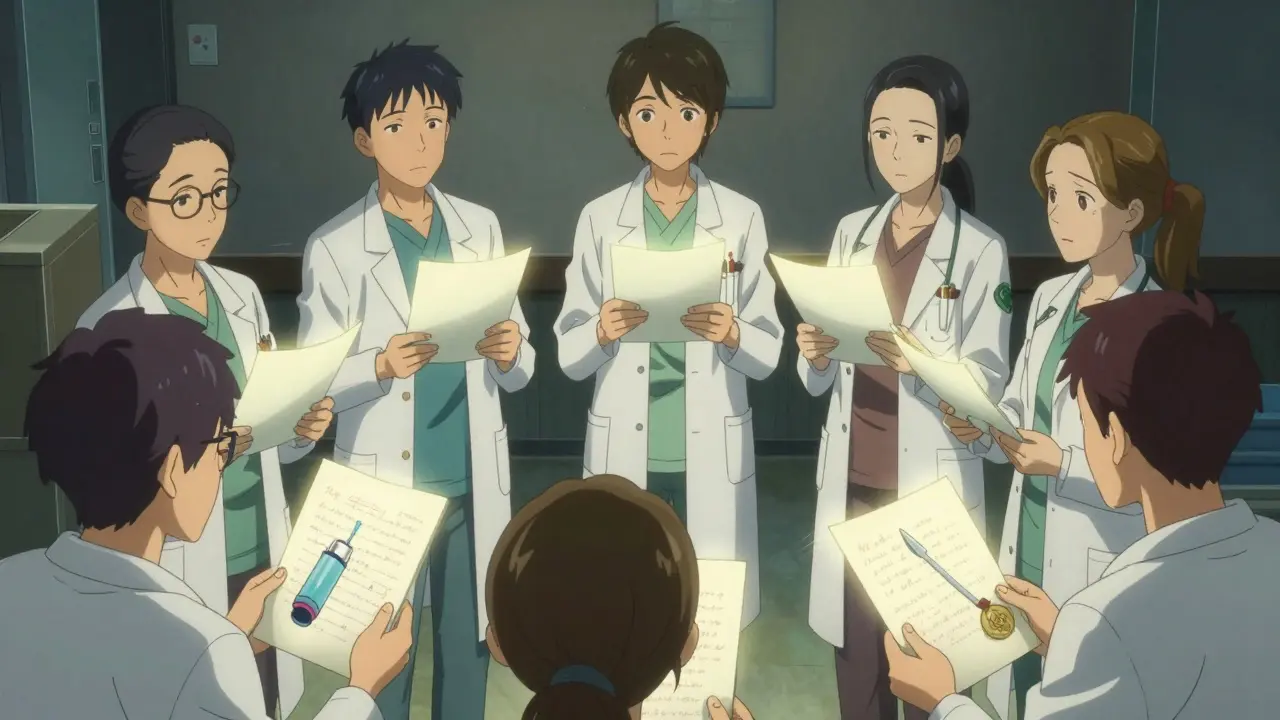
Narrative medicine doesn’t happen by accident. It’s taught. At Columbia, every first-year medical student takes mandatory seminars. They read memoirs. They analyze short stories. They write about their own experiences as patients or caregivers.
One exercise: read a short piece by a patient with cancer. Then, sit with a partner and reflect: What did you notice? What was left out? What did the silence say?
These aren’t fluffy humanities classes. They’re training in attention, representation, affiliation, and creativity - the four narrative capacities that Columbia says every clinician needs.
- Attention: Learning to notice the small things - a clenched fist, a glance away, a rushed answer.
- Representation: Helping patients shape their story into something coherent, without forcing it into medical jargon.
- Affiliation: Building connection. Not just between doctor and patient, but between providers who feel overwhelmed.
- Creativity: Finding new ways to respond - not just with pills, but with presence.
When a doctor learns to listen like this, they stop seeing patients as cases. They start seeing them as co-authors of their own healing.
Why this works better than facts alone
Medicine has long believed that if you give people enough data, they’ll make the right choices. But we know that’s not true. People don’t follow treatment plans because they understand the science. They follow them because they feel safe, respected, and seen.
Take statins. They lower cholesterol. They prevent heart attacks. Yet nearly half of patients stop taking them within a year. Why? Some fear side effects. Others feel the pill reminds them they’re “sick.” But deeper still - many feel their doctor doesn’t get how hard it is to live with this lifelong burden.
Now imagine a doctor says: “I know this pill feels like a life sentence. I’ve had patients tell me it makes them feel like they’ve lost control. What does it feel like for you?”
That single question opens a door. Suddenly, the patient isn’t just a risk factor. They’re a person with a story. And that changes everything.
Research shows that when patients feel heard, they’re more likely to:
- Stick with medications
- Attend follow-up appointments
- Report side effects honestly
- Engage in lifestyle changes
It’s not magic. It’s empathy - built through listening, not lectures.
Where narrative medicine is heading
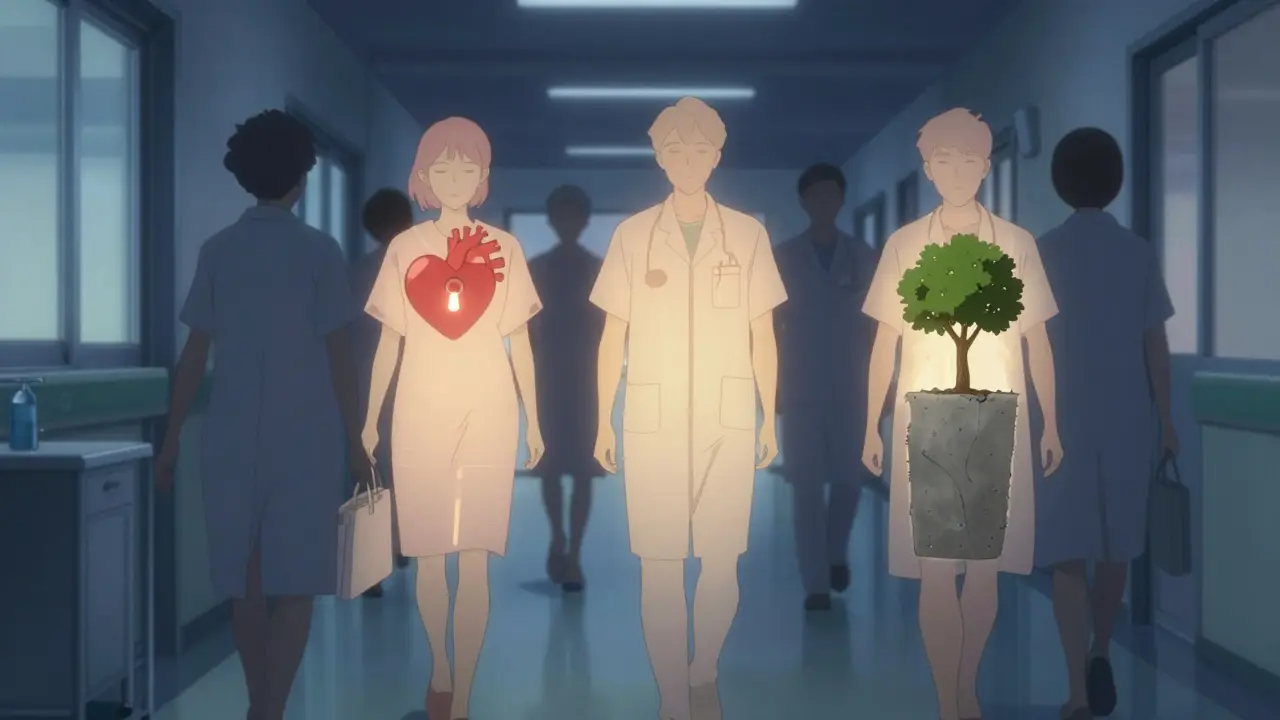
Narrative medicine is no longer a fringe idea. It’s being woven into medical schools, hospitals, and clinics across the U.S. and beyond. Columbia trains nurses, social workers, chaplains, and even hospital administrators. The VA uses it to reduce veteran isolation. Pediatric units use it to fight clinician burnout.
And it’s growing because the system is breaking. Clinicians are exhausted. Patients feel ignored. The answer isn’t more technology. It’s more humanity.
Future programs are starting to look beyond the clinic. They’re asking: How do stories of illness shape policy? How do they reveal inequities in care? A Black mother who’s told her child’s asthma is “just bad air quality” - when her neighborhood lacks green space and has high pollution - isn’t just telling a personal story. She’s telling a systemic one.
Narrative medicine is becoming a tool for justice. It doesn’t just help people accept illness. It helps us accept that the system needs to change too.
What this means for you
If you’re a patient: Don’t be afraid to tell your story. Even if it’s messy. Even if it’s angry. Even if it doesn’t make sense. Your story isn’t noise. It’s data. And it matters.
If you’re a provider: Start small. Ask one patient this week: “What’s been the hardest part of this for you?” Then just listen. Don’t fix. Don’t explain. Just be there.
If you’re in healthcare leadership: Stop treating narrative medicine as a “soft skill.” It’s a clinical tool. Train your staff. Fund the sessions. Make space for it.
Acceptance doesn’t come from a pamphlet. It comes from being known.


Graham Holborn
Hi, I'm Caspian Osterholm, a pharmaceutical expert with a passion for writing about medication and diseases. Through years of experience in the industry, I've developed a comprehensive understanding of various medications and their impact on health. I enjoy researching and sharing my knowledge with others, aiming to inform and educate people on the importance of pharmaceuticals in managing and treating different health conditions. My ultimate goal is to help people make informed decisions about their health and well-being.