
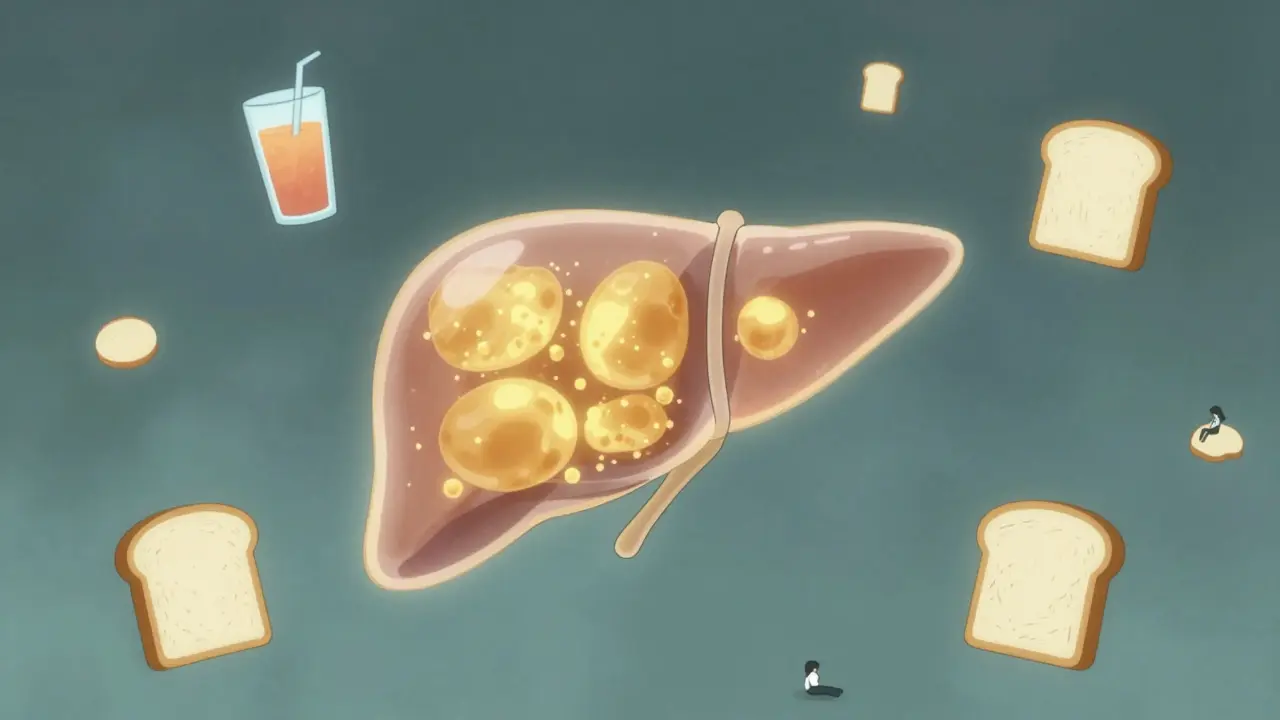
More than 1 in 4 adults worldwide have fat building up in their liver - and they don’t drink alcohol. This isn’t rare. It’s not just a side effect of being overweight. It’s nonalcoholic fatty liver disease, now called MASLD, and it’s quietly becoming the leading cause of chronic liver problems on the planet.
What MASLD Really Means
In 2023, doctors changed the name from NAFLD to MASLD - metabolic dysfunction-associated steatotic liver disease. The old name focused on what wasn’t there (alcohol). The new name focuses on what is: metabolic problems. If you have excess fat in your liver (at least 5% of liver cells) and at least one metabolic issue - like high blood sugar, high blood pressure, belly fat, or abnormal cholesterol - you have MASLD. This isn’t just a liver issue. It’s a signal your whole metabolism is out of balance. Your liver is trying to process too much sugar and fat, and it’s drowning in it. That’s why people with type 2 diabetes have up to a 90% chance of having MASLD. That’s why 70% of people with NASH (the more serious form) also have insulin resistance.Who’s at Risk?
You don’t have to be obese to have MASLD, but it’s far more common if you are. About 30-40% of U.S. adults have it. Among people with obesity, that number jumps to 60-90%. Hispanic populations have the highest rates - nearly 45% - while non-Hispanic Black populations have slightly lower rates, around 20%. Kids aren’t safe either. One in 10 children now have fatty liver. In obese children, it’s as high as 70%. That means a generation is growing up with a ticking time bomb in their liver. Even if you feel fine, your liver might be screaming. Most people don’t have symptoms until it’s advanced. Some feel tired. A few get mild pain under the right ribs. But by the time jaundice, swelling in the belly, or confusion shows up, the damage is often severe.How It Progresses - And Why It’s Dangerous
MASLD starts as simple fat buildup - steatosis. That’s reversible. But if the fat causes inflammation, it becomes MASH (metabolic dysfunction-associated steatohepatitis). That’s when liver cells start dying, scar tissue builds up, and the liver stiffens. About 15-25% of people with MASH will develop cirrhosis over 10 years. That’s when the liver can’t function properly anymore. And once cirrhosis hits, the risk of liver cancer rises sharply. In fact, MASLD is now responsible for 24% of all liver transplants in the U.S. - up from just 5% in 2000. Unlike some liver diseases you’re born with, MASLD is almost entirely preventable. That’s the good news. The bad news? There’s no magic pill. Until March 2024, there were no FDA-approved drugs for MASH. Now, resmetirom is available - but it’s not a cure. It slows progression. And it only works if you’re still managing your weight and diet.
How to Prevent and Reverse It
The most powerful tool you have? Losing weight. Not 20 pounds. Not 50. Just 5-7% of your body weight. That’s 10 pounds if you weigh 200. Studies show that drops liver fat by 30% in six months. Lose 10%, and nearly half of people see MASH disappear completely on biopsy. You don’t need a gym membership. You need movement. Aim for 150 minutes a week of brisk walking - that’s 30 minutes, five days a week. Or 10,000 steps a day. Walking after meals helps lower blood sugar spikes, which directly reduces fat storage in the liver. Diet matters more than you think. Cut out sugary drinks. Stop eating processed snacks. Avoid refined carbs like white bread, pasta, and pastries. These turn into sugar fast - and your liver turns that sugar into fat. The Mediterranean diet works. It’s not a fad. It’s simple: vegetables, olive oil, nuts, fish, beans, whole grains, and fruit. Avoid red meat and fried food. A community study found 76% of people who stuck with this diet for six months saw their liver fat drop significantly.What Doctors Look For
If you have metabolic risk factors - high blood pressure, high triglycerides, insulin resistance - ask your doctor for a liver enzyme test. ALT levels above 30 U/L for women or 40 U/L for men are a red flag. That’s not normal, even if your doctor says it’s "benign." Ultrasound is the first test. It’s cheap and shows fat. But it doesn’t show inflammation or scarring. FibroScan is better - it measures liver stiffness. It’s non-invasive, quick, and covered by many insurers now. But 35% of patients still get denied coverage. Liver biopsy is the gold standard - but it’s risky. Only used when doctors need to be certain. Most people don’t need it. Blood tests like the Enhanced Liver Fibrosis panel are coming fast. By 2025, they’ll detect advanced scarring with 89% accuracy - no needle needed.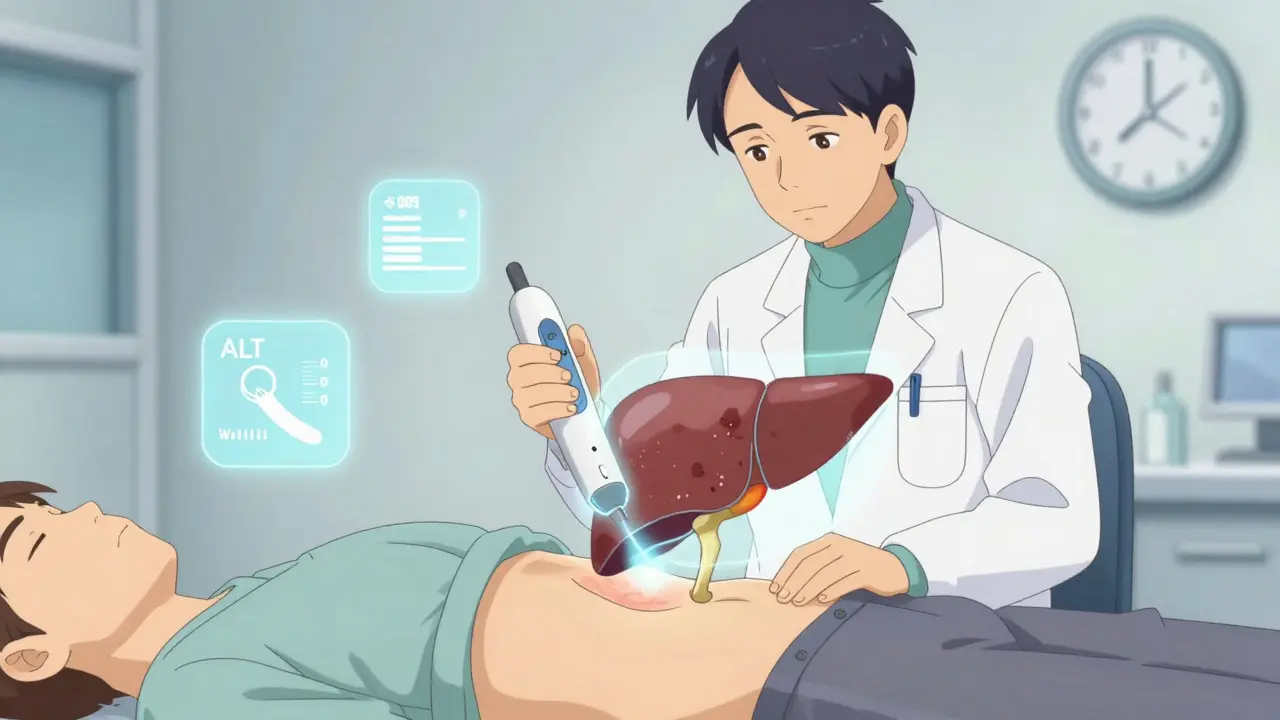
Why Most People Fail - And How to Succeed
The biggest problem? People don’t stick with it. Fatigue, lack of time, or feeling overwhelmed leads to quitting. Nearly half of people give up on exercise within three months. Success comes from consistency, not intensity. Start small. Walk 10 minutes after dinner. Swap soda for sparkling water. Eat one extra serving of vegetables each day. Build habits, not goals. Track your weight monthly. Not daily. Weight fluctuates. Liver fat doesn’t. If your waist size drops, your liver is healing - even if the scale doesn’t move much. Workplace programs are starting to help. IBM reduced MASLD rates by 37% in three years by offering free nutrition coaching, gym access, and health screenings. If your employer doesn’t offer this, ask. Your liver is worth it.The Future Is Here - But You Still Have to Act
We’re entering a new era. Resmetirom is approved. Non-invasive tests are coming. But none of this matters if you don’t change your lifestyle. The drug helps - but only if you’re still eating well and moving. The obesity epidemic is accelerating. By 2030, half of U.S. adults will be obese. That means MASLD could affect one in three people globally by 2040. This isn’t a disease you wait for. It’s a condition you prevent - every day. With your fork. With your feet. With your choices.What You Can Do Today
- Get your ALT levels checked if you have metabolic risk factors
- Start walking 30 minutes a day, five days a week
- Eliminate sugary drinks - soda, juice, sweetened coffee
- Swap white rice and bread for brown rice, quinoa, or whole wheat
- Fill half your plate with vegetables at every meal
- Ask your doctor about FibroScan if you’re overweight or diabetic
- Don’t wait for symptoms. If you’re at risk, act now.
The liver is one of the few organs that can regenerate. But only if you give it a chance.


Graham Holborn
Hi, I'm Caspian Osterholm, a pharmaceutical expert with a passion for writing about medication and diseases. Through years of experience in the industry, I've developed a comprehensive understanding of various medications and their impact on health. I enjoy researching and sharing my knowledge with others, aiming to inform and educate people on the importance of pharmaceuticals in managing and treating different health conditions. My ultimate goal is to help people make informed decisions about their health and well-being.