

Statins & Diabetes Risk Calculator
How Your Statin Treatment May Affect Blood Sugar
This tool estimates your risk of developing type 2 diabetes while taking statins based on your health factors and statin type. Statins can increase blood sugar levels in some people, especially those already at risk for diabetes.
Many people take statins to lower their cholesterol and protect their heart. But if you’ve been on statins for a while and noticed your blood sugar creeping up, you’re not imagining it. Research confirms that statins can raise blood sugar levels in some people - enough to push a few over the line into type 2 diabetes. It’s not common, and it doesn’t happen to everyone, but it’s real. And knowing how it works can help you make smarter choices with your doctor.
How Statins Affect Blood Sugar
Statins work by blocking a liver enzyme called HMG-CoA reductase, which your body uses to make cholesterol. But that same enzyme is part of a bigger pathway that also helps produce other important molecules, including those your muscles and pancreas need to respond to insulin. When statins interfere with this pathway, two things happen: your cells become less sensitive to insulin, and your pancreas struggles to release enough insulin to compensate.
A 2023 study tracking over 8,700 non-diabetic adults found that those taking statins had a 46% higher chance of developing type 2 diabetes over six years. Why? Insulin sensitivity dropped by 24%, and insulin production fell by 12%. That’s not a huge change for most people - but for someone already close to the diabetes threshold, it’s enough to cross over.
It’s not just one statin. All statins have this effect to some degree, but the higher the dose, the stronger the impact. High-intensity statins like atorvastatin (40-80 mg) and rosuvastatin (20-40 mg) are more likely to cause blood sugar changes than lower doses like pravastatin or fluvastatin. A 10-week study at Stanford showed that even short-term, high-dose atorvastatin increased insulin resistance - and while the pancreas tried to make more insulin to make up for it, that boost wasn’t enough to keep blood sugar in check.
Who’s Most at Risk?
This isn’t a risk that affects everyone equally. If you’re already at risk for diabetes, statins can push you over the edge. Risk factors include:
- Prediabetes (fasting glucose between 100-125 mg/dL)
- Obesity, especially around the waist
- High blood pressure
- Low HDL (good cholesterol) and high triglycerides
- Family history of type 2 diabetes
- Being over 65
- Taking other medications like steroids or certain diuretics
The Oxford Population Health study in 2021 found that people on low-dose statins had a 10% higher risk of developing diabetes compared to those on placebo. For those on high-dose statins? That jumped to 36%. For people already diagnosed with diabetes, higher statin doses made blood sugar control 24% harder.
Genetics also play a role. A 2023 study in Nature Medicine identified a specific gene variant - SLCO1B1 - that changes how the body processes statins. People with this variant were more likely to see blood sugar rise after starting statins. While this test isn’t routine yet, it’s a step toward personalized medicine.
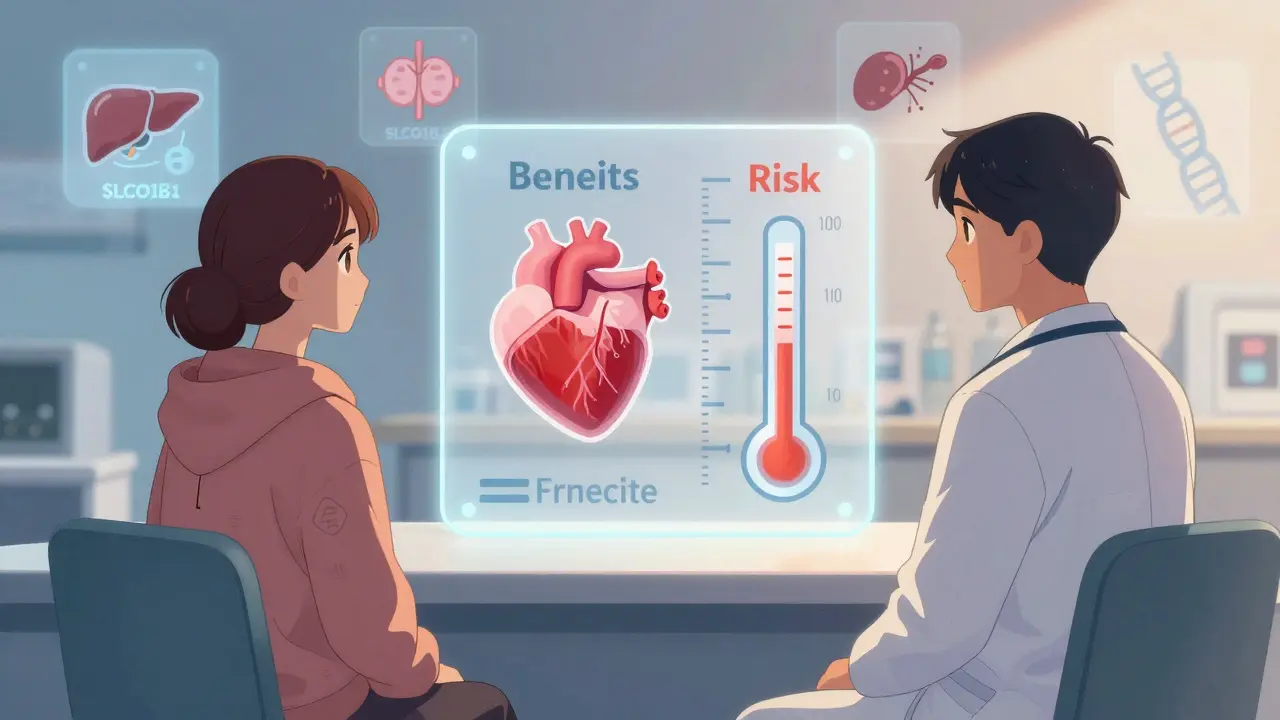
The Bigger Picture: Benefits vs. Risk
Here’s the key thing to remember: statins save lives. For people with heart disease, a history of stroke, or even just high cholesterol and other risk factors, the benefits far outweigh the risk of developing diabetes.
The American Heart Association and American Diabetes Association agree: if you need a statin, take it. The CDC estimates that statins prevent about 50,000 heart attacks and strokes every year in the U.S. The number of new diabetes cases possibly linked to statins? Only 2,000 to 3,000 per year. That’s a net gain of tens of thousands of lives.
Think of it this way: if you’re a 60-year-old man with high LDL cholesterol, high blood pressure, and a family history of heart disease, your chance of having a heart attack in the next five years might be 15%. Taking a statin lowers that to about 13.5%. The added risk of developing diabetes? Less than 1% over the same period. The math is clear.
But if you’re a 45-year-old woman with borderline cholesterol, no family history of heart disease, and prediabetes? The balance shifts. That’s when you and your doctor need to have a real conversation - not to avoid statins, but to choose the right one, at the right dose, with the right monitoring.
What Should You Do If You’re on Statins?
You don’t need to stop taking your statin. But you should monitor your blood sugar, especially if you’re in a higher-risk group.
- Get tested before you start. Ask for a fasting glucose test and HbA1c before your first statin prescription.
- Check again after 3-6 months. If your numbers go up, that’s a signal - not a crisis. It doesn’t mean you have to quit, but it means you need to adjust.
- Focus on lifestyle. Exercise, even just 30 minutes a day, five days a week, can improve insulin sensitivity. Losing 5-10% of your body weight can cut diabetes risk in half. Eat fewer refined carbs and more fiber. These steps help counteract statin effects.
- Consider lower-intensity statins. If you’re at high risk for diabetes, your doctor might switch you from atorvastatin 80 mg to rosuvastatin 10 mg or simvastatin 40 mg. You still get the heart protection - with less impact on glucose.
- Don’t ignore symptoms. If you’re thirsty all the time, peeing more, or feeling unusually tired, get your blood sugar checked. These can be early signs of rising glucose.
Some people report needing to adjust their diabetes meds after starting statins. If you already have type 2 diabetes, your doctor might need to increase your metformin or add another medication. That doesn’t mean the statin failed - it just means your body’s needs changed.

What About Stopping Statins?
Some people wonder: if statins raise blood sugar, should I stop them? The answer is almost always no - unless your doctor says so.
Stopping statins suddenly increases your risk of heart attack or stroke. That risk is immediate and serious. The diabetes risk? It’s slow, small, and mostly affects people who were already close to developing it.
And here’s something important: if you do stop a statin and your blood sugar improves, that doesn’t mean the statin caused diabetes. It means it pushed you over a line you were already teetering on. The underlying risk was there - the statin just made it visible.
That’s why experts don’t recommend stopping statins just because blood sugar rose. They recommend managing it - with diet, movement, and sometimes medication - while keeping the heart protection.
The Bottom Line
Statins can raise blood sugar. That’s not a myth. But it’s not a reason to avoid them. For most people, the heart benefits are huge. For a small group - mostly those with prediabetes, obesity, or genetic risk - the trade-off is real.
The best move? Don’t panic. Don’t stop. Do talk to your doctor. Get tested. Make lifestyle changes. Ask if a lower-dose statin might work just as well for your heart - with less impact on your glucose.
Statins aren’t perfect. But they’re one of the most effective tools we have to prevent heart disease. And when used wisely, they keep millions of people alive - even if a few need to manage their blood sugar a little more carefully.
Do all statins raise blood sugar the same way?
No. High-intensity statins like atorvastatin and rosuvastatin have a stronger effect on blood sugar than lower-intensity ones like pravastatin or fluvastatin. The higher the dose, the greater the impact. If you’re at risk for diabetes, your doctor may choose a lower-intensity statin to minimize this effect while still protecting your heart.
Can I prevent statin-induced diabetes with diet and exercise?
Yes. Lifestyle changes are your best defense. Losing even 5-10% of your body weight, walking 30 minutes a day, and cutting back on sugar and refined carbs can improve insulin sensitivity enough to offset statin effects. Studies show that people who combine statins with healthy habits have almost no increased diabetes risk.
Should I get my blood sugar tested before starting statins?
Absolutely. Ask your doctor for a fasting glucose test and HbA1c before you start. If your numbers are already near the prediabetes range (fasting glucose 100-125 mg/dL or HbA1c 5.7-6.4%), you’re at higher risk. This helps your doctor choose the right statin and dose - and decide if you need closer monitoring.
Is statin-induced diabetes permanent?
Not always. In some cases, blood sugar levels return to normal after stopping the statin - especially if lifestyle changes are made. But if you’ve crossed into full diabetes (HbA1c over 6.5%), you’ll likely need ongoing management. The statin didn’t create diabetes out of nothing - it revealed an underlying risk.
What if I already have type 2 diabetes? Should I still take statins?
Yes. People with diabetes have a much higher risk of heart disease. Statins reduce that risk by 25-30%. Even if your blood sugar gets a little harder to control, the heart protection is worth it. Your doctor may adjust your diabetes medications, but they won’t stop the statin. The benefits far outweigh the risks.


Graham Holborn
Hi, I'm Caspian Osterholm, a pharmaceutical expert with a passion for writing about medication and diseases. Through years of experience in the industry, I've developed a comprehensive understanding of various medications and their impact on health. I enjoy researching and sharing my knowledge with others, aiming to inform and educate people on the importance of pharmaceuticals in managing and treating different health conditions. My ultimate goal is to help people make informed decisions about their health and well-being.