
Chemotherapy Drug Interaction Checker
How This Tool Works
This tool checks for potential interactions between medications/supplements and chemotherapy based on common clinical knowledge. WARNING: This is NOT medical advice. Always consult your oncologist or pharmacist.
Potential Interactions Found
This is a simplified check only. For accurate results, speak with your oncology team.
CRITICAL If you experience sudden fatigue, unusual bruising, rash, or yellow skin, contact your doctor immediately.
No common interactions detected in your list. However, this does NOT guarantee safety. ALWAYS consult your oncology team before taking anything new during treatment.
- Bring a complete medication list to all appointments
- Ask specifically about interactions
- Never stop prescribed medications without consulting your doctor
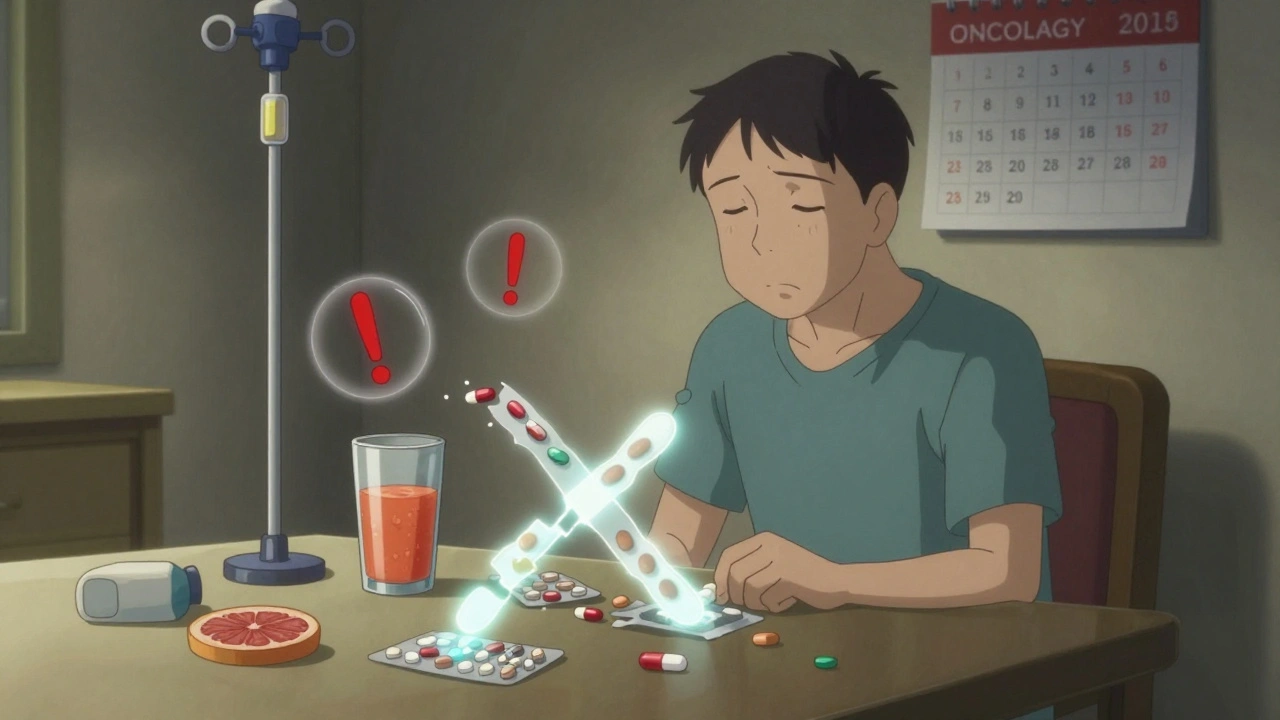
When you're undergoing chemotherapy, every pill, supplement, or even a glass of grapefruit juice can change how your treatment works. It’s not just about the cancer drugs themselves-it’s what they’re doing when they meet something else in your body. About half of all outpatient cancer patients experience at least one potential drug interaction, and one in three of those could be serious enough to cause hospitalization or worse. This isn’t rare. It’s routine. And it’s something no one talks about enough.
What Happens When Chemo Meets Other Drugs?
Chemotherapy doesn’t work in a vacuum. It’s a powerful chemical assault on fast-growing cells, but it doesn’t know the difference between cancer cells and healthy ones. When you add another drug-whether it’s a blood pressure pill, an antidepressant, or a turmeric supplement-it can mess with how your body processes the chemo. There are three main ways this happens.Pharmacokinetic interactions are the most common. These are about how your body absorbs, moves, breaks down, or gets rid of the drugs. Most chemo drugs are processed by enzymes in your liver, especially the CYP3A4 family. If another drug blocks or speeds up these enzymes, your chemo levels can spike or drop dangerously. For example, grapefruit and Seville oranges contain compounds that shut down CYP3A4. One glass of grapefruit juice can keep your chemo levels too high for days. That means more nausea, more nerve damage, more risk of organ failure.
Pharmacodynamic interactions are about what the drugs do together. Two drugs might both hurt your kidneys. When you take them at the same time, the damage adds up. Cisplatin and amphotericin B? Both are hard on the kidneys. Together? Risk of kidney failure jumps. Or take tamoxifen, used for breast cancer, and common antidepressants like paroxetine or fluoxetine. These SSRIs block the enzyme that turns tamoxifen into its active form. That can cut its cancer-fighting power by half. In one study, women on this combo had a 24% higher chance of cancer returning.
Immunological interactions are newer and sneakier. With immunotherapy drugs like pembrolizumab or nivolumab, your immune system is turned loose on cancer. But if you’re also taking a drug that affects your immune response-like a steroid for arthritis or an herbal supplement-it can trigger wild reactions. Cases have been reported where patients on checkpoint inhibitors developed severe liver damage or life-threatening skin rashes after taking even small doses of common NSAIDs like ibuprofen. These reactions don’t show up in standard drug interaction databases. They’re invisible until it’s too late.
Supplements Are Not Safe Just Because They’re Natural
You’ve heard it before: “It’s just a supplement.” But supplements aren’t tested like drugs. There’s no FDA review for safety or purity. A 2023 review from the VA Whole Health Library found that nearly 1 in 5 herbal products contained unlisted pharmaceuticals or heavy metals. And many interact badly with chemo.Take turmeric. It’s full of curcumin, which sounds great for inflammation. But it also inhibits CYP3A4 and P-glycoprotein-two key systems that move chemo drugs out of cells. That means your body can’t clear the drugs properly. Same with ginger, garlic, and ginkgo biloba. They thin your blood. If you’re on a chemo that lowers platelets, or you’re scheduled for surgery, you’re at risk of uncontrolled bleeding.
Even something as simple as vitamin E? High doses can interfere with radiation therapy and some chemo drugs by protecting cancer cells from oxidative damage. Fish oil? It can increase bleeding risk and reduce the effectiveness of drugs like cyclophosphamide. And don’t forget black cohosh or dong quai-both used for menopause symptoms-but they can mimic estrogen, which is dangerous for hormone-sensitive cancers like breast or ovarian.
The bottom line: if you didn’t get it from your oncologist or pharmacist, don’t take it. Not even “just for a few days.”
Older Patients Are at Highest Risk
Cancer isn’t just a disease of the young. More than 60% of diagnoses happen in people over 65. And most of them are already taking five or more medications for high blood pressure, diabetes, arthritis, or heart problems. That’s called polypharmacy-and it’s a recipe for disaster when combined with chemo.As we age, our liver and kidneys slow down. That means drugs stick around longer. A dose that was fine at 50 can become toxic at 75. A 2014 study of 244 cancer patients over 70 found that 75% had at least one potential serious interaction between their chemo and other meds. Many didn’t even know they were at risk.
One woman, 78, was on docetaxel for lung cancer. She also took a daily fish oil capsule for “heart health.” Within two weeks, her platelets dropped to dangerous levels. Turns out, fish oil was amplifying docetaxel’s bone marrow suppression. She nearly bled out. Her oncologist had no idea she was taking it. She didn’t think it counted as a “medicine.”
This happens every day. Because patients don’t tell their doctors. Or doctors don’t ask.
Oral Chemo Is Changing the Game
Ten years ago, most chemo was given in the hospital. Now, 25% of chemotherapy drugs in development are oral. That means you’re taking them at home-daily, sometimes for months. That increases your exposure to interactions dramatically.Oral drugs like capecitabine, lenalidomide, or ibrutinib are absorbed through your gut. What you eat, what you drink, what you take with it-everything matters. A pill taken with breakfast might be fine. The same pill taken with grapefruit juice? Could be deadly. And unlike IV chemo, where nurses monitor you, oral chemo happens in private. No one’s watching.
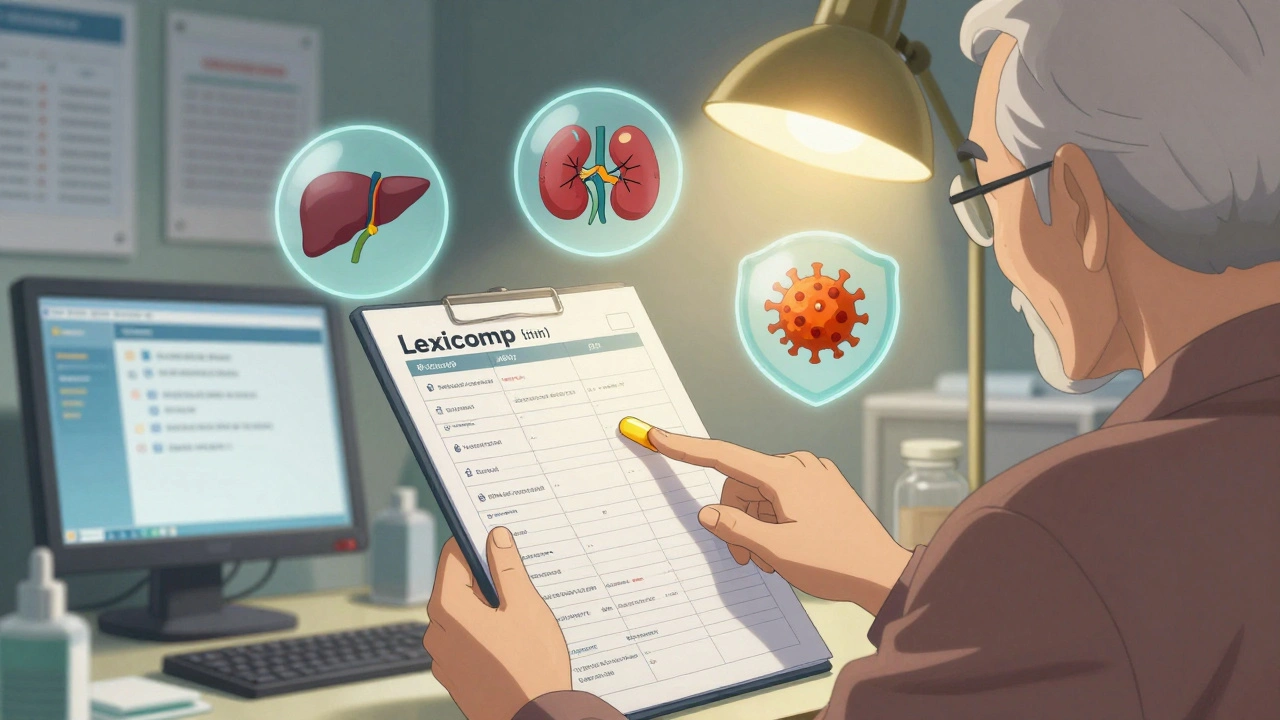
That’s why pharmacists are now essential members of cancer care teams. At Cancer Treatment Centers of America, pharmacists review every patient’s full medication list-prescription, OTC, supplement, even herbal teas-before chemo starts. They flag interactions using specialized tools like Lexicomp and Micromedex. But even those tools miss newer immunotherapy interactions. Human judgment still beats software.
What You Need to Do Right Now
This isn’t theoretical. This is life-or-death. Here’s what you must do:- Make a full list of everything you take: prescription drugs, over-the-counter meds, vitamins, herbs, teas, even topical creams. Include dosages and how often you take them.
- Bring it to every appointment-not just your oncologist. Your pharmacist, your primary care doctor, your specialist. Show it to them. No excuses.
- Ask specifically: “Could any of these interfere with my chemo?” Don’t say “Is this safe?” Say “Could this make my treatment less effective or more dangerous?”
- Stop all supplements unless your oncologist says otherwise. Even “natural” ones. Especially before surgery.
- Avoid grapefruit, Seville oranges, and pomelos completely. They’re not just “a little risky.” They’re a known danger.
- Report weird side effects immediately-rash, sudden fatigue, unusual bruising, yellow skin, or stomach pain. It might not be the chemo. It might be what you took with it.
Why This Matters More Than Ever
Cancer treatment is getting more complex. New drugs, new combinations, new side effects. What worked last year might not be safe this year. And the old rules don’t apply to immunotherapy.Drug interactions are responsible for up to 4% of deaths in hospitalized cancer patients. That’s not a small number. That’s hundreds of people every year who didn’t have to die. Not because their cancer came back. But because someone didn’t ask about the turmeric pill.
The goal isn’t to scare you. It’s to empower you. You’re not just a patient. You’re the most important person in your care team. You hold the list. You know what you’re taking. You have to speak up.
Ask questions. Keep records. Don’t assume. Don’t guess. Your life depends on it.
Can I take ibuprofen while on chemotherapy?
It depends. For traditional chemotherapy, occasional use of ibuprofen may be okay if your kidney function is normal. But if you’re on immunotherapy like pembrolizumab or nivolumab, NSAIDs like ibuprofen can trigger severe immune reactions, including liver damage or skin toxicity. Always check with your oncologist before taking any pain reliever.
Is it safe to take vitamins during chemo?
Most high-dose vitamins are not safe during chemotherapy. Vitamin E, C, and selenium can protect cancer cells from the oxidative damage that some chemo drugs rely on to kill tumors. Multivitamins are usually low-risk, but even they can contain hidden ingredients. Never start a vitamin without your oncologist’s approval.
Why is grapefruit dangerous with chemo?
Grapefruit contains furanocoumarins, which permanently block the CYP3A4 enzyme in your liver and gut. This enzyme breaks down many chemotherapy drugs. When it’s blocked, chemo levels build up to toxic levels. Even one glass of juice can affect drug metabolism for days. Avoid all grapefruit products, including juices, candies, and flavorings.
Do herbal supplements really interact with chemo?
Yes, and often dangerously. Supplements like milk thistle, echinacea, turmeric, ginseng, and St. John’s wort can interfere with how your body processes chemo drugs. Some increase side effects, others make treatment less effective. Many supplements aren’t tested for interactions and may contain hidden contaminants. Always disclose every supplement you take.
Should I stop my other medications before starting chemo?
Never stop prescribed medications without talking to your oncology team. Some drugs, like blood pressure or heart medications, are essential. The goal isn’t to stop everything-it’s to identify which ones are risky and find safer alternatives. Your pharmacist will review all your meds and recommend changes if needed.
How do I know if a drug interaction is happening?
Watch for sudden changes: unexplained fatigue, bruising, nausea, vomiting, yellowing skin, dark urine, or unusual rashes. These could signal liver damage, low blood counts, or immune reactions. If something feels off, call your oncologist immediately. Don’t wait for your next appointment.


Graham Holborn
Hi, I'm Caspian Osterholm, a pharmaceutical expert with a passion for writing about medication and diseases. Through years of experience in the industry, I've developed a comprehensive understanding of various medications and their impact on health. I enjoy researching and sharing my knowledge with others, aiming to inform and educate people on the importance of pharmaceuticals in managing and treating different health conditions. My ultimate goal is to help people make informed decisions about their health and well-being.