
LDL Reduction Calculator
How Combination Therapy Works
The article explains that LDL reduction from combination therapy is multiplicative rather than additive. A statin reduces LDL by X%, then the second drug acts on the remaining percentage.
Example:
Statin reduces LDL by 40% → 60% remains
Ezetimibe reduces remaining 60% by 20% → 12% reduction
Total reduction = 40% + 12% = 52%
LDL Reduction Calculator
Your Results
High-Dose Statin Only
Estimated LDL Reduction: 0%
Estimated LDL: 0 mg/dL
Target Met
Combination Therapy
Estimated LDL Reduction: 0%
Estimated LDL: 0 mg/dL
Target Met
Recommendations
For years, the go-to move for high cholesterol was simple: crank up the statin dose. But if you’ve ever been on a high-dose statin and felt muscle aches, fatigue, or just plain worse after starting it, you’re not alone. And here’s the thing - doubling the dose doesn’t double the benefit. In fact, it barely moves the needle. That’s where combination cholesterol therapy with reduced statin doses comes in - a smarter, safer, and more effective way to get your LDL cholesterol down without pushing your body to its limit.
Why Higher Statin Doses Don’t Work Like You Think
Doctors used to believe more statin meant better results. But science showed otherwise. There’s something called the ‘rule of six’: every time you double the statin dose, you only get about 6% more LDL reduction. So if you go from 10 mg to 20 mg of atorvastatin, your LDL might drop from 39% to 45%. That’s not a big win - and it comes with a bigger risk of side effects.
High-dose statins like atorvastatin 80 mg or rosuvastatin 40 mg can cause muscle pain, liver enzyme changes, or even diabetes in some people. Studies show up to 15% of patients stop taking high-dose statins within a year because of these issues. And when they stop, their risk of heart attack or stroke goes back up.
Here’s the real problem: we’ve been treating cholesterol like a light switch - turn it up until it’s bright enough. But cholesterol reduction isn’t linear. It’s multiplicative. That means adding a second drug doesn’t just add to the statin’s effect - it multiplies it.
How Combination Therapy Actually Works
Combination therapy means using a lower, better-tolerated statin dose along with one or two non-statin drugs. The most common combo? Moderate-dose statin + ezetimibe.
Let’s break it down with numbers. A moderate-dose statin - say, atorvastatin 20 mg or rosuvastatin 10 mg - lowers LDL by about 30-49%. Ezetimibe, a pill that blocks cholesterol absorption in the gut, adds another 18-20%. But here’s the trick: you don’t add them. You multiply.
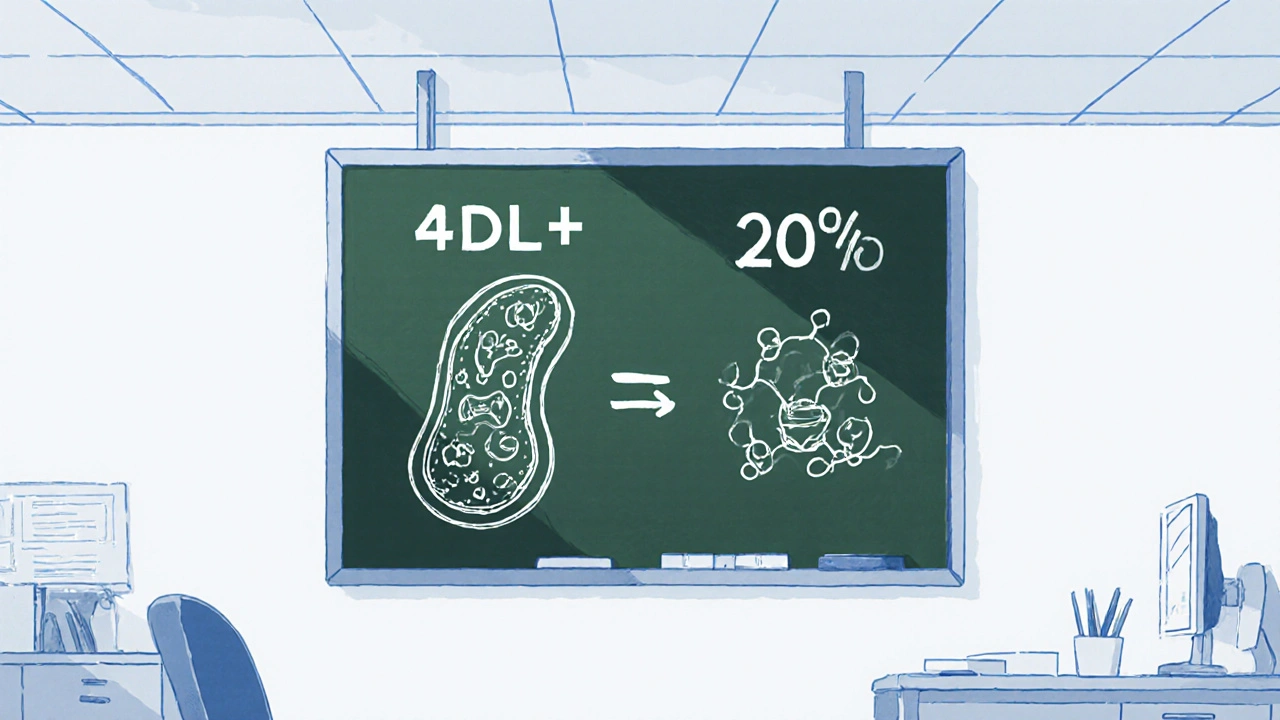
Here’s the math: if a statin lowers LDL by 40%, that leaves 60% still in your blood. Ezetimibe then reduces that remaining 60% by 20%. That’s 12% more reduction. So total reduction? 40% + 12% = 52%. That’s better than a high-dose statin alone, which typically only hits 50%.
And it gets even better with triple therapy: high-dose statin + ezetimibe + a PCSK9 inhibitor (like evolocumab or alirocumab) can drop LDL by 84%. That’s more than most people ever thought possible without injectables.
Who Benefits Most From This Approach?
This isn’t for everyone. But if you fall into one of these groups, combination therapy could be life-changing:
- People with statin intolerance - about 1 in 7 statin users can’t tolerate high doses due to muscle pain or other side effects. For them, switching to a lower statin dose plus ezetimibe cuts muscle-related side effects by 25% and keeps them on treatment.
- People with familial hypercholesterolemia - inherited high cholesterol that puts you at extreme risk. These patients often need LDL under 55 mg/dL. Only combination therapy gets them there reliably.
- People with established heart disease - if you’ve had a heart attack, stroke, or stent, your goal is ultra-low LDL. High-dose statins alone often fall short. Combination therapy gets you there faster and safer.
- People who failed to reach targets on high-dose statins - if you’ve been on 80 mg of atorvastatin and your LDL is still above 70, you’re not alone. Many patients need a second agent to hit the mark.
A real-world example: a 68-year-old man had a heart attack. He was on atorvastatin 80 mg, but his LDL stayed at 82 mg/dL. He had muscle pain, so his doctor cut the statin to 40 mg and added ezetimibe. Within 8 weeks, his LDL dropped to 64 mg/dL - and his muscle pain vanished. He’s been on this combo for two years now, with no issues.
Why Isn’t Everyone Doing This Already?
Despite strong evidence, most doctors still start with high-dose statins. Why? Three reasons:
- Guidelines lag behind data - The 2013 ACC/AHA guidelines barely mentioned combination therapy. Even newer European guidelines still treat it as a backup, not a first option.
- Therapeutic inertia - Doctors are busy. It’s easier to prescribe one pill at a high dose than explain two pills and how they work together.
- Insurance hurdles - Ezetimibe is cheap (generic, under $10/month). But PCSK9 inhibitors cost over $10,000 a year. Many insurers make patients fail on cheaper options first, even if they’re unlikely to work.
And here’s the kicker: a 2023 study found primary care doctors only started combination therapy in 25% of eligible patients. Meanwhile, lipid specialists - the experts - are using it in 78% of very high-risk cases. That’s a huge gap.
The Cost Question: Is It Worth It?
Yes. Even if you pay more upfront, you save money long-term.
Each 1 mmol/L (39 mg/dL) drop in LDL - whether from statins, ezetimibe, or PCSK9 inhibitors - cuts your risk of heart attack, stroke, or death by 22%. That’s proven across dozens of trials. So if combination therapy gets your LDL down by 60% instead of 50%, you’re preventing more events.
Ezetimibe costs about $300-$400 a year in the U.S. PCSK9 inhibitors are expensive, but many patients qualify for patient assistance programs. And in countries with public healthcare, like Australia, these drugs are heavily subsidized.
Plus, avoiding a heart attack or stroke saves hundreds of thousands in medical bills. That’s not just financial - it’s quality of life.

What You Can Do Today
If you’re on a high-dose statin and still not at your LDL goal - or if you’re struggling with side effects - talk to your doctor about combination therapy. Here’s what to ask:
- “Could I try a lower statin dose with ezetimibe?”
- “What’s my LDL target based on my risk level?”
- “Have you seen this work for other patients like me?”
- “Is there a way to test if I’m truly statin intolerant, or is it just a side effect I can manage?”
Don’t assume you have to suffer through side effects to stay healthy. There’s a better way.
The Future Is Combination Therapy
The 2024 European Heart Journal study showed that patients on statin + ezetimibe reached their LDL targets 4.2 months faster than those on high-dose statins alone. That’s more than a month and a half of reduced risk.
Leaked drafts of the 2025 ESC/EAS guidelines suggest they’ll recommend moderate-intensity statin plus ezetimibe as first-line therapy for very high-risk patients. That’s a massive shift - from “last resort” to “first choice.”
And it’s not just about pills. The field is moving toward personalized lipid management - using genetics, inflammation markers, and real-time LDL tracking to tailor treatment. Combination therapy is the foundation of that future.
If you’re high risk, your goal isn’t just to take a pill. It’s to stay alive, active, and free from heart disease. Combination therapy with reduced statin doses gives you the best shot at that - without the side effects that make so many people quit.
Is combination cholesterol therapy safe?
Yes, when used as directed. Moderate-dose statins combined with ezetimibe have been studied in over 18,000 patients across 47 trials. Side effects are generally mild and less frequent than with high-dose statins alone. Muscle pain drops by 25%, and liver issues are rare. PCSK9 inhibitors are injectable but have an excellent safety profile, with no increased risk of diabetes or cognitive issues.
Can I just take ezetimibe without a statin?
Ezetimibe alone lowers LDL by about 18-20%, which isn’t enough for most high-risk patients. It’s designed to be used with a statin - not as a replacement. For people who truly can’t take any statin, bempedoic acid or PCSK9 inhibitors are better alternatives.
How long does it take to see results with combination therapy?
You’ll typically see your LDL drop within 4 to 6 weeks. Most patients reach their target in 8 to 12 weeks. Blood tests are usually done at 6 weeks and then again at 12 weeks to confirm progress. If you’re not on track, your doctor may adjust the dose or add a third agent.
Does insurance cover combination therapy?
Ezetimibe is generic and usually covered with a low copay. PCSK9 inhibitors often require prior authorization and proof that you’ve tried and failed on statins and ezetimibe. Many manufacturers offer co-pay cards or patient assistance programs to reduce out-of-pocket costs. Ask your pharmacist or doctor’s office for help navigating this.
What if I’m not high risk? Do I need this?
If you’re at low risk for heart disease - no diabetes, no smoking, no family history, normal blood pressure - then starting with a low-dose statin or even lifestyle changes may be enough. Combination therapy is mainly for those with established heart disease, very high LDL (over 190 mg/dL), or multiple risk factors. It’s not a one-size-fits-all solution.


Graham Holborn
Hi, I'm Caspian Osterholm, a pharmaceutical expert with a passion for writing about medication and diseases. Through years of experience in the industry, I've developed a comprehensive understanding of various medications and their impact on health. I enjoy researching and sharing my knowledge with others, aiming to inform and educate people on the importance of pharmaceuticals in managing and treating different health conditions. My ultimate goal is to help people make informed decisions about their health and well-being.