
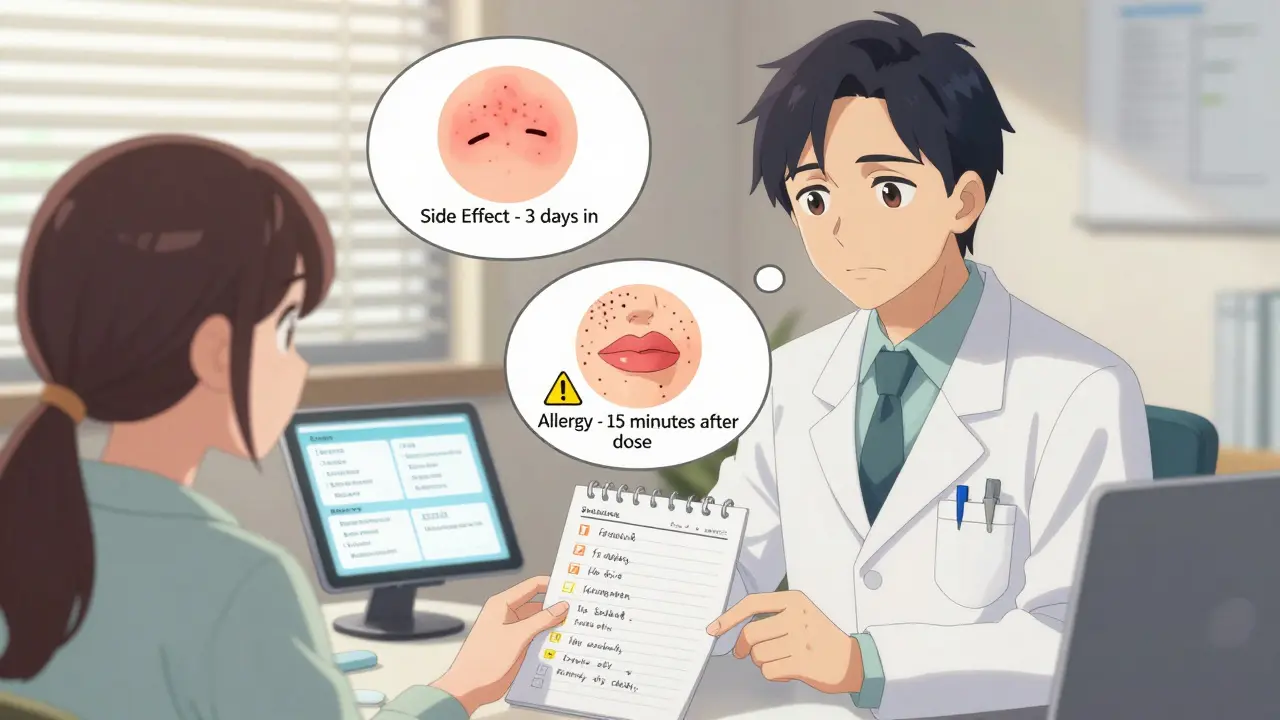
When you start a new medication, it’s normal to wonder: is this feeling normal, or is something dangerous happening? Many people confuse side effects with allergic reactions - and that confusion can cost you better care, more money, and even your health. The truth is, side effects and allergies are not the same. One is predictable, the other is life-threatening. Knowing how to tell them apart - and how to explain it clearly to your care team - can change everything.
What’s the real difference?
Side effects are expected, common reactions to a drug. They happen because the medication affects more than just the target area in your body. For example, statins can cause muscle aches in about 10% of users. Antibiotics often lead to stomach upset in 15-30% of people. These aren’t signs your body is attacking the drug. They’re just side effects - and many fade within a few weeks as your body adjusts. Allergic reactions are different. They happen when your immune system mistakes the drug for a threat. This triggers a real immune response. Symptoms can include hives, swelling of the face or throat, trouble breathing, or a sudden drop in blood pressure. These reactions can happen even with a tiny dose, and they get worse every time you take the drug. Penicillin is the most common drug allergy - about 10% of Americans say they have it. But studies show 90% of those people aren’t actually allergic. They had a side effect and were told it was an allergy.Why does this mix-up matter?
If your doctor thinks you’re allergic to penicillin when you’re not, they’ll give you a different antibiotic - often a broader-spectrum one. That increases your risk of antibiotic resistance, hospital stays, and even C. diff infections. A 2021 study in JAMA found that people labeled with penicillin allergies get 63% more of these stronger antibiotics. That’s not just a medical error - it’s a public health problem. Also, if you think a side effect is an allergy, you might avoid a medication that could help you. Maybe you stopped taking a blood pressure pill because you got a headache. But headaches are a known side effect in 15% of users - and they often go away after a week. If you quit without telling your provider, you might have ended up with uncontrolled blood pressure - and two extra prescriptions trying to fix what wasn’t broken.How to talk to your care team - the right way
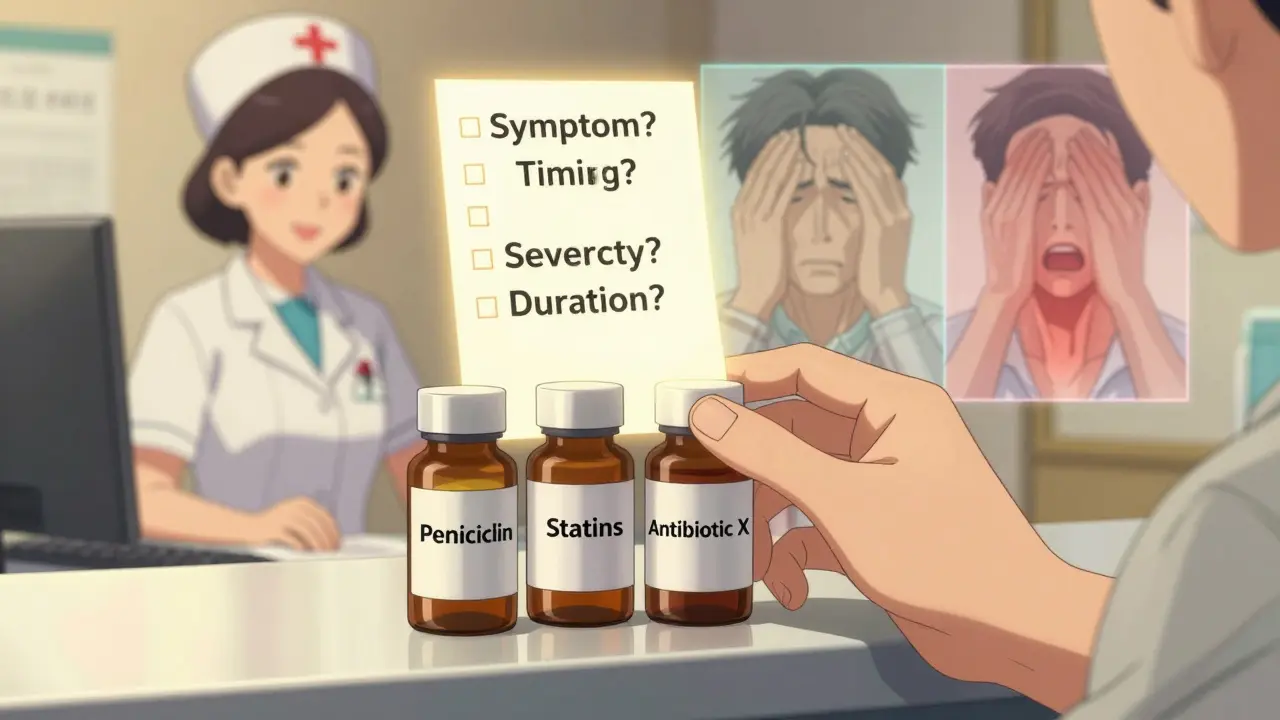
Don’t say, “I’m allergic to this.” Say instead: “I had this symptom after I started the medicine. Here’s what happened.” Here’s what to prepare before your appointment:- Write down the exact symptom. Was it a rash? Nausea? Dizziness? Don’t say “I felt bad.” Be specific.
- When did it start? Did it begin 10 minutes after taking the pill? Or 3 days later? Timing matters. Allergies usually show up fast - within minutes to a few hours. Side effects often take longer.
- How bad was it? Rate it on a scale of 1 to 10. Did it go away on its own? Did it get worse with each dose?
- Did it go away when you skipped a dose? If yes, it’s likely a side effect. If it got worse or stayed the same, it might be something else.
Use this simple phrase to start the conversation: “I experienced [symptom] within [time] after taking [medication]. Is this a known side effect, or could it be an allergic reaction?”
A 2021 study from UC San Diego found that patients who brought written logs to appointments reduced miscommunication by 37%. That’s not magic - it’s clarity. Your memory is unreliable. A note on your phone counts.
What questions should you ask?
Don’t just report - ask. These questions guide your provider to the right answer:- “What are the most common side effects of this drug?” (Ask for percentages - if they say “some people,” ask, “What’s the rate?”)
- “Which symptoms mean I should stop this immediately?”
- “Is there another drug in a different class that might work without this reaction?”
- “Could this be something else - like a virus, stress, or another medication?”
- “Should I get tested to confirm if this is a true allergy?”
The American Medical Association recommends asking: “If I had this same reaction again, would you still say it’s an allergy?” That forces them to think critically - not just label.
What to bring to your appointment
Bring your medications - all of them. Not a list. The actual bottles. A 2022 UCLA study showed that when patients brought physical bottles to appointments, communication errors dropped by 28%. Why? Because providers see the exact name, dose, and form. They spot interactions you didn’t know about. Also bring your symptom log. Track for at least 72 hours before your visit. Include:- Date and time of each dose
- Time symptom started
- Severity (1-10)
- Duration (how long it lasted)
- What helped (or didn’t)
The CDC recommends the S.O.A.P. method:
- Subjective: What you felt
- Objective: What you measured (like temperature or pulse)
- Assessment: Your guess - “I think this is a side effect because…”
- Plan: “What should we do next?”
A 2023 Johns Hopkins study found this method improves provider understanding by 41%.
What if you’re told you have an allergy - but you’re not sure?
Ask: “Can I get tested?” Many people are told they’re allergic to penicillin after a childhood rash. But rashes from viruses look like drug rashes - and most aren’t allergies. Allergy testing is simple: a skin prick or blood test. It takes 30 minutes. The American Academy of Allergy, Asthma & Immunology says 90% of people who think they’re allergic can safely take penicillin after testing. If your provider says testing isn’t needed - ask why. If they say “it’s not worth it,” ask for a referral to an allergist. This isn’t overkill - it’s safety.What’s changing in healthcare
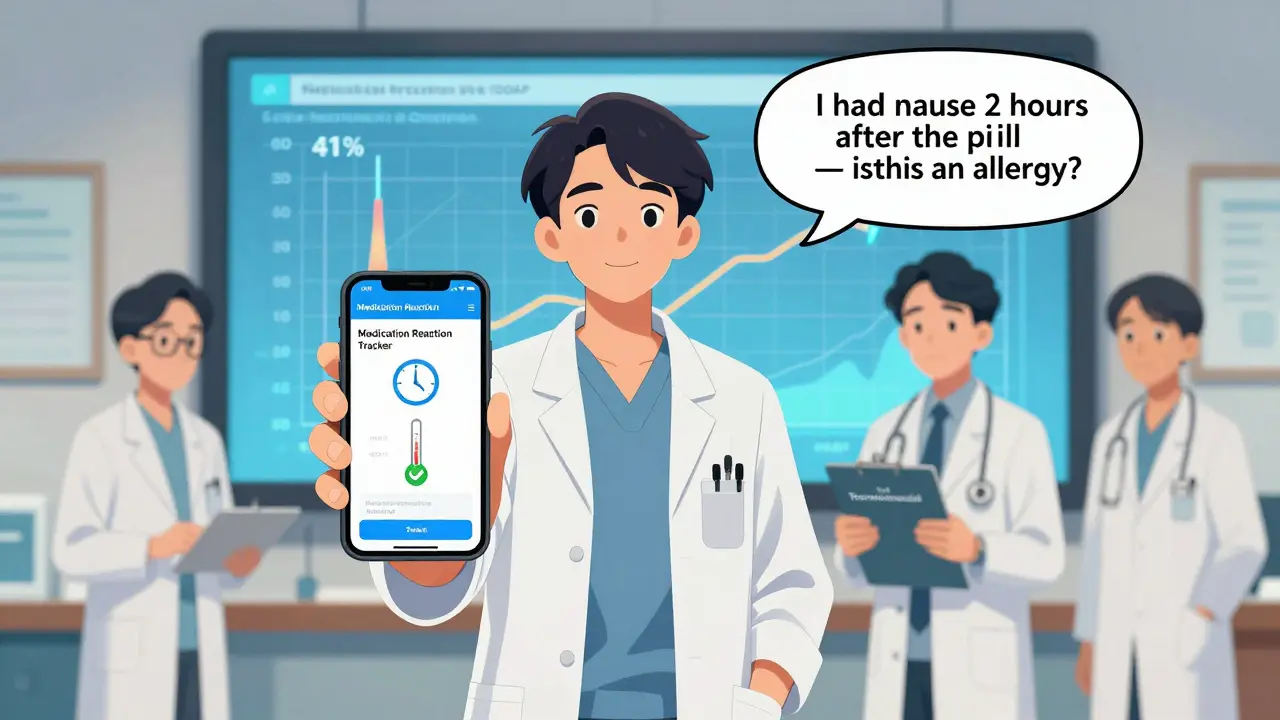
More clinics are using tools to fix this problem. The FDA now requires all new drug guides to clearly separate side effects from allergic symptoms. The American Pharmacists Association released a free app called Medication Reaction Tracker - it walks you through questions to help you decide if it’s a side effect or allergy. Over 87,000 people have downloaded it. Hospitals are also updating their electronic records. If you’re labeled as allergic to penicillin, the system now flags it and asks the provider: “Is this confirmed by testing?” That’s new. And it’s saving lives.Bottom line
You’re not just a patient. You’re the most important person in your care team. You notice things your provider doesn’t. You know your body better than any chart. Stop saying “I’m allergic.” Start saying: “I had this symptom after I took this. Here’s what happened.” Write it down. Bring the bottles. Ask the right questions. If you’re told you’re allergic - ask for proof. If you’re told to stop a medication because of a side effect - ask if there’s another option. Your care team needs you to speak clearly. Don’t guess. Don’t assume. Don’t stay silent. The right words can keep you safer - and keep the right drugs in your medicine cabinet.How do I know if my rash is a side effect or an allergic reaction?
A side effect rash usually appears days after starting the medication, is mild, and doesn’t spread quickly. It often looks like small pink spots and may itch slightly. An allergic reaction rash appears within minutes to hours, spreads fast, and often includes hives (raised, red, itchy welts). It may be accompanied by swelling of the lips or tongue, trouble breathing, or dizziness. If you have trouble breathing or swelling - seek emergency help immediately.
Can I outgrow a drug allergy?
Yes - especially with penicillin. Studies show that 80% of people who had a penicillin allergy as children lose the allergy within 10 years. But you won’t know unless you get tested. Never assume you’ve outgrown it. Always ask your provider about allergy testing before trying the drug again.
What if my doctor dismisses my symptoms as "just a side effect"?
If your symptoms are severe, persistent, or worsening - don’t accept dismissal. Say: “I’ve tracked this for X days, and it’s affecting my daily life. Is there a different medication I can try?” If they still won’t help, ask for a referral to a pharmacist, allergist, or specialist. You have the right to safe, effective care - and your concerns matter.
Can side effects be dangerous?
Yes - even common side effects can become serious if ignored. For example, muscle pain from statins can lead to rhabdomyolysis, a rare but dangerous muscle breakdown. Dizziness from blood pressure meds can cause falls. Always report side effects - even if you think they’re minor. Your provider needs to know to adjust your dose or switch drugs before it gets worse.
Should I stop taking my medication if I think I’m having an allergic reaction?
If you have symptoms like swelling, trouble breathing, hives, or a rapid drop in blood pressure - stop the medication immediately and call 911 or go to the ER. For milder symptoms like nausea or a mild rash, call your provider before stopping. Never stop a medication without guidance, especially if it’s for a chronic condition like high blood pressure or epilepsy.


Graham Holborn
Hi, I'm Caspian Osterholm, a pharmaceutical expert with a passion for writing about medication and diseases. Through years of experience in the industry, I've developed a comprehensive understanding of various medications and their impact on health. I enjoy researching and sharing my knowledge with others, aiming to inform and educate people on the importance of pharmaceuticals in managing and treating different health conditions. My ultimate goal is to help people make informed decisions about their health and well-being.