
Drug Interaction Checker
Check Your Medications
Enter the medications you're taking to identify potential interactions. This tool helps you understand risks you might not see on the label.
Interaction Results
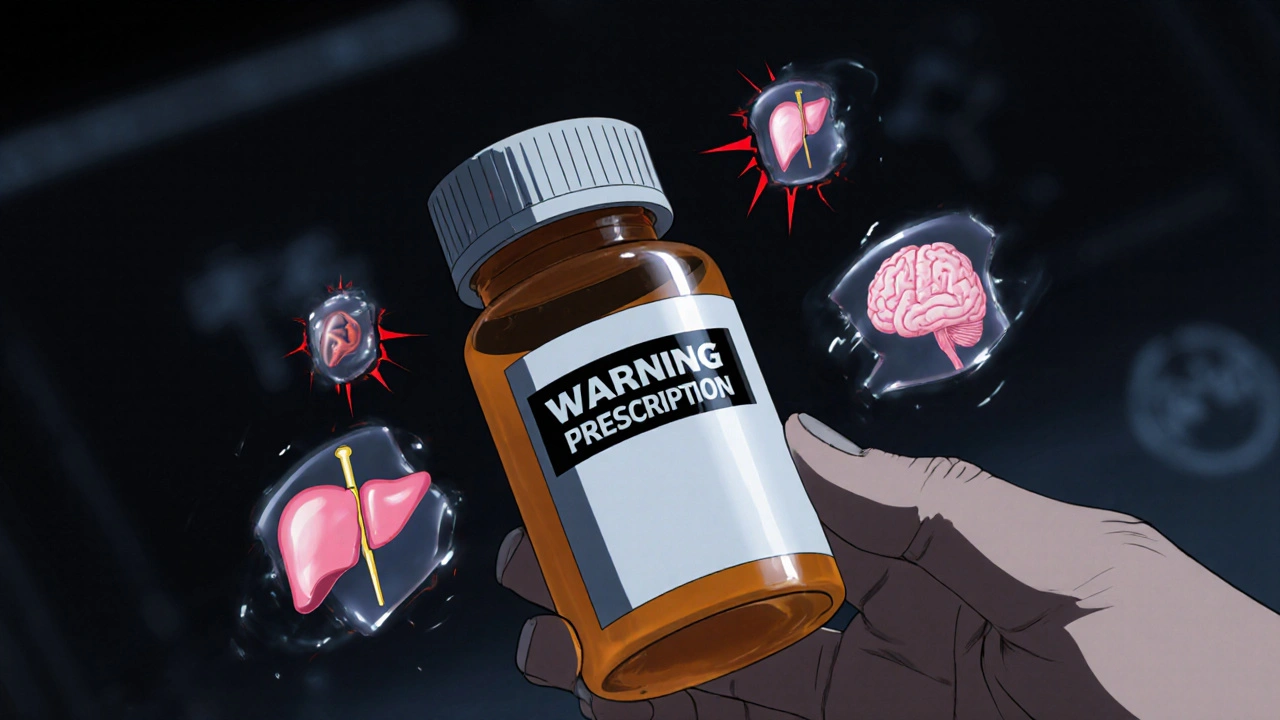
Every time you pick up a prescription, there’s a hidden layer of critical information tucked on the label-information that could stop you from ending up in the emergency room. Most people glance at the name of the drug and the dosage, then put it away. But skipping the safety and warnings section is like driving without checking your mirrors. You might get away with it most of the time, but one missed warning can change everything.
What You’re Actually Reading
The safety and warnings section isn’t just a paragraph of fine print. It’s a structured, FDA-mandated breakdown of real risks tied to your medication. The U.S. Food and Drug Administration requires this section to follow strict rules so that the most serious dangers stand out. You’ll find three main parts: the boxed warning, the warnings and precautions, and the drug interactions section.The boxed warning, often called a "black box warning," is the highest level of risk alert the FDA can issue. It’s printed with a thick black border and appears at the top of the prescribing information. These aren’t warnings about mild side effects like headaches or nausea. They’re reserved for life-threatening risks-like liver failure, severe allergic reactions, or sudden heart rhythm changes. For example, the antibiotic linezolid carries a boxed warning for serotonin syndrome when taken with antidepressants. If your drug has this box, it’s not a suggestion. It’s a red flag that demands attention.
Decoding the Warnings and Precautions
Right after the boxed warning comes the Warnings and Precautions section. This is where the details get specific. The language here is carefully chosen. You’ll see phrases like "may cause," "has been associated with," or "risk increases with." These aren’t vague guesses. They’re based on clinical trial data and real-world reports. If it says, "May cause dizziness, especially in elderly patients," that’s not a generic warning-it’s tied to documented cases in people over 65.Look for warnings about conditions you already have. If you have kidney disease, check if the drug is cleared through the kidneys. If you’re pregnant or planning to be, see if it’s labeled as pregnancy category D or X-those mean proven harm to the fetus. Even if your doctor didn’t mention it, the label might warn against use if you have glaucoma, heart failure, or a history of seizures. These aren’t just "what ifs." They’re red flags based on actual patient outcomes.
Drug Interactions: The Silent Killer
One of the most dangerous gaps in patient understanding is drug interactions. You might take your blood pressure pill, your cholesterol med, and your daily aspirin without thinking twice. But when those mix, things can go wrong fast. The interaction section doesn’t just say "may interact with other drugs." It names specific medications and explains how the interaction works. For example: "CYP3A4 inhibitors like clarithromycin may increase blood levels of simvastatin by up to 400%, raising the risk of muscle damage."This isn’t just about other prescriptions. Over-the-counter drugs, herbal supplements, and even grapefruit juice can trigger dangerous interactions. St. John’s wort can make birth control fail. Grapefruit can turn a common cholesterol drug into a heart hazard. If you’re on five or more medications, as many older adults are, the chances of a hidden interaction rise sharply. That’s why pharmacists now use digital tools to scan your full list-something you should ask for every time you fill a new prescription.

What’s on the Pharmacy Label (And What’s Missing)
The small sticker on your pill bottle isn’t the full story. It’s a condensed version of the warning, designed to fit on a tiny label. Pharmacists are required to include the most urgent warnings in large print: "May cause drowsiness-do not drive," "Take on empty stomach," or "Avoid alcohol." But here’s the catch: they often have to cut corners. On pediatric bottles, the surface area is 75% smaller than adult ones. That means important details get left out.And placement matters. A 2023 survey found that 38% of patients missed critical warnings because they were printed on the bottom of the bottle-hidden when stored in a medicine cabinet. Always turn the bottle over. Read every line. Don’t assume the pharmacist told you everything. If something feels unclear, ask again. Say: "Can you explain this warning to me in simple terms?"
Why Some People Miss the Warnings
It’s not just about not reading. It’s about how the information is presented. Studies show that patients with low health literacy are over three times more likely to misunderstand warnings. A warning that says, "Take 2 hours before meals," might be read as "Take before breakfast." That’s not the same thing. A warning about "maximum 4 doses in 24 hours" can be misinterpreted as "4 pills total," not "4 doses, meaning up to 4 pills spaced out."Another problem? The word "black box" means nothing to most people. A 2022 survey found that 68% of patients didn’t know what it meant. They saw the black border and thought it was just a printing error. The FDA has tried to fix this by adding icons and color codes-red for critical, yellow for moderate-but those aren’t on every label yet.
How to Make Sure You Understand
You don’t need to be a doctor to read these labels correctly. Here’s how to do it right:- Ask for the Medication Guide. For high-risk drugs like blood thinners, opioids, or certain antidepressants, the FDA requires a separate, easy-to-read guide. It’s not optional-it’s handed to you at the pharmacy. Read it.
- Use the "teach-back" method. After your pharmacist explains a warning, say: "So, just to make sure I got it-this warning means I shouldn’t take it with X because it could cause Y. Is that right?" This simple trick cuts medication errors by 27%.
- Keep a warning log. Write down each drug, its main warning, and why it matters to you. Example: "Lisinopril-watch for swelling in face/throat. I have a history of allergies."
- Check for updates. Drug labels change. A new warning might be added months after you started taking the drug. If you’re on a long-term medication, ask your pharmacist every 6 months: "Has anything changed on this label?"
- Use digital tools. Apps like Medisafe let you scan your pills and get real-time interaction alerts. They’re not perfect, but they catch 89% of known risks when used consistently.

What’s Changing in 2025
The FDA is rolling out major changes. Starting in 2024, all new drug applications must include warning language tested on people with low reading skills. That means simpler words, clearer instructions, and fewer medical terms. By 2025, you’ll start seeing QR codes on labels that link to short videos explaining the risks in plain language. Some pharmacies are already testing NFC chips on bottles-you tap your phone, and it plays a voice explanation.But here’s the catch: not everyone has a smartphone. That’s why the FDA still requires printed warnings in multiple languages and large print. If you’re over 65, have vision problems, or speak another language, ask for a printed version in your preferred language. You have the right to it.
Real Stories, Real Consequences
A 68-year-old man in Ohio took dextromethorphan for a cough. He didn’t realize it could interact with his antidepressant. He developed serotonin syndrome-his body overheated, his muscles locked up, and he ended up in the ICU. The warning was on the bottle, but it was in 8-point font, buried under other text.On the other side, a woman in Texas saw the "may cause drowsiness" sticker on her muscle relaxer. She canceled her road trip. That night, she had a near-miss when she nearly fell asleep at the wheel. She told her pharmacist: "That sticker saved me."
It’s not about fear. It’s about awareness. The label isn’t trying to scare you. It’s trying to help you avoid a mistake you didn’t even know you were making.
What to Do Next
Next time you get a prescription:- Don’t rush. Sit down. Read the label like you’re reading a safety manual for a new appliance.
- Compare the pharmacy label with the Medication Guide. They’re not the same.
- Ask: "What’s the one thing I absolutely must avoid while taking this?"
- Write down your answer.
- Keep that note with your meds.
Medication safety isn’t just the doctor’s job. It’s yours too. The label is your best tool. Use it.
What is a black box warning on a prescription label?
A black box warning is the strongest safety alert the FDA requires on a prescription drug. It’s printed with a thick black border and highlights life-threatening risks-like organ failure, severe allergic reactions, or sudden death. These warnings are based on documented cases and are only used when the risk is serious enough to outweigh the benefits for some patients. If your drug has one, it doesn’t mean you can’t take it-it means you need to understand the risks and monitor for symptoms.
Can I ignore a warning if my doctor says it’s okay?
Your doctor may decide the benefit outweighs the risk-but that doesn’t mean the warning isn’t real. For example, a doctor might prescribe a drug with a boxed warning for a life-threatening condition because no other option works. But you still need to know what to watch for. Never assume a warning is "not for you" just because your doctor approved it. Ask: "What signs should I call you about right away?" That’s the key question.
Do over-the-counter drugs and supplements have the same warnings?
No. OTC drugs and supplements aren’t required to follow the same FDA labeling rules as prescription drugs. Their warnings are often vague, like "may cause upset stomach" or "consult your doctor if pregnant." Many herbal supplements have no warnings at all, even when they interact dangerously with prescription meds. Always tell your pharmacist about everything you’re taking-including vitamins, herbs, and CBD. They can flag risks you didn’t know existed.
Why do warnings sometimes change after I’ve been taking a drug for months?
New safety data comes out all the time. A drug might be on the market for years before a rare but serious side effect shows up in thousands of patient reports. The FDA reviews this data and updates labels when needed. That’s why it’s important to check in with your pharmacist every 6 months. Even if your prescription hasn’t changed, the warning might have. A new interaction, a new age restriction, or a new monitoring requirement could have been added.
What should I do if I don’t understand a warning?
Don’t guess. Don’t assume. Ask your pharmacist to explain it in plain language. Say: "Can you tell me what this means for me personally?" If they’re busy, ask for a quiet moment. Many pharmacies now offer free 5-minute safety consultations. You can also call the drug manufacturer’s patient hotline-every prescription has one listed on the label. Your health isn’t a guessing game. Get it clarified.
Next steps: Keep your medication log updated. Ask your pharmacist for a Medication Guide if you haven’t received one. Set a calendar reminder to review your labels every 6 months. Small habits like these prevent big problems.


Graham Holborn
Hi, I'm Caspian Osterholm, a pharmaceutical expert with a passion for writing about medication and diseases. Through years of experience in the industry, I've developed a comprehensive understanding of various medications and their impact on health. I enjoy researching and sharing my knowledge with others, aiming to inform and educate people on the importance of pharmaceuticals in managing and treating different health conditions. My ultimate goal is to help people make informed decisions about their health and well-being.