
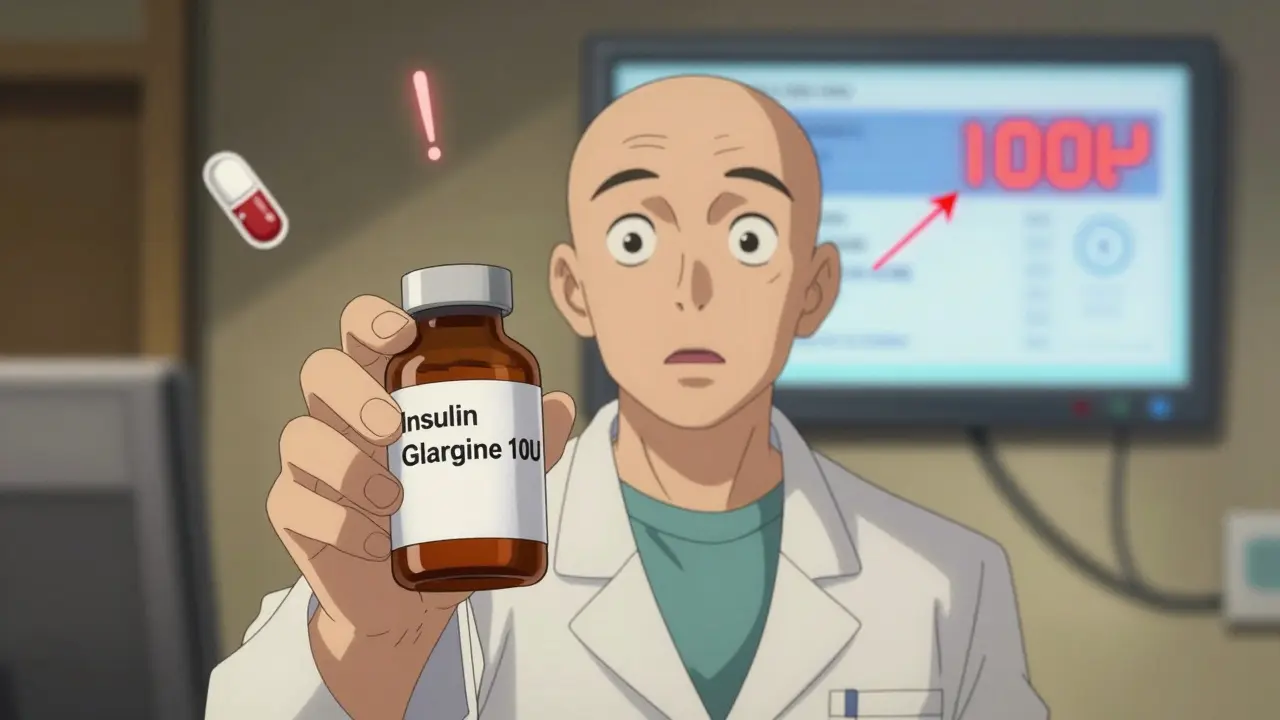
When a pharmacist dispenses a medication, every label matters. A single misplaced decimal point, a wrong dosage, or a mislabeled drug name can lead to serious harm. But what if the error didn’t start at the pharmacy counter? What if it started earlier-in the digital system that generated the label in the first place? Many people assume pharmacy labels are accurate because they’re printed by machines. But behind every automated label is a dataset, and datasets can be wrong. Labeling errors in medication data aren’t just technical glitches-they’re patient safety risks.
What Are Labeling Errors in Medication Data?
Labeling errors in this context mean incorrect or inconsistent information in digital records that get turned into physical or electronic labels. This could be a wrong drug name, incorrect strength (like 10mg instead of 100mg), wrong route (oral instead of IV), or even a mismatched patient ID. These aren’t rare mistakes. A 2023 study of electronic prescribing systems in Australian hospitals found that 7.4% of medication labels contained some form of data labeling error, with the most common being dosage inaccuracies and drug name confusion. These errors often come from how data is entered or mapped across systems. For example, when a hospital switches from one electronic health record (EHR) to another, drug names might not translate perfectly. “Lantus” might map correctly in one system but get mislabeled as “Lantis” in another. Or a generic drug like “metformin 500mg” might be labeled as “metformin hydrochloride 500mg” in the database-technically correct, but confusing to pharmacists who expect the brand-style naming.How to Spot These Errors Before They Reach Patients
You don’t need to be a data scientist to notice when something’s off. Here are the most common red flags:- Unfamiliar drug names-If a label shows a drug you’ve never heard of, or one that sounds almost right but isn’t (e.g., “Hydroxyzine” instead of “Hydralazine”), pause and double-check.
- Inconsistent dosage formats-One bottle says “5 mg,” another says “5.0 mg,” and a third says “5mg” without a space. These small differences can signal poor data mapping.
- Missing or mismatched patient info-If the label says “John Smith” but the prescription was for “Jane Smith,” that’s not a typo-it’s a data linkage error.
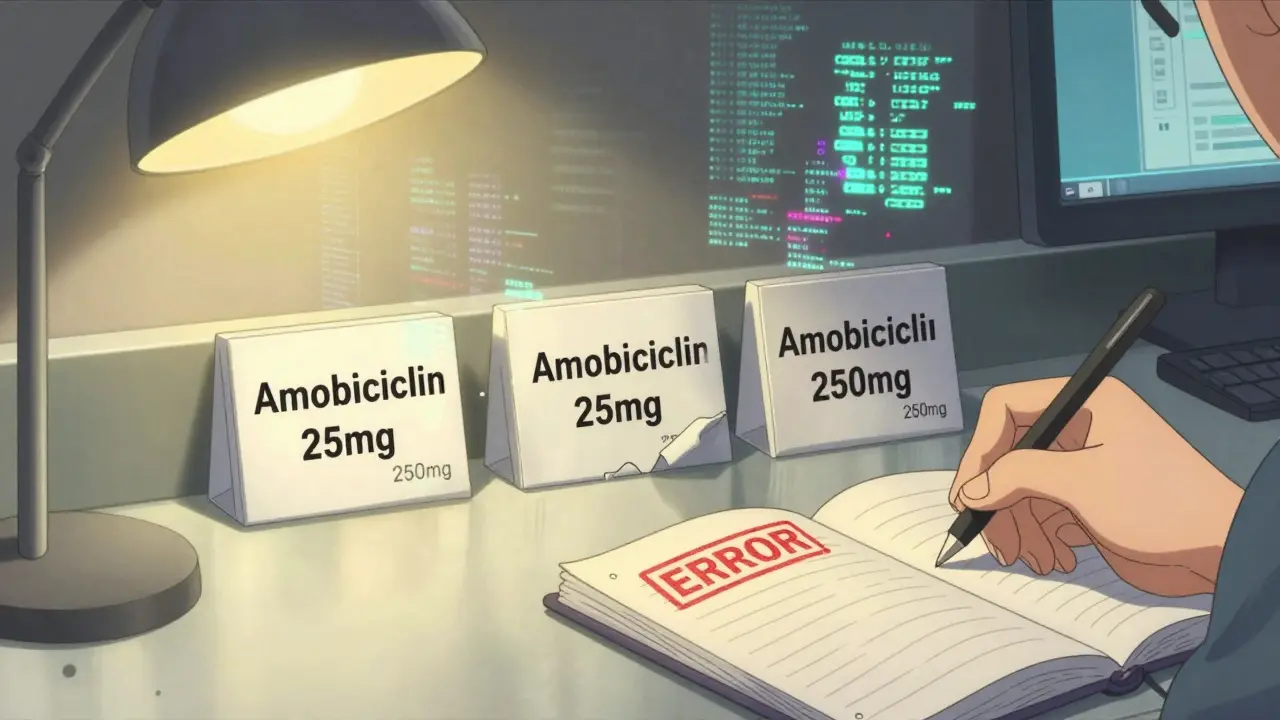
- Repeated errors across batches-If three different prescriptions from the same source all have the same label glitch (e.g., “Amoxicillin 250mg” labeled as “Amoxicillin 25mg”), there’s a systemic issue.
- Out-of-date brand names-Some systems still use old brand names like “Zyrtec” instead of the generic “Cetirizine,” even when the prescription calls for the generic. This creates confusion for both staff and patients.
Why These Errors Happen-And Why They’re Hard to Catch
Most labeling errors come from three root causes:- Weak data mapping-When systems talk to each other, they often use automated rules. If a rule says “replace ‘A’ with ‘B’” without checking context, it can turn “Ciprofloxacin” into “Ciprofloxacine.”
- Missing validation steps-Many pharmacy systems auto-generate labels without a human review step. Even a 10-second glance by a pharmacist could catch 80% of errors.
- Unclear labeling guidelines-If the hospital’s own policy doesn’t specify whether to use brand or generic names, or whether to include the manufacturer, staff will guess. And guesses lead to inconsistencies.
How to Ask for Corrections Without Blaming Anyone
When you spot an error, the goal isn’t to point fingers-it’s to fix the system. Here’s how to do it effectively:- Document it-Take a photo of the label. Write down the date, time, patient ID (if allowed), and exact error. Don’t rely on memory.
- Use the right channel-Don’t yell in the hallway. Submit a formal report through your pharmacy’s quality reporting system. If there isn’t one, email the pharmacy manager with the subject: “Potential Labeling Data Error-Action Requested.”
- Be specific-Say: “On February 18, patient ID 7892 received a label for ‘Lisinopril 5mg’ but the prescription was for 10mg. The same error occurred on February 15 for patient 7891.” Specifics get attention.
- Ask for the source-Instead of saying “this is wrong,” ask: “Can we trace this label back to the EHR export? I suspect a mapping issue between the prescription system and the label generator.”
- Follow up-If you don’t hear back in 48 hours, ask again. Labeling errors are often ignored because they seem small. But small errors add up.
What Happens After You Report It
Good pharmacy systems don’t just fix one label-they fix the root cause. Here’s what should happen after you report an error:- Root cause analysis-The pharmacy team should check if this error appears in other records. Did it happen in other batches? Other patients? Other drugs?
- System audit-They should review the data pipeline: How was the prescription entered? How was it translated into the label? Was there a recent software update?
- Guideline update-If the error came from unclear rules, the labeling policy should be rewritten with examples. For example: “Always use generic names unless the prescriber specifies brand.”
- Validation step added-If no human checked the label before printing, a mandatory review step should be added. Even 30 seconds of human eyes can cut errors by 70%.
Real-World Example: The Case of the Missing Zero
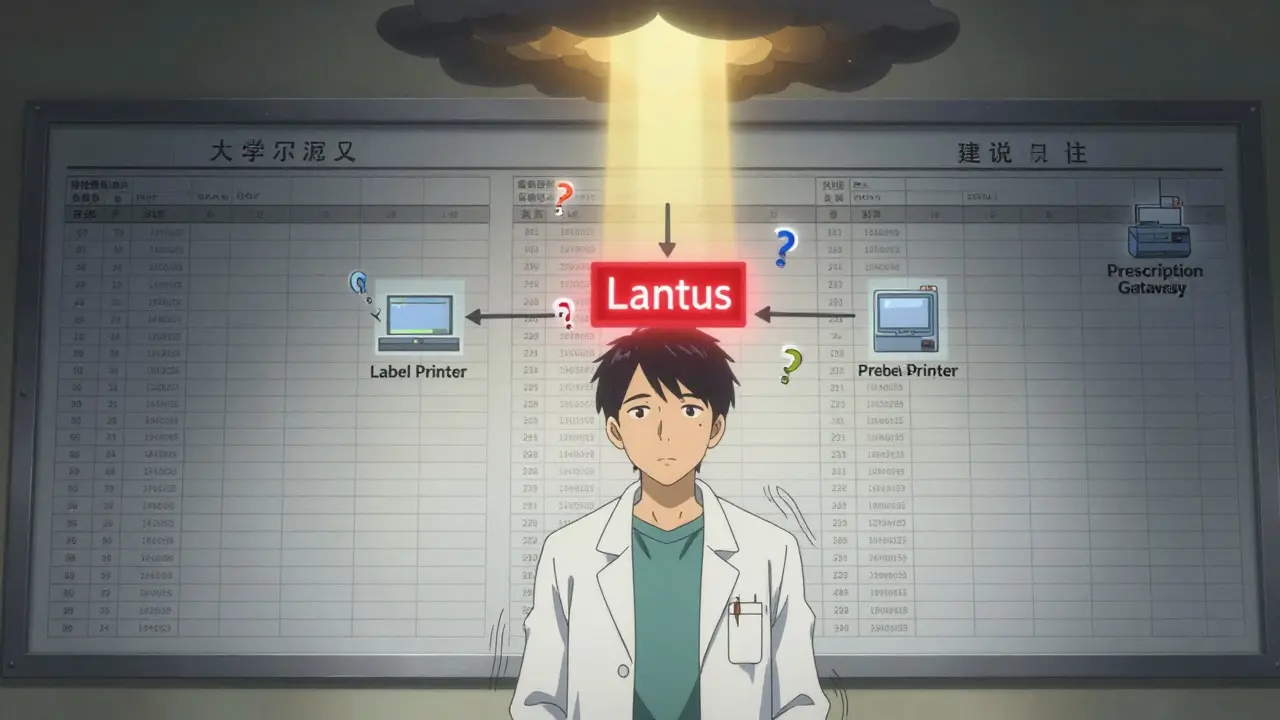
In late 2023, a community pharmacy in Perth noticed that several patients were getting “Insulin Glargine 10U” instead of “100U.” At first, they thought it was a human error. But after checking 200 labels, they found the same mistake every time the prescription came from a specific EHR system. The system was truncating the last digit when exporting to the label printer. They reported it. The vendor confirmed a bug in their export module. The fix? A software patch and a manual override rule added to all insulin prescriptions until the patch was deployed. No one was harmed. But it almost happened.Why This Matters More Than You Think
The global medication labeling error rate in digital systems is estimated at 5-12%. In Australia, where over 180 million prescriptions are filled annually, that’s tens of thousands of potentially dangerous labels every year. The FDA and TGA now require that all digital medication systems have “label integrity checks” built in. But enforcement is patchy. That’s why frontline staff like you are the last line of defense. Fixing labeling errors isn’t about being perfect. It’s about being vigilant. It’s about asking, “Does this make sense?” And then speaking up-even if you’re not sure.Can a labeling error in a medication label really cause harm?
Yes. Even small errors can be dangerous. A label that says “5mg” instead of “50mg” could lead to under-treatment, while “500mg” instead of “50mg” could cause overdose. In 2022, the Australian Commission on Safety and Quality in Health Care reported that 14% of all medication-related harms in hospitals were linked to labeling or data mapping errors, not human dosing mistakes.
How common are labeling errors in pharmacy systems?
Studies show that 3% to 12% of digital medication labels contain some form of labeling error. In Australia, the rate is around 7.4%, according to a 2023 study of public hospital systems. Errors are more common in older systems, during software transitions, or when multiple systems are used together.
What’s the difference between a labeling error and a dispensing error?
A dispensing error happens when a pharmacist picks the wrong bottle. A labeling error happens when the label on the bottle is wrong-even if the right medicine is inside. For example, a bottle of amoxicillin labeled as “azithromycin” is a labeling error. The medicine is correct, but the information is wrong. Both are dangerous.
Can software fix labeling errors automatically?
Some systems can flag likely errors-like mismatched dosage formats or unknown drug codes. But software can’t replace human judgment. For example, it might not catch that “Lantus” was mislabeled as “Lantis” because both look plausible. Only a trained pharmacist knows that’s wrong. The best systems combine automated flags with mandatory human review.
Should I report a labeling error even if the patient didn’t take the medication?
Yes. Reporting every error-even if it was caught before dispensing-is how systems improve. If you don’t report it, the error might happen again. And next time, it might not be caught. Every report helps build safer systems for everyone.


Graham Holborn
Hi, I'm Caspian Osterholm, a pharmaceutical expert with a passion for writing about medication and diseases. Through years of experience in the industry, I've developed a comprehensive understanding of various medications and their impact on health. I enjoy researching and sharing my knowledge with others, aiming to inform and educate people on the importance of pharmaceuticals in managing and treating different health conditions. My ultimate goal is to help people make informed decisions about their health and well-being.