
Side Effect Risk Calculator
Interpret FAERS Report Data
FAERS shows reported side effects but doesn't provide the total number of users (denominator). This tool helps you calculate potential risk using your estimated user base.
When you're trying to understand if a medication might cause unexpected side effects, the FAERS database is one of the most powerful tools available. But it's not a simple Google search. If you type in a drug name and expect a clear list of dangers, you'll walk away confused-or worse, misled. The FDA Adverse Event Reporting System (FAERS) doesn't tell you how often side effects happen. It tells you what people have reported. And that’s a big difference.
What FAERS Actually Shows You
FAERS is a public database of over 2.7 million reports collected since 2014. These reports come from doctors, pharmacists, patients, and drug companies. Every time someone thinks a medicine caused a problem-whether it’s dizziness, liver damage, or a heart rhythm issue-they can file a report. Drug manufacturers are legally required to send in serious reports within 15 days. Patients and providers can file too, but most reports come from companies.
Here’s the catch: FAERS doesn’t confirm if the drug actually caused the problem. A person takes a new blood pressure pill and then has a stroke. The report gets filed. But maybe they had high cholesterol, didn’t take their other meds, or were already at risk. FAERS doesn’t sort that out. It just collects the story. That’s why experts say FAERS is for spotting signals-not proving cause.
How to Search FAERS Using the Public Dashboard
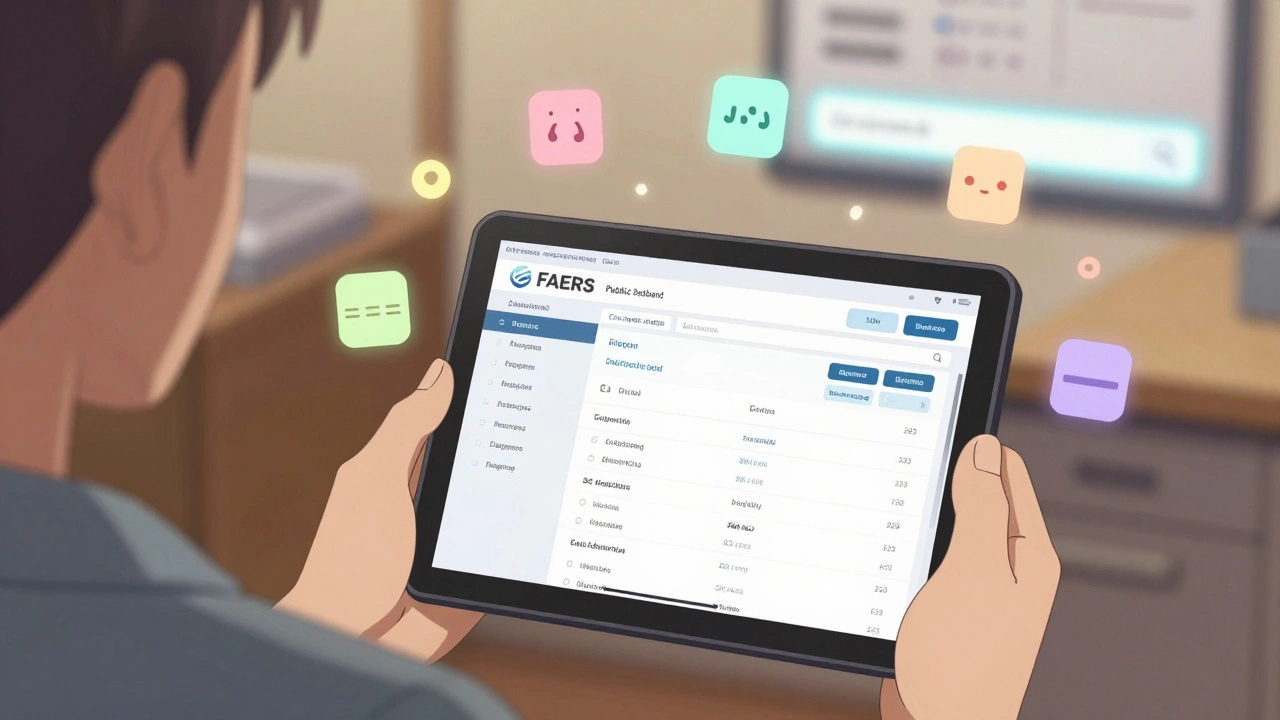
The easiest way to start is with the FAERS Public Dashboard. It’s free, no login needed, and designed for non-experts.
- Go to the dashboard and click the blue search bar at the top.
- Type in the drug’s generic name. For example, use lisinopril, not Zestril or Prinivil. But if you’re unsure, try both-the system will catch some brand names, but not all.
- Click Search. You’ll see a bar graph showing how many reports came in each year.
- Look to the right of the graph. There’s a drop-down menu. Select "Cases by Reaction".
- Now you’ll see a list of symptoms or conditions people reported after taking the drug. Common ones: nausea, headache, fatigue, high potassium, kidney issues.
Use the filters below the graph to narrow results. You can sort by patient age, gender, reporter type (doctor vs. patient), and outcome (hospitalized, life-threatening, death). This helps you see if certain groups are more affected.
Why You Need to Search Multiple Names
Many drugs have dozens of brand names, especially generics. Take metformin. It’s sold as Glucophage, Fortamet, Riomet, and dozens of store brands. The FAERS dashboard only lets you search five drug names at once. If you only search "metformin," you might miss reports tied to "Glucophage"-especially older ones filed before the generic became common.
Pro tip: Look up the drug on Drugs.com or the FDA’s Orange Book. It’ll list all approved brand names. Copy those into your search. Do the same for combination drugs. For example, if you’re checking a pill that has both hydrochlorothiazide and olmesartan, search both drugs separately and together.
Don’t Confuse FAERS with MAUDE
If you’re looking for side effects from a medical device-like a pacemaker, hip implant, or insulin pump-you’re in the wrong place. FAERS only covers drugs and biologics. For devices, use the MAUDE database (Manufacturer and User Facility Device Experience). The search works similarly, but device names are messy. One company might make 12 versions of the same pump. If you search "Medtronic pump," you’ll get hundreds of unrelated results. Always use the exact model number if you can find it in your medical records.
What the Numbers Don’t Tell You
Let’s say 1,200 people reported dizziness after taking Drug X. That sounds scary. But if 10 million people took it, that’s a tiny fraction. FAERS doesn’t tell you how many people used the drug at all. That’s called "denominator data," and it’s missing. Without it, you can’t calculate risk.
Also, some side effects get reported more often than others. Headaches? Everyone reports them. Rare liver failure? Only serious cases make it in. And if a drug is new, reports spike simply because more people are using it. That doesn’t mean it’s dangerous-it just means more eyes are watching.
That’s why the FDA doesn’t use FAERS alone to pull drugs off the market. They use it to find patterns. If 50 people report the same rare kidney injury after taking a new diabetes drug, and no other drug shows that pattern, that’s a signal. Then they dig deeper with clinical studies.
Advanced Tools: VisDrugs and PharmaPendium
If you’re a researcher, pharmacist, or someone who needs to compare drugs, the Public Dashboard isn’t enough. That’s where tools like VisDrugs and PharmaPendium come in.
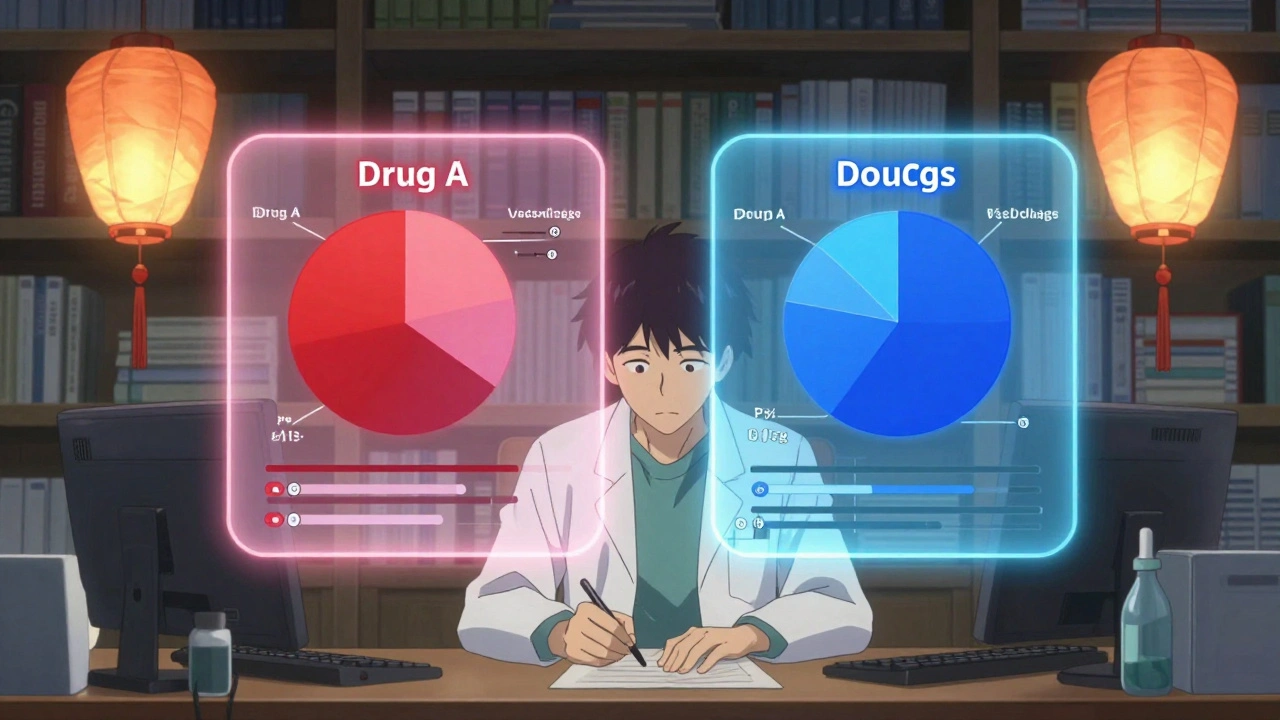
VisDrugs is a free web tool built by scientists to make FAERS data easier to understand. You can input two drugs and see side effects side-by-side. It generates pie charts and forest plots that show which reactions are more likely with one drug versus another. It even breaks results down by age and gender. If you’re trying to choose between two antidepressants, this tool shows you which one has more reports of weight gain or insomnia.
PharmaPendium (by Elsevier) is a paid research platform used by hospitals and pharma companies. It lets you use Boolean logic-like "drug A AND NOT drug B"-to compare safety profiles. It also includes data from other global databases. If you’re writing a paper or advising patients on complex medication choices, it’s worth exploring.

Real-World Example: Checking a New Blood Pressure Drug
Let’s say your doctor prescribes a new drug called vericiguat. You’ve never heard of it. You go to FAERS and search it. You see 87 reports in the last year. The top reactions: low blood pressure (32 reports), dizziness (21), and fatigue (15). That seems normal for a blood pressure drug.
But you also search spironolactone, a common alternative. You see 1,400 reports. Top reactions: high potassium (520), breast tenderness (210), and menstrual irregularities (180). Now you see something: vericiguat has fewer reports of hormonal side effects. That might matter if you’re a woman in your 40s. You didn’t know that from the prescribing info. FAERS gave you real-world patterns.
What to Do With This Info
FAERS isn’t a reason to stop a medication. It’s a conversation starter. If you see a rare side effect you’re experiencing-like sudden hearing loss or unexplained bruising-bring the report list to your doctor. Say: "I saw this reaction in FAERS. Is this something I should watch for?"
Doctors rarely check FAERS themselves. Most rely on drug labels or clinical guidelines. But if you show them a pattern you found, they’ll often look deeper. Sometimes, they’ll report it themselves. That’s how safety signals grow.
For legal cases or insurance claims, FAERS reports can support your story-but they’re not proof. You’ll still need medical records, lab results, and expert testimony. FAERS just helps you show others that others had similar experiences.
Bottom Line: Use FAERS Wisely
FAERS is not a danger meter. It’s a listening post. It hears what people say. It doesn’t verify it. But when you see the same rare reaction pop up across dozens of reports, especially with a new drug, that’s worth paying attention to.
Use the Public Dashboard for quick checks. Use VisDrugs to compare drugs. Use PharmaPendium if you’re doing serious research. Always cross-check with official drug labels and your doctor. And remember: if you have a reaction, report it. Your report could help someone else avoid it.


Graham Holborn
Hi, I'm Caspian Osterholm, a pharmaceutical expert with a passion for writing about medication and diseases. Through years of experience in the industry, I've developed a comprehensive understanding of various medications and their impact on health. I enjoy researching and sharing my knowledge with others, aiming to inform and educate people on the importance of pharmaceuticals in managing and treating different health conditions. My ultimate goal is to help people make informed decisions about their health and well-being.