
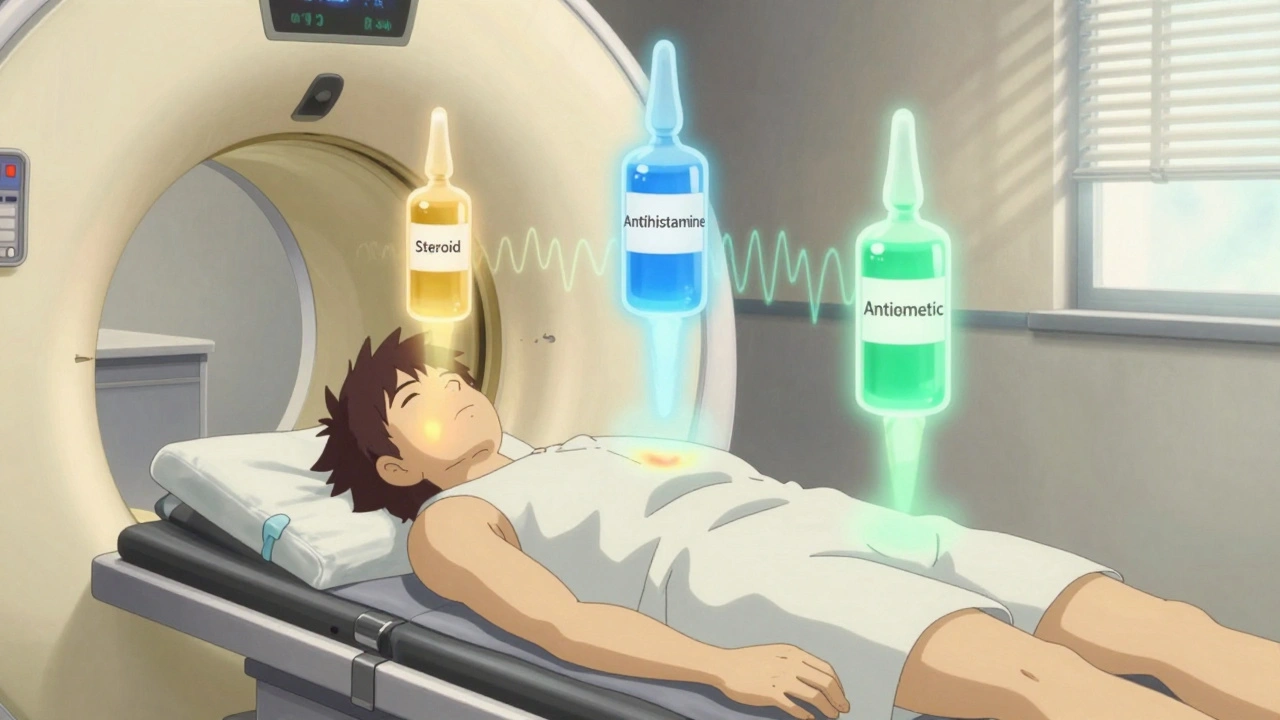
Pre-Medication Timing Calculator
Select Procedure Type
Recommended Pre-Medication
Results will appear here after calculation
Important: Steroids should only be used for patients with documented prior reactions. Never administer steroids prophylactically without proper indication.
Why Pre-Medication Matters in Modern Healthcare
Every year, millions of patients receive contrast dye for CT scans, undergo chemotherapy, or enter surgery. For many, these procedures are routine. But for some, they carry hidden risks - sudden nausea, hives, low blood pressure, even life-threatening reactions. That’s where pre-medication comes in. It’s not a one-size-fits-all fix. It’s a targeted, science-backed strategy using antiemetics, antihistamines, and steroids to stop problems before they start.
These drugs don’t cure anything. They don’t treat illness. They prevent side effects. And when used right, they cut severe reactions by more than 90%. But get the timing wrong, pick the wrong drug, or give it to the wrong person, and you’re adding risk instead of reducing it.
How Steroids Stop Allergic Reactions to Contrast Dye
When someone has had a bad reaction to iodinated contrast dye before - say, hives, swelling, or trouble breathing - the risk of it happening again is real. Steroids like prednisone and methylprednisolone work by calming down the immune system’s overreaction. They don’t block histamine like antihistamines do. Instead, they reduce the overall inflammatory response that leads to serious reactions.
The timing matters more than the dose. Oral prednisone needs 13 hours to reach full effect. That’s why it’s given at 13, 7, and 1 hour before a scan. If the scan is scheduled for 9 a.m., the first dose has to be taken at 8 p.m. the night before. That’s not easy for same-day referrals or emergency cases.
That’s where IV methylprednisolone comes in. It works in about 4 hours. For inpatients or emergency cases, 40mg IV at 4 hours before the procedure is the standard. Hydrocortisone is an alternative if methylprednisolone isn’t available. The key? Don’t give steroids unless there’s a documented past reaction. Giving them to everyone just in case doesn’t help - it just adds side effects like high blood sugar, insomnia, or mood swings.
Antihistamines: Old vs. New, Drowsiness vs. Effectiveness
Antihistamines are the first line of defense against mild to moderate allergic reactions. But not all are created equal.
First-generation drugs like diphenhydramine (Benadryl®) have been used for decades. They work. But they cause drowsiness in over 40% of patients. That’s a problem if someone needs to drive home after a scan or if they’re already feeling nauseous from chemo.
Second-generation antihistamines like cetirizine (Zyrtec®) are now preferred. They’re just as effective at preventing reactions but cause drowsiness in only 15% of people. A 2021 JAMA Internal Medicine study showed cetirizine’s safety profile makes it better for outpatient use. It’s given orally, usually 10mg within an hour of the procedure.
For kids under 6 months, diphenhydramine is still used at 1mg per kg (max 50mg). Older children get cetirizine based on weight. The goal? Keep reactions from getting worse - not to eliminate every itch or sneeze, but to stop the cascade into anaphylaxis.
Antiemetics: The Game-Changer for Chemotherapy Patients
Chemotherapy-induced nausea and vomiting (CINV) used to be accepted as unavoidable. Now, it’s preventable. The standard has shifted from single drugs to triple therapy: a 5-HT3 blocker (like ondansetron), an NK1 blocker (like aprepitant), and dexamethasone.
This combo isn’t just better - it’s dramatically better. Studies show it achieves a 70-80% complete response rate for acute nausea, meaning no vomiting and no need for rescue meds. Compare that to older regimens using just one drug, where nausea hit 60% or more.
For high-risk chemo like cisplatin, triple therapy reduces nausea to under 30%. Dual therapy (without the NK1 blocker) still leaves 57% of patients nauseated. That’s why ASCO guidelines since 2022 recommend triple therapy as the baseline for highly emetogenic regimens.
But it’s not perfect. About 15-20% of patients still get breakthrough nausea, especially with cisplatin or doxorubicin. That’s why rescue meds like prochlorperazine or lorazepam are kept on hand. And why patients need clear instructions: take your pills on time, even if you feel fine.
Who Gets Pre-Medication - and Who Doesn’t
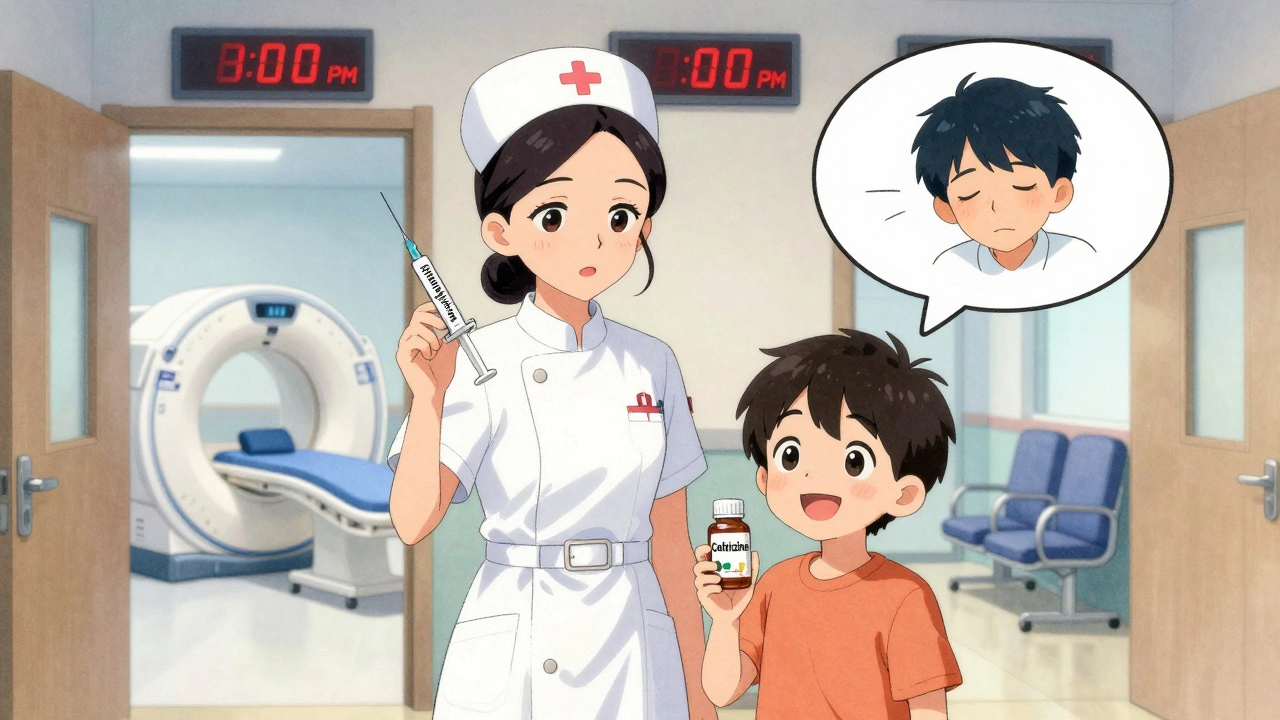
This isn’t for everyone. Giving these drugs to patients with no history of reactions is unnecessary and risky. Yale University’s protocol, adopted by many top hospitals, is clear: only patients with a documented prior reaction to similar contrast media get premedication.
That means if you had a rash after a CT scan with iodinated contrast last year, you’re a candidate. If you’ve never reacted, you’re not. Same for chemo - only those getting highly emetogenic drugs like cisplatin or doxorubicin get triple therapy. For moderately emetogenic chemo, a 5-HT3 blocker plus dexamethasone is enough.
Even then, it’s not automatic. The Institute for Safe Medication Practices (ISMP) requires verification of patient history, allergies, and prior reactions before any premedication is given. That’s Best Practice 15 in their 2024-2025 guidelines. A nurse or pharmacist must confirm the order matches the patient’s record. No exceptions.
Common Mistakes and How to Avoid Them
Even with solid protocols, errors happen. Here are the top three:
- Wrong timing. Giving prednisone at 8 a.m. for a 9 a.m. scan? It won’t work. Steroids need hours to kick in. Schedule alerts in the EHR are critical.
- Documentation gaps. A 2022 ASHP survey found 68% of hospitals had medication reconciliation errors with premed orders. One patient got dexamethasone because the nurse thought it was for allergies - but it was meant for chemo nausea. That’s a mix-up.
- Unlabeled syringes. If a nurse prepares a syringe of diphenhydramine and walks away, even for a minute, it must be labeled. ISMP’s 2015 guidelines say unmarked syringes are a major error risk. Barcode scanning helps prevent this.
Solutions? Use standardized order sets in your EHR. Set up automated alerts for premedication windows. Train staff on the 30-second verification rule: Check the patient’s name, the drug, the dose, the route, and the time - every single time.
What’s Changing in 2025 and Beyond
Pre-medication isn’t standing still. New tools are emerging. Point-of-care barcode scanning is now required in surgical areas under ISMP’s 2024-2025 guidelines. Infusion pumps with dose-error reduction systems are becoming standard.
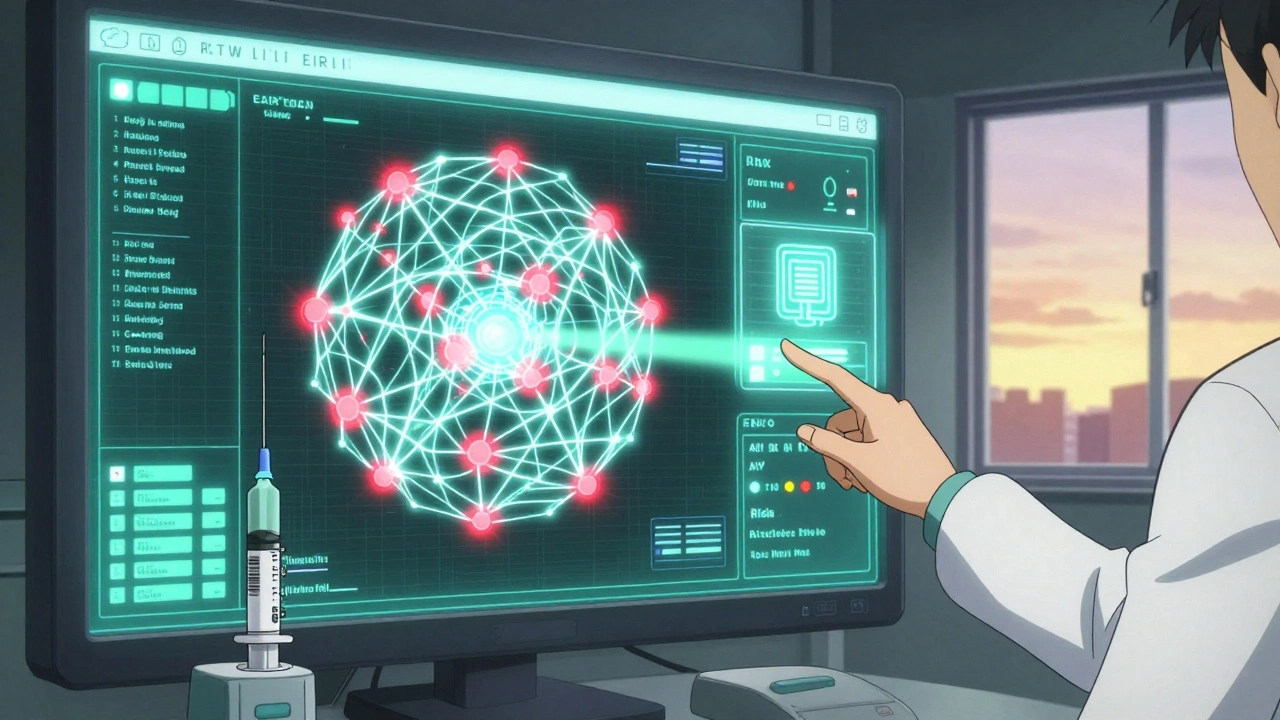
Artificial intelligence is stepping in too. A 2023 study in the Journal of the American College of Radiology used machine learning to predict contrast reactions with 84% accuracy. It looked at age, sex, history of asthma, prior reactions, and even lab values. This could one day replace blanket protocols with personalized risk scores.
On the drug front, next-generation NK1 antagonists like fosnetupitant are in trials. They’re easier to give - single-dose IV instead of oral capsules - and may replace aprepitant in the next few years.
But the core won’t change. Steroids, antihistamines, and antiemetics remain the backbone. The future is smarter delivery, better verification, and precision targeting - not abandoning what works.
Real Stories from the Front Lines
A radiology tech on Reddit shared that since their clinic adopted Yale’s protocol, they’ve had zero severe reactions in over 200 premedicated patients. But scheduling is a nightmare. “We lose two slots a day because patients can’t take the 8 p.m. pill,” they wrote.
An oncology nurse on AllNurses said triple therapy changed her job. “Before, I spent half my shift calming down nauseated patients. Now, I spend it helping them enjoy their first decent meal in weeks.” But she still sees 15-20% with breakthrough nausea - especially with cisplatin. “We keep Zofran and Ativan ready,” she says.
At Johns Hopkins, implementing barcode-assisted premedication cut contrast reactions by 92% in a year. But it took six months of meetings between pharmacy, radiology, and nursing to get everyone on the same page.
Getting Started: What You Need to Know
If you’re a patient: Know your history. Did you ever break out in hives after a CT scan? Did you throw up after chemo? Tell your doctor. Don’t assume it’s “no big deal.”
If you’re a provider: Don’t guess. Use protocols. Verify. Document. Don’t give steroids to someone just because they’re “nervous.” Don’t give Benadryl to an elderly patient unless you’ve checked for glaucoma or prostate issues. Use Zyrtec when you can.
For hospitals: Build automated alerts into your EHR. Train staff on the 30-second verification rule. Audit your premedication orders quarterly. Compliance isn’t optional - it’s safety.
Final Thought: Prevention Is Better Than Reaction
Pre-medication isn’t glamorous. No one celebrates a patient who didn’t get sick. But that’s the point. It’s silent, invisible work - and it saves lives. When done right, it turns a risky procedure into a safe one. The data doesn’t lie: 96% reduction in moderate reactions. 75% reduction in severe ones. That’s not luck. That’s science.
Use it wisely. Use it only when needed. And never skip the check.


Graham Holborn
Hi, I'm Caspian Osterholm, a pharmaceutical expert with a passion for writing about medication and diseases. Through years of experience in the industry, I've developed a comprehensive understanding of various medications and their impact on health. I enjoy researching and sharing my knowledge with others, aiming to inform and educate people on the importance of pharmaceuticals in managing and treating different health conditions. My ultimate goal is to help people make informed decisions about their health and well-being.