
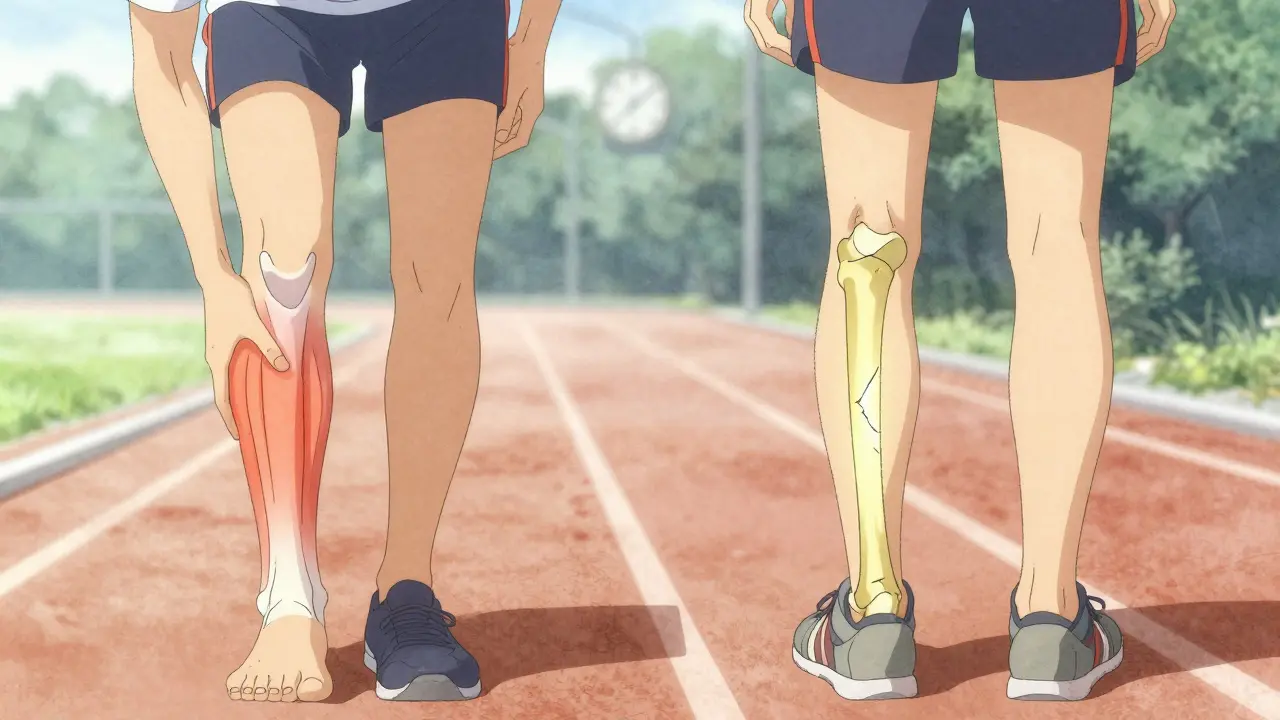
Running hurts-not the good kind of burn, but the sharp, nagging pain along your shin that won’t go away. You push through, thinking it’s just shin splints. But what if it’s worse? What if it’s a stress fracture?
Shin splints (medial tibial stress syndrome) and stress fractures are both common in runners, but they’re not the same. Shin splints involve inflammation of the muscles and tissue around the tibia. Stress fractures are tiny cracks in the bone itself. Mixing them up can cost you months of running time-or worse, a full-blown break.
Here’s the truth: most runners return too soon. The old advice-“rest for a week, then ease back in”-doesn’t work. Bone doesn’t heal on a calendar. It heals on load. And if you overload it too fast, you’re not just risking a setback. You’re risking a repeat injury.
How to Tell the Difference
Shin splints usually feel like a diffuse ache along the inner edge of your shin. It often shows up after a long run or hill workout. The pain eases as you warm up, then comes back after you stop. Pressing on the area might hurt, but it’s spread out over a few inches.
Stress fractures are different. The pain is sharp, localized, and gets worse with activity. You can often point to one exact spot-maybe just below the knee or halfway down your shin. It hurts even when you’re not running. Sometimes, you can’t walk without limping.
Imaging is the only way to be sure. An MRI shows bone marrow edema for stress reactions and clear cracks for fractures. X-rays often miss early stress fractures. If your pain lasts more than two weeks despite rest, get an MRI. Don’t wait.
Recovery Timelines: Not One Size Fits All
Shin splints? Most runners recover in 2-6 weeks with the right rehab. Stress fractures? That’s 6-12 weeks, depending on where it is.
The location matters. A stress fracture on the back-inner side of the tibia (posterior medial) usually heals faster-around 6 weeks. But if it’s on the front of the shin (anterior tibia), or worse, your navicular bone or femoral neck, you’re looking at 8-12 weeks. These sites have less blood flow, so healing is slower.
Women are at higher risk. Up to 21% of female runners get stress fractures, compared to 8% of men. Why? Often, it’s not just training. Low energy availability-when you’re not eating enough to match your training load-is a silent culprit. This is called RED-S (Relative Energy Deficiency in Sport). Studies show 31% of women with recurring stress fractures have undiagnosed RED-S. No rehab plan works unless nutrition and hormones are addressed.
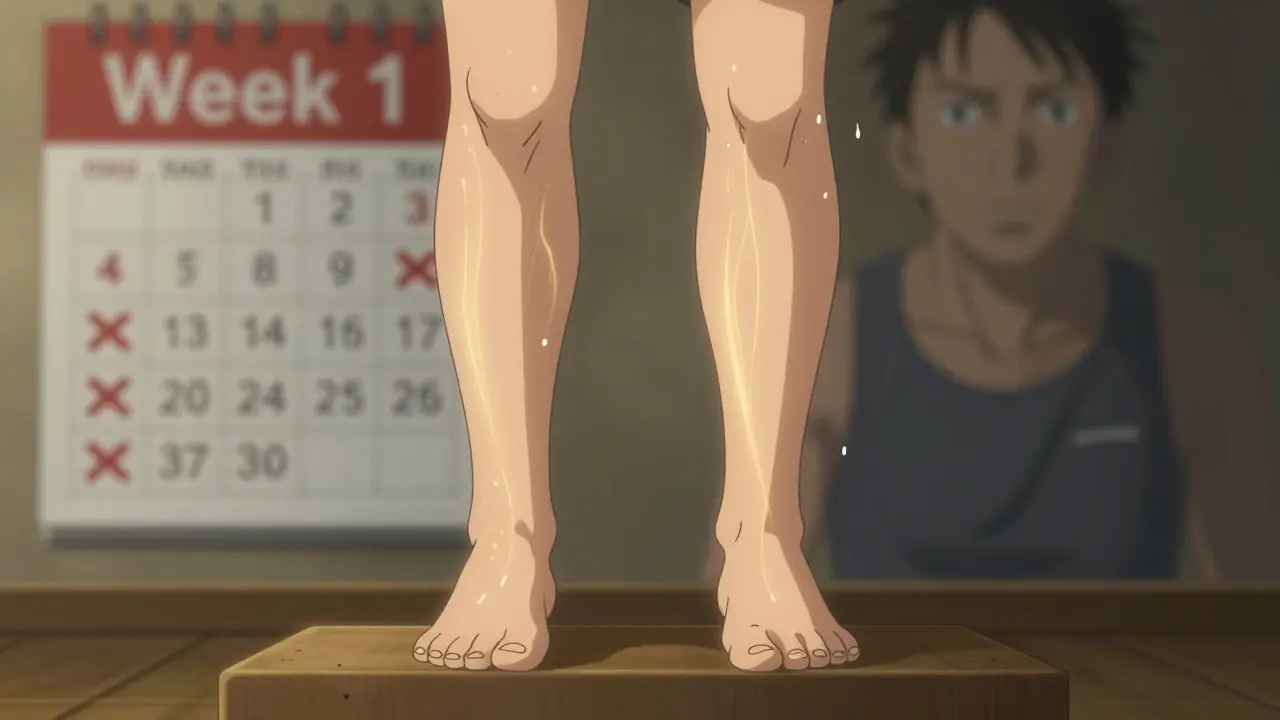
The 6-Phase Return-to-Run Plan
Forget “just run slower.” This isn’t about mileage. It’s about controlled loading. Here’s how to rebuild safely.
Phase 1: Pain-Free Walking (3-10 days)
No running. No jumping. No stair climbing. If you can’t walk without pain, you’re not ready. This phase is about letting the bone calm down. Use a pool, stationary bike, or elliptical if you need cardio-but keep it low impact. Aim for zero pain at rest and during daily movement.
Phase 2: Gentle Bone Loading (Weeks 1-2)
Once walking is pain-free for 7 straight days, start loading the bone. This isn’t about strength yet-it’s about signaling the bone to heal.
- Double-leg heel raises: 3 sets of 15-20 reps, twice a day
- Single-leg balance: 30 seconds per leg, 3 times daily
Pain must stay under 2/10 during and after. If it spikes, go back to walking only for 3 more days.
Phase 3: Full Range Strength (Weeks 3-4)
Now you build strength. Use a step or curb for heel raises to increase range of motion.
- Step-up heel raises: 3 sets of 10-15 reps per leg
- Calf stretches: hold 30 seconds, 3 times per leg
- Glute bridges: 3 sets of 15 reps
Weak glutes? That’s a red flag. Studies show 57% of runners who skip hip work end up injured again within 3 months. Your hips control how your leg lands. If they’re weak, your shin takes the hit.
Phase 4: Explosive Strength (Weeks 5-6)
Time to reintroduce bounce. Start with low-intensity plyos.
- Double-leg hops: 2 sets of 10-15 reps, 2x/week
- Single-leg hops: 2 sets of 8 reps per leg, once you can do doubles pain-free
Don’t rush this. If your heel raises hurt, you’re not ready for hops. Bone needs time to adapt to impact.
Phase 5: Run-Walk Progression (Weeks 6-10)
This is where most people fail. You’re tempted to jump to 1:1 running. Don’t.
Follow this exact progression for low-risk stress fractures:
- Week 1-2: 1 minute run, 4 minutes walk (total 20 minutes)
- Week 3: 1:3 ratio, 25 minutes total
- Week 4: 1:2 ratio, 30 minutes total
- Week 5: 1:1 ratio, 35 minutes total
- Week 6: 3 minutes run, 1 minute walk, 40 minutes total
Only move to the next week if you’re completely pain-free during and after. And never run two days in a row. At least one rest day between runs cuts recurrence risk by 34%.
Phase 6: Full Return (Week 11+)
Once you can run 40 minutes at a 3:1 ratio without pain, you’re ready to slowly increase distance. Go back to the old 10% rule? Don’t. A 2024 review found that 68% of runners with stress fractures can’t safely follow it. Bone remodeling takes 90-120 days. Pushing too fast just re-injures you.
Instead, use the “two weeks forward, one week back” method. Run your planned mileage for two weeks, then drop back 20% for a recovery week. Repeat.
What Not to Do
Here’s what doesn’t work-and why:
- Heel lifts in shoes: They reduce tibial strain by only 12-15%. Gait retraining cuts it by 38%.
- “I feel fine, so I’m running”: Pain is a late signal. Bone damage happens before you feel it.
- Skipping nutrition: If you’re not eating enough protein, calcium, or vitamin D, your bone can’t repair. Female runners: check your iron and estrogen levels.
- Ignoring cross-training: Pool running and cycling keep your heart strong while your bone heals. Anti-gravity treadmills (AlterG) can cut recovery time by 27 days.
Why Most People Fail
It’s not lack of willpower. It’s lack of structure.
A 2023 study found 42% of recreational runners abandon rehab because they move too fast. Reddit users report the same: “I jumped to 1:1 after two pain-free days. Three weeks later, I was back on crutches.”
Those who succeed? They track pain daily. They stick to rest days. They do their heel raises even when they’re tired. And they work with a physical therapist who knows running injuries.
Only 28% of rural US counties have therapists trained in running rehab. If you’re one of them, look for telehealth options. Mayo Clinic is piloting virtual rehab programs that guide you through each phase with video check-ins.
The Future Is Personalized
Wearables are catching up. The WHOOP strap now tracks bone strain with 89% accuracy. Brooks and Kinetic Sports Medicine have apps that guide runners through rehab based on their training history. And by 2025, blood tests for bone markers (PINP, CTX) will tell your doctor exactly when your bone is healed-not guess based on MRI scans.
AI is coming too. The RunRx app’s algorithm, tested on 4,200 runners, predicts recovery time with 86% accuracy by combining your mileage, gait, and nutrition data. It’s not magic-it’s science.
But here’s the bottom line: no app replaces discipline. No gadget replaces patience. Healing bone takes time. And if you rush it, you’re not just losing weeks of running-you’re risking years of setbacks.
Be smart. Be slow. Be consistent. Your future self will thank you.


Graham Holborn
Hi, I'm Caspian Osterholm, a pharmaceutical expert with a passion for writing about medication and diseases. Through years of experience in the industry, I've developed a comprehensive understanding of various medications and their impact on health. I enjoy researching and sharing my knowledge with others, aiming to inform and educate people on the importance of pharmaceuticals in managing and treating different health conditions. My ultimate goal is to help people make informed decisions about their health and well-being.