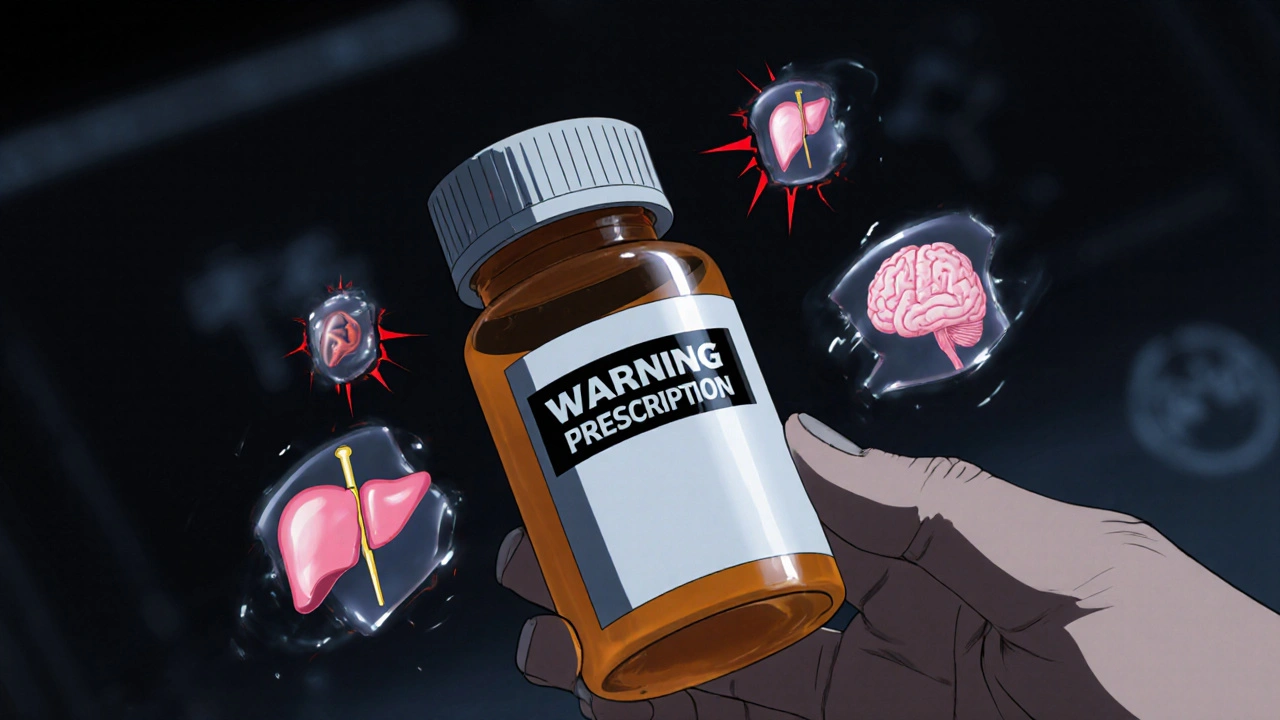
Safety Warnings: Critical Drug Risks You Can't Afford to Ignore
When you take a pill, you trust it will work—and not hurt you. But safety warnings, official alerts about dangerous side effects, interactions, or misuse of medications exist for a reason. They’re not just fine print. They’re life-or-death signals. The FDA, WHO, and medical experts issue these because people die from overlooked risks—like mixing opioids with benzodiazepines, taking grapefruit with statins, or using counterfeit drugs with no active ingredient. These aren’t rare cases. They’re preventable tragedies.
One of the biggest dangers isn’t the drug itself, but what it does when mixed with something else. drug interactions, when two or more medications affect each other’s behavior in the body can turn a safe treatment into a killer. Rifampin, used for tuberculosis, can make birth control, blood thinners, and HIV meds useless. MAOIs and other antidepressants can trigger serotonin syndrome—a condition that causes seizures, high fever, and death. Even something as simple as grapefruit can spike statin levels to toxic amounts, wrecking your muscles and kidneys. These aren’t theoretical. They’re documented in hospital records across the U.S. and Europe.
Then there’s the hidden threat: boxed warnings, the strongest safety alerts the FDA can issue, printed in bold black borders on drug labels. These mean the drug carries a high risk of death, organ failure, or severe harm. PML from immunosuppressants, liver damage from valproic acid, or fatal respiratory depression from opioid-benzodiazepine combos—all carry boxed warnings. And yet, many patients never see them. Doctors don’t always explain them. Pharmacies don’t always highlight them. You have to ask. You have to read. You have to know what to look for.
Counterfeit drugs add another layer. In places with weak regulation, fake pills with no medicine—or worse, toxic chemicals—are sold as real. They don’t treat your infection. They don’t lower your blood pressure. They just make you sicker. And you won’t know until it’s too late. This isn’t just a problem overseas. Fake modafinil, fake Viagra, fake antibiotics are flooding online markets everywhere.
What you’ll find below isn’t a list of scary stories. It’s a practical guide to what actually matters. Real cases. Real data. Real steps you can take. You’ll learn how to spot dangerous combos, understand what FDA safety programs like REMS really mean, and avoid the mistakes that land people in the ER. These aren’t abstract rules. They’re survival tips for anyone taking medication—whether it’s for high blood pressure, depression, or hair loss. Skip the fluff. Get the facts. Your next pill could be the one that saves your life—or ends it.