
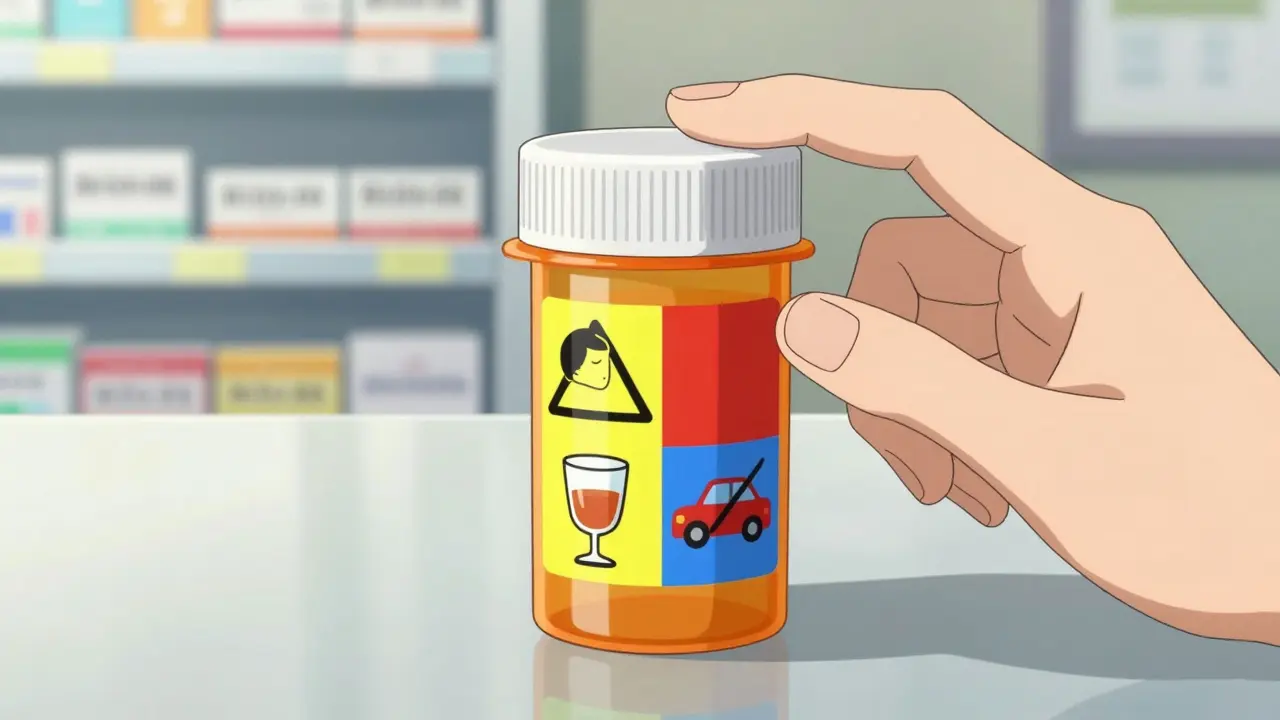
Have you ever looked at your prescription bottle and felt confused by the small symbols and colored stickers stuck to the label? You’re not alone. These icons aren’t just decorative-they’re critical safety tools designed to keep you from taking your medicine the wrong way. But too often, they do the opposite. A 2021 Consumer Reports study found that over half of Americans misinterpret at least one common warning on their medication labels. That’s not a small mistake. It can lead to hospital visits, dangerous side effects, or even death.
What Do These Icons Actually Mean?
Pharmacy warning icons are visual shortcuts. They’re meant to communicate important risks quickly, especially when patients have low health literacy, speak another language, or are in a hurry. The most common ones you’ll see are color-coded stickers:
- Yellow: Usually means "caution." This is the most frequent warning color. It often appears with messages like "May cause drowsiness" or "Avoid alcohol." In New Zealand, this is part of a nationally standardized system called Cautionary and Advisory Labels (CALs), and studies show patients there understand them 22% better than in the U.S.
- Red: Signals "danger." This one’s serious. It might warn about life-threatening interactions, like mixing blood thinners with certain painkillers. The FDA recommends red only for the highest-risk warnings.
- Blue, White, Green: These are typically "advisory" or "recommendation" labels. Things like "Take with food" or "Shake well." They’re less urgent, but still important.
But here’s the problem: people don’t always agree on what colors mean. A 2019 study in U.S. Pharmacist found that 42% of patients assume red = danger, yellow = caution, and lighter colors = "just a suggestion." That’s helpful-if it’s consistent. But it’s not. One pharmacy chain might use yellow for sedatives, another for antibiotics. The lack of national standardization in the U.S. means you could get different warnings for the same drug depending on where you fill your prescription.
Why Do These Icons Exist?
Medication errors are a silent epidemic. The FDA estimates at least 7,000 people die each year in the U.S. because of mistakes with prescription drugs. Many of those errors happen because patients didn’t understand the label. A woman might take her eye drops by mouth because she misread the dropper symbol. A man might crush a pill he was told not to, thinking "don’t chew" meant "don’t swallow." These aren’t rare mistakes. A 2022 study from the Pennsylvania Patient Safety Authority showed that standardized warning labels cut certain errors by 28%. That’s a big win.
The real value of these icons is that they work across language barriers. If you don’t speak English well, a picture of a car with a slash through it (meaning "don’t drive") is clearer than a paragraph of text. The FDA says symbols paired with text reduce errors by 40% among non-English speakers. That’s why organizations like the Institute for Safe Medication Practices (ISMP) have spent decades pushing for standardization.
What’s Wrong With the Current System?
Even though these icons help, they’re far from perfect. Here are the biggest flaws:
- Too many labels: A 2021 report from the National Community Pharmacists Association found independent pharmacies use an average of 23 different warning labels. That’s overwhelming. When every bottle is covered in stickers, patients tune out. One survey found 63% of people say clutter makes them ignore the warnings entirely.
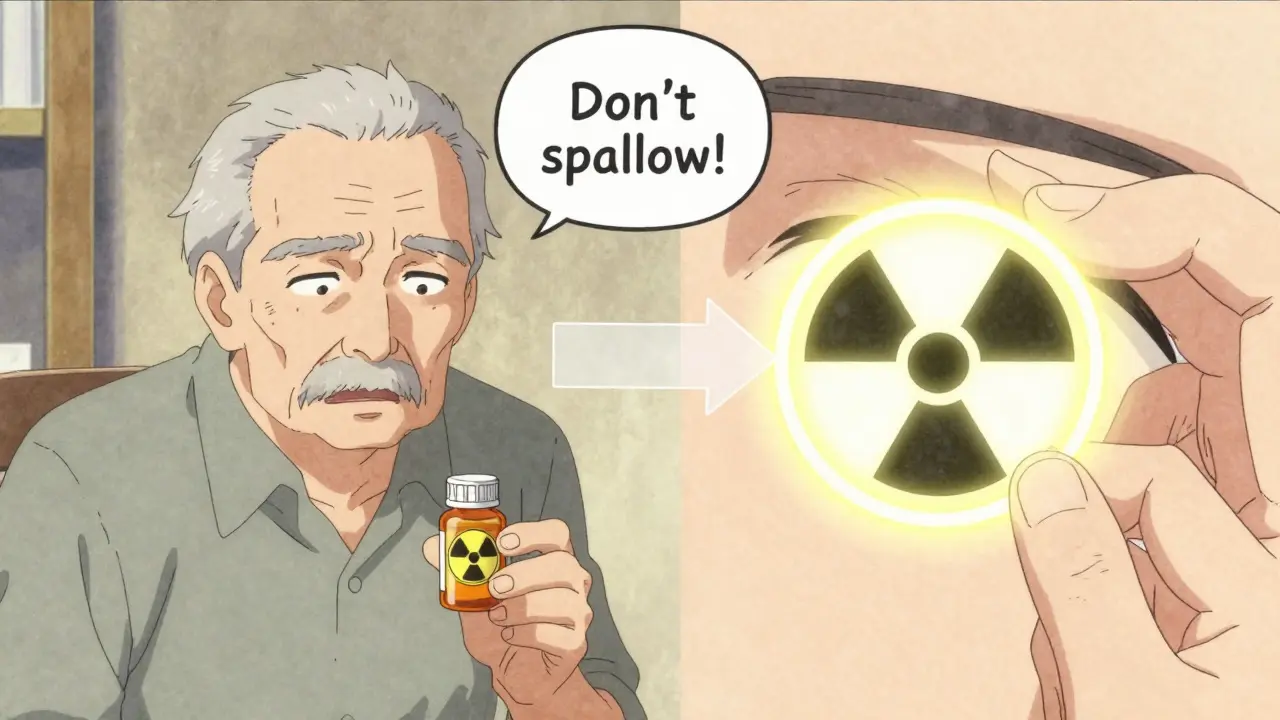
- Confusing symbols: The "radioactive" symbol (a circle with three curved lines) is sometimes used to mean "external use only." But 68% of patients with low health literacy think it means the medicine is dangerous or radioactive. That’s not just a misunderstanding-it’s a safety risk.
- Text that’s too small: FDA guidelines say warning text must be at least 6-point font. But on small pill bottles, that’s barely legible. A 2020 FDA survey found 58% of patients struggle to read the fine print.
- False confidence: A 2020 study in the Journal of Patient Safety found that 41% of patients thought they understood their warning labels… but actually got them wrong. They were sure they knew what "take on empty stomach" meant, but they didn’t.
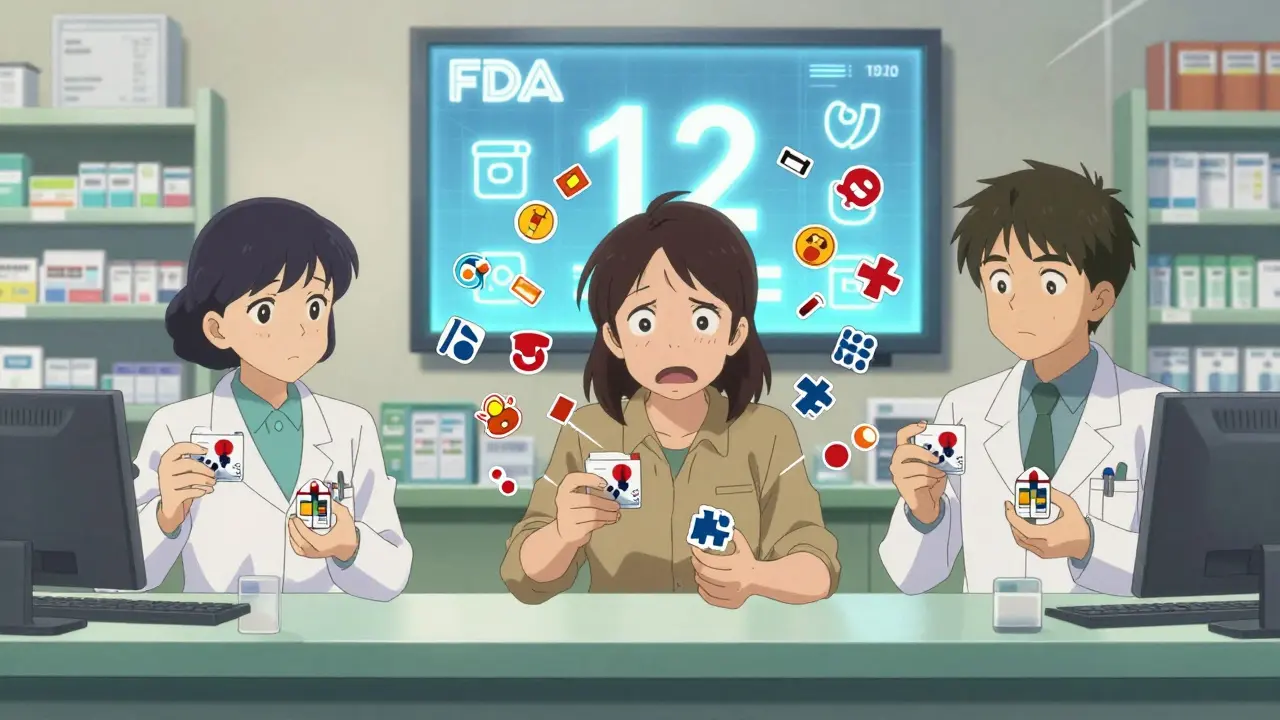
And then there’s the inconsistency. CVS uses 14 warning icons. Walgreens uses 17. Independent pharmacies? Often 20 or more. This isn’t just confusing-it’s dangerous. A patient who switches pharmacies might suddenly see different symbols for the same drug. No wonder so many people get it wrong.
How Are Things Changing?
The good news? Change is coming. In September 2022, the FDA released draft guidance proposing a national standard of just 12 core warning icons. By 2026, they want every pharmacy in the U.S. to use the same set. CVS Health already announced it will cut its 14 icons down to 12 by the end of 2023. Walgreens plans to follow by mid-2024. This is a major step forward.
Other innovations are also emerging:
- Digital help: 43% of pharmacies now add QR codes to labels. Scan it, and you get a short video explaining the warning. But here’s the catch: 24% of seniors don’t use smartphones regularly. So this helps some, but leaves others behind.
- AI customization: Researchers at the University of Pittsburgh tested AI that tailors warnings to individual patients. If you’re over 70, have kidney issues, or take five other drugs, the system generates a personalized warning. Early results showed a 32% improvement in adherence.
- Augmented reality: Kaiser Permanente tested AR labels in 2022-patients used their phone camera to see animated warnings floating over the bottle. Comprehension jumped from 58% to 89%. It’s promising, but still expensive and not widely available.
These tools are helpful, but they’re not replacements for clear, simple, standardized labels. The goal isn’t tech-it’s understanding.
What Should You Do?
Don’t rely on the icons alone. Here’s what works:
- Ask your pharmacist: When you pick up a new prescription, ask: "What does this sticker mean?" Don’t be shy. Pharmacists are trained to explain these. They’ve seen every mistake possible.
- Read the text: The icon is a reminder. The words tell you the full story. "Take with food" isn’t just a suggestion-it’s about how your body absorbs the drug. "Do not crush" means the pill’s coating is designed to release slowly. Crushing it could cause an overdose.
- Use the ISMP tool: The Institute for Safe Medication Practices offers a free "Medication Safety Self-Assessment" tool online. It walks you through common warning symbols and tests your understanding. It takes 5 minutes. Do it.
- Check for updates: The FDA’s new standard will roll out over the next few years. If your pharmacy suddenly changes its labels, don’t assume it’s the same warning. Ask again.
Also, if you’re helping an older parent or someone with memory issues, write down the warnings in big letters on a sticky note and keep it next to the medicine. A simple phrase like "DO NOT DRIVE AFTER TAKING" is more reliable than a tiny yellow sticker.
Why This Matters
Medication errors cost the U.S. healthcare system $21.3 billion a year, according to the American Medical Association. That’s not just money-it’s lives. A single misread warning can send someone to the ER. Or worse.
Standardized icons are one of the most effective tools we have to prevent that. But only if they’re clear, consistent, and understood. Right now, they’re a mix of progress and confusion. The system is improving, but you still need to be your own advocate. Don’t guess. Don’t assume. Ask. Read. Double-check. Your safety depends on it.
What does a yellow sticker on my medicine mean?
A yellow sticker typically means "caution." It’s used for warnings like "May cause drowsiness," "Avoid alcohol," or "Take with food." In the U.S., yellow isn’t standardized across all pharmacies, so the exact meaning can vary. In New Zealand, yellow is part of a national system and consistently means "cautionary advice." Always read the text under the sticker-it’s the real instruction.
Why do some pharmacies have more warning labels than others?
In the U.S., there’s no federal standard for warning labels. CVS uses 14 icons, Walgreens uses 17, and independent pharmacies often use 20 or more. This lack of consistency means the same drug might have different warnings depending on where you fill it. The FDA is working to fix this by creating a national standard of 12 icons, expected to roll out by 2026.
Can I ignore a warning if I’ve taken the medicine before without problems?
No. Warnings are based on how the drug works in your body-not your personal experience. For example, a drug might be safe for you now, but if you start taking a new medication, develop kidney issues, or get older, the risk changes. What was fine last year could be dangerous this year. Always treat every warning as relevant, even if you’ve used the drug before.
What should I do if I don’t understand a warning symbol?
Call your pharmacy or ask your pharmacist the next time you pick up a prescription. Don’t guess. Many patients misinterpret symbols like the "radioactive" icon (for external use) or the "car" symbol (for driving). The ISMP offers a free online self-assessment tool that helps you learn what common icons mean. You can also ask for a printed explanation or a video link if your pharmacy offers one.
Are there any new safety tools being introduced?
Yes. Some pharmacies now include QR codes that link to short video explanations of warnings. Kaiser Permanente tested augmented reality labels that project animated instructions over the bottle, boosting patient understanding from 58% to 89%. The FDA is also pushing for a national standard of 12 core warning icons by 2026. AI is being tested to personalize warnings based on your age, other medications, and health conditions. But none of these replace clear, simple, standardized labels.


Graham Holborn
Hi, I'm Caspian Osterholm, a pharmaceutical expert with a passion for writing about medication and diseases. Through years of experience in the industry, I've developed a comprehensive understanding of various medications and their impact on health. I enjoy researching and sharing my knowledge with others, aiming to inform and educate people on the importance of pharmaceuticals in managing and treating different health conditions. My ultimate goal is to help people make informed decisions about their health and well-being.