
Quick Summary: What You Need to Know
- Comprehensive Scope: Tracks 7-16 different physiological markers, including brain waves, heart rate, and oxygen levels.
- Gold Standard: The only reliable way to diagnose non-respiratory disorders like narcolepsy or REM behavior disorder.
- The Process: Involves an overnight stay in a controlled lab environment with a certified technologist.
- Accuracy: Significantly lower failure rates (2-5%) compared to home sleep tests (15-20%).
- Outcome: Results typically lead to a precise diagnosis and, in some cases, immediate treatment settings via a split-night study.
How Polysomnography Actually Works
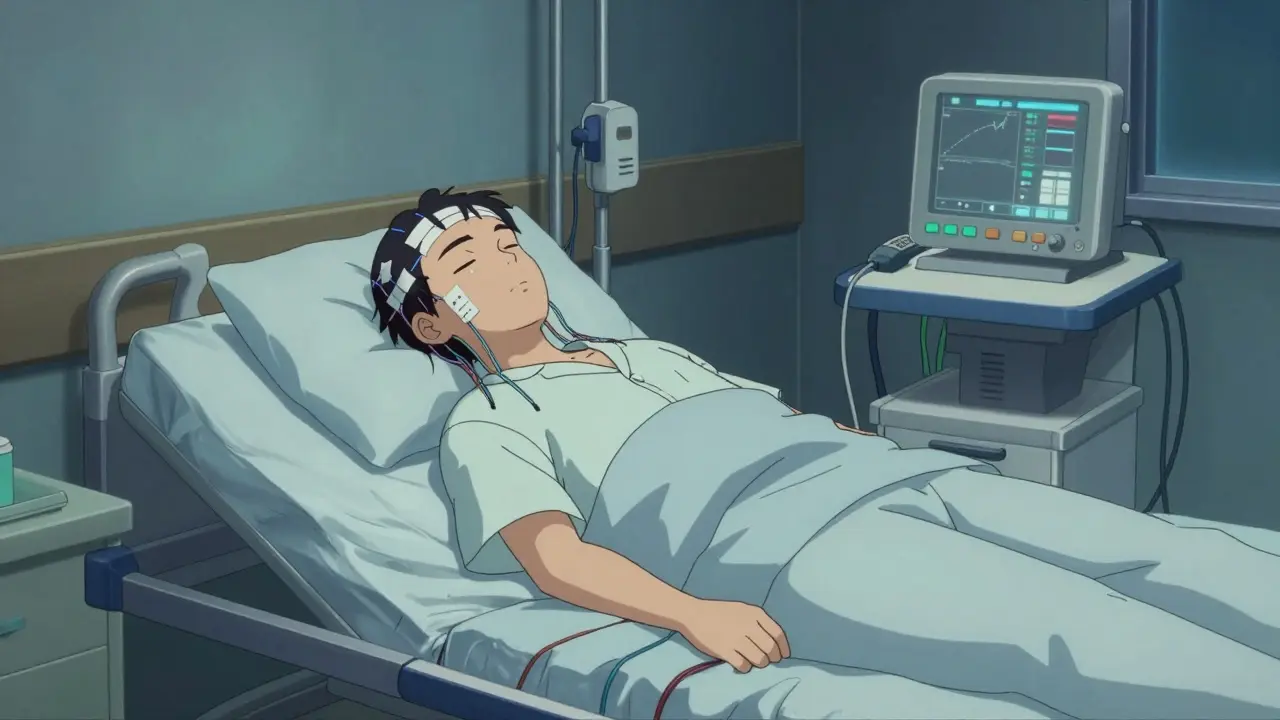
To understand how a sleep study works, you have to look at what the machines are actually hunting for. A certified sleep technologist will spend about 30 to 45 minutes attaching sensors to your body. By the time you're tucked in, you'll likely have around 22 electrodes and sensors monitoring different systems simultaneously. This isn't just for show; each sensor tracks a specific biological function that tells a piece of the puzzle.
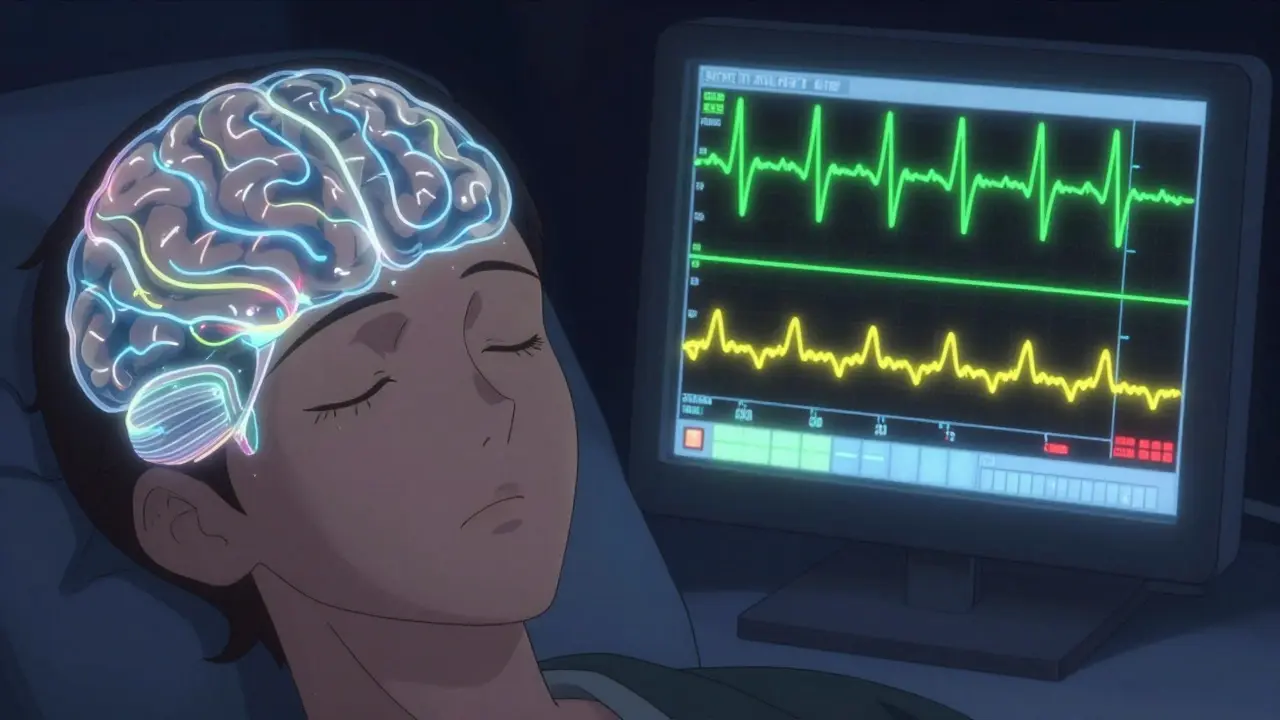
The most critical part is the Electroencephalogram (EEG), which measures brain wave activity. This allows doctors to see if you're actually hitting the deep stages of sleep or if you're being jerked awake by a breathing obstruction. Along with the EEG, an Electrooculogram (EOG) tracks your eye movements, which is the primary marker for REM sleep. If your eyes are darting around but your muscles are paralyzed, you're likely in a dream state.
While your brain is being mapped, your body is also under the microscope. An Electromyogram (EMG) monitors muscle tone in your chin and legs to spot abnormal movements. Meanwhile, Pulse Oximetry tracks how much oxygen is in your blood. If your oxygen levels dip every time you stop breathing, it's a clear sign of an apnea event. To round it all out, nasal transducers and chest belts track exactly how much air is moving in and out of your lungs.
Lab Study vs. Home Testing: Which is Better?
You might wonder why you can't just do this at home. While home sleep apnea tests (HSAT) are cheaper and more convenient, they are essentially "lite" versions of a full study. A home test usually only tracks three or four things: airflow, oxygen, and heart rate. It can tell you if you have obstructive sleep apnea, but it can't tell you why you're waking up.
For example, if you have Central Sleep Apnea-where your brain simply forgets to tell your muscles to breathe-a home test might miss the nuances. A full lab study can distinguish between obstructive apnea (where the airway is blocked) and central apnea (where the signal from the brain is missing). Furthermore, home tests cannot diagnose narcolepsy or parasomnias because they don't track brain waves.
| Feature | In-Lab Polysomnography | Home Sleep Apnea Test |
|---|---|---|
| Parameters Tracked | 7 to 16 (Full Architecture) | 3 to 4 (Respiratory only) |
| Failure Rate | 2-5% | 15-20% |
| Diagnoses Narcolepsy? | Yes | No |
| Sleep Staging (REM/NREM) | Yes | No |
| Cost | Higher | 30-50% Lower |
What the Night Actually Looks Like
The experience is designed to be as close to home as possible, though that's a bit of a stretch when you're wired to a machine. You'll arrive at the clinic an hour or two before your usual bedtime. The room is usually kept between 68-72°F (20-22°C) to keep you comfortable. Once the sensors are on, you'll be left to your own devices, but a technician is monitoring you in real-time from the next room.
One of the biggest hurdles is the "first-night effect." It's common to find it hard to fall asleep in a strange place with wires on your skin. However, clinical data shows that about 85% of people complete the study successfully. If you're really struggling, technicians can often talk you through the nerves via a speaker system.
If the technician notices severe sleep apnea early in the night, they might perform a Split-Night Polysomnography. This is a bit of a shortcut: the first half of the night is used for diagnosis, and the second half is used to test different pressure settings for a CPAP (Continuous Positive Airway Pressure) machine. This saves you from having to come back for a second visit just for titration.
Making Sense of Your Results
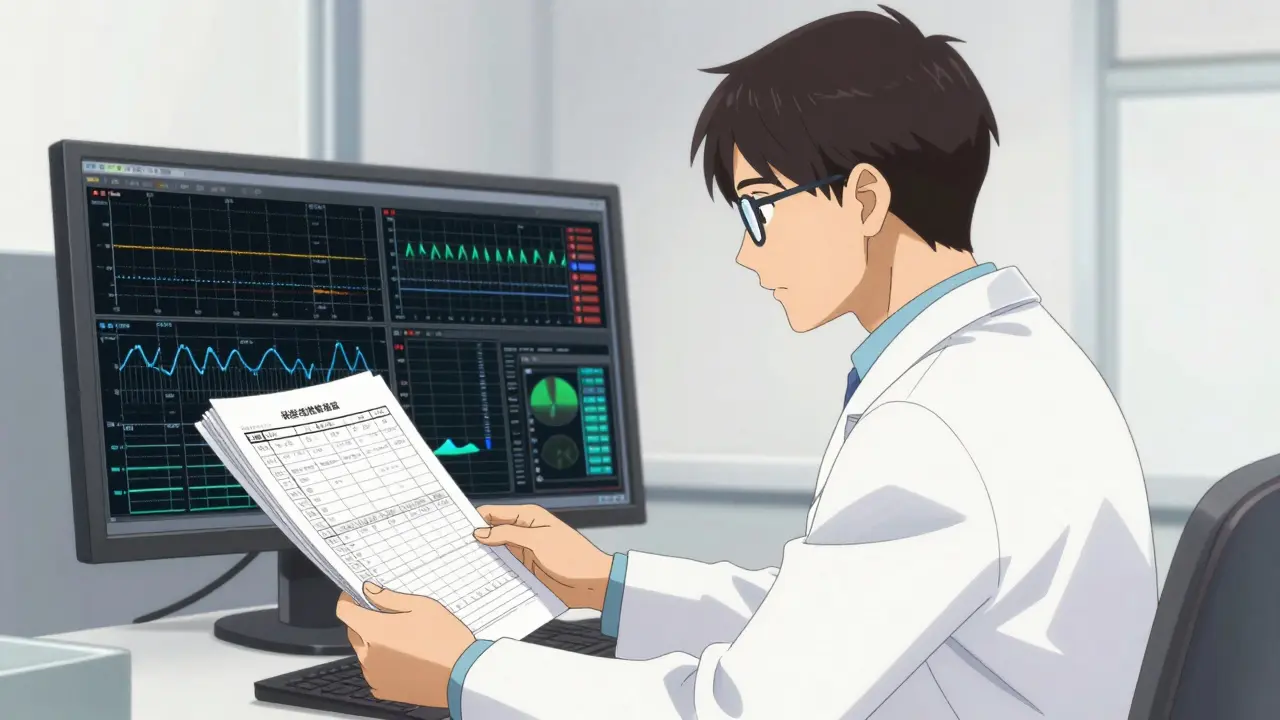
When you wake up and the sensors are removed, the work is only beginning. Your night of sleep generates over 1,000 pages of raw data. A board-certified sleep physician has to spend two to three hours analyzing these waveforms to create a diagnostic report. They aren't just looking at how long you slept, but how you slept.
A key metric they look at is the 90-minute sleep cycle. Normally, you drift from light NREM sleep into deep sleep, and finally into REM. If a patient enters REM sleep immediately, it's a massive red flag for narcolepsy. They'll also calculate your Apnea-Hypopnea Index (AHI), which tells them how many times per hour you stopped breathing or had a partial blockage. If your AHI is high, you'll likely be started on therapy.
Pro Tips for a Successful Study
You can't fake a sleep study, but you can make the data more accurate. Here are a few rules of thumb to ensure the results are reliable:
- Stick to your routine: For several days before the test, wake up and go to bed at your usual times. Don't try to "catch up" on sleep the night before the study, or you'll be too tired to show your typical patterns.
- Cut the caffeine: Stop drinking coffee, tea, or soda after noon on the day of your test. Caffeine masks sleepiness and can alter your sleep architecture.
- Dress comfortably: Wear loose-fitting pajamas that button down. This makes it easier for the technician to place the chest and abdomen belts without you having to strip completely.
- Avoid alcohol: While a glass of wine might help you fall asleep in a strange room, it fragments REM sleep and can worsen sleep apnea, leading to skewed results.
Does the study hurt?
No, the procedure is non-invasive. The electrodes are attached to your skin using a conductive paste or adhesive. Some people find it slightly annoying or "itchy," but there is no pain involved in the recording process.
Will insurance cover the cost?
Most insurance providers, including Medicare, cover polysomnography if you meet specific clinical criteria, such as witnessed apnea, chronic snoring, or extreme daytime sleepiness. However, many private insurers require prior authorization, so check with your doctor's office before scheduling.
What happens if I can't sleep during the test?
It's common to have a restless first night. If you don't get enough sleep for the doctor to make a diagnosis, you may be asked to return for a second night. Technologists are trained to help you relax, and most patients eventually fall asleep despite the equipment.
How is this different from a Multiple Sleep Latency Test (MSLT)?
A polysomnography is an overnight study to see how you sleep. An MSLT is a daytime test where you take 4-5 scheduled naps to see how quickly you fall asleep. Doctors often use an MSLT after a polysomnography to confirm a diagnosis of narcolepsy.
Can I take my usual medications?
Generally, yes, but you must tell your doctor. Some medications, especially sedatives or stimulants, can alter your sleep stages and lead to an inaccurate diagnosis. Your physician will tell you if any specific meds need to be paused.
Next Steps After Your Results
Once your doctor reviews the data, you'll likely fall into one of three scenarios. If you've been diagnosed with obstructive sleep apnea, the next step is usually starting CPAP therapy or exploring an oral appliance. If the study showed a "split-night" success, you might already have your pressure settings and just need the machine.
If the results were inconclusive-perhaps because you didn't sleep enough or the data was noisy-your doctor might suggest a repeat study or a different type of monitoring. For those suspected of having narcolepsy, the next logical step is the Multiple Sleep Latency Test to measure daytime sleepiness. Regardless of the outcome, the clarity provided by a full lab study removes the guesswork and allows for a targeted treatment plan.

Graham Holborn
Hi, I'm Caspian Osterholm, a pharmaceutical expert with a passion for writing about medication and diseases. Through years of experience in the industry, I've developed a comprehensive understanding of various medications and their impact on health. I enjoy researching and sharing my knowledge with others, aiming to inform and educate people on the importance of pharmaceuticals in managing and treating different health conditions. My ultimate goal is to help people make informed decisions about their health and well-being.