
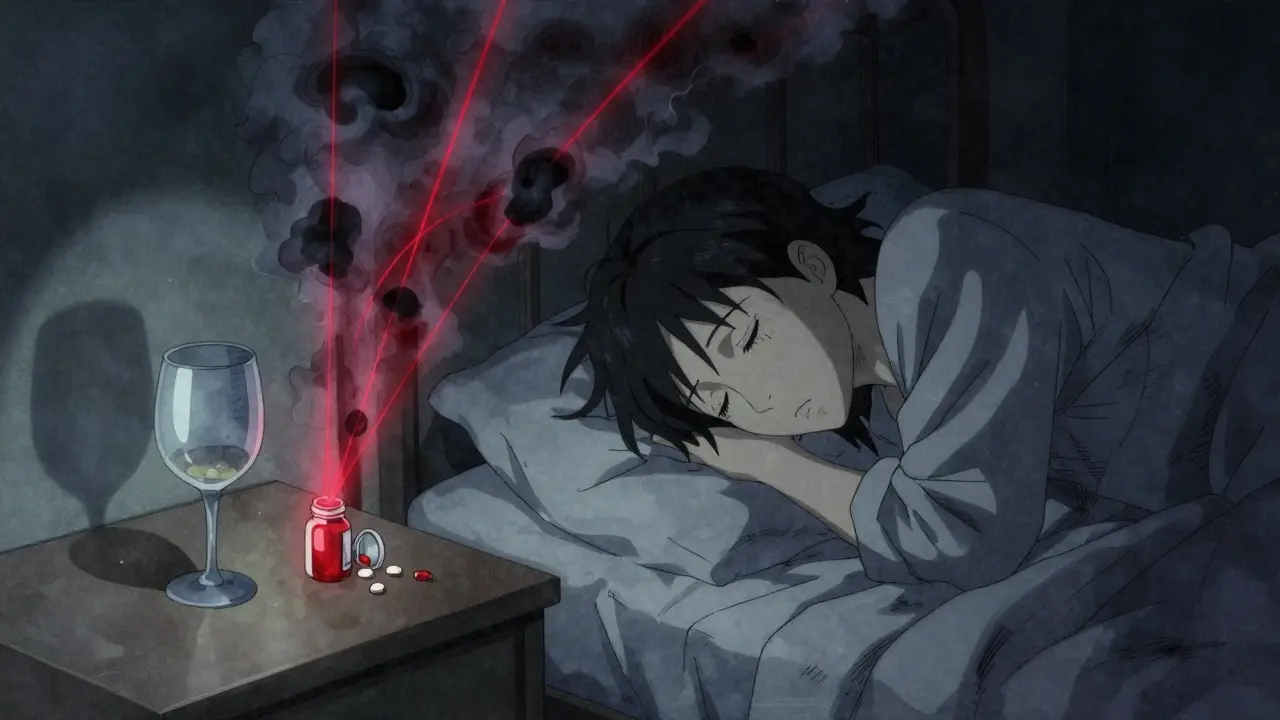
Every year, thousands of people die from drug combinations that shouldn’t be mixed - not because they were taking too much, but because they didn’t know what was happening inside their bodies. It’s not always about street drugs or reckless behavior. Sometimes, it’s just someone taking their prescribed painkiller with a glass of wine at dinner. Or mixing anxiety meds with a few beers to help sleep. These aren’t rare mistakes. They’re common, deadly, and preventable.
Why Mixing Drugs Is More Dangerous Than You Think
Drugs don’t just work on their own. They talk to each other - sometimes politely, sometimes violently. When two or more substances enter your system, they can amplify each other’s effects, create new toxic compounds, or shut down vital functions like breathing. The body doesn’t distinguish between prescription pills and alcohol. To your liver, they’re all chemicals that need processing. And when too many come at once, the system overloads.
Take opioids and alcohol. Both are central nervous system depressants. Alone, they slow your breathing. Together, they can stop it completely. Research from the Journal of Clinical Pharmacology shows this combo increases the risk of respiratory failure by 4.5 times compared to either drug alone. That’s not a small risk. That’s a death sentence waiting to happen - even at low doses. People think, “I’ve had two drinks before, and I took my oxycodone once, no problem.” But the body doesn’t remember past use. Each time you mix them, you’re rolling the dice.
The Deadliest Duo: Opioids and Benzodiazepines
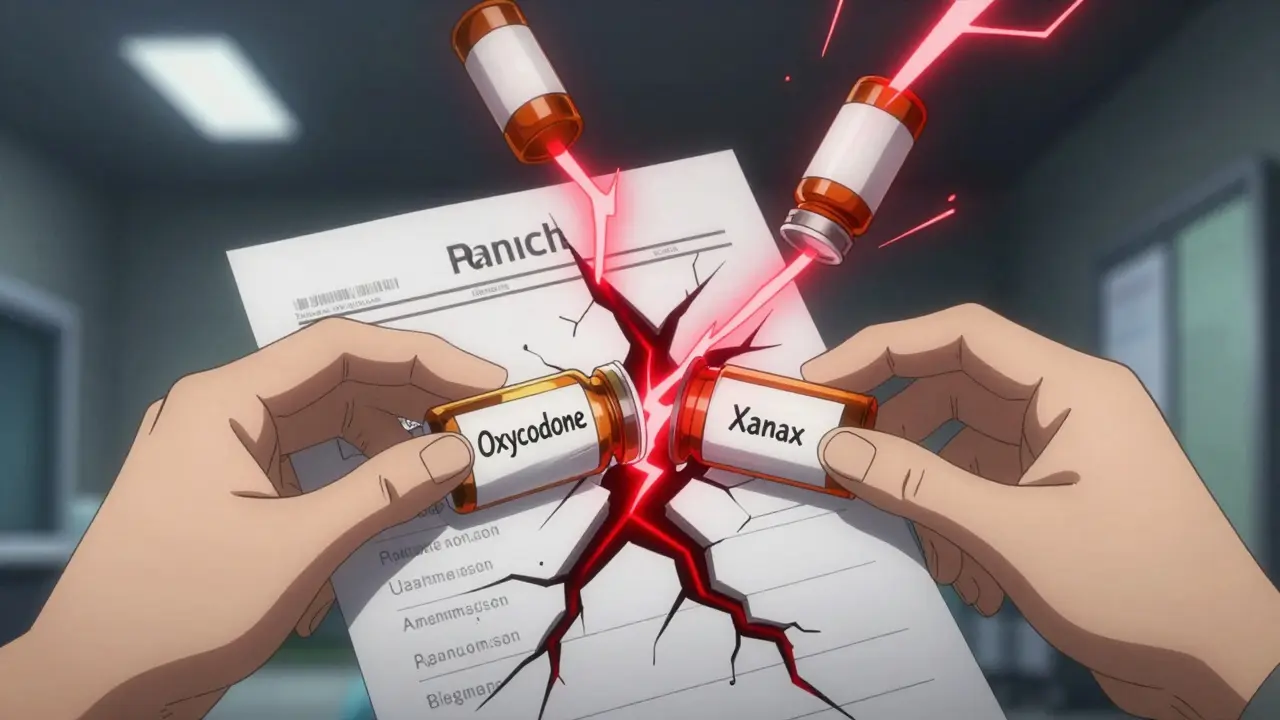
If you’re on a painkiller like hydrocodone or oxycodone, and your doctor also prescribed Xanax, Valium, or Ativan for anxiety or insomnia, you’re in a high-risk zone. The CDC and SAMHSA report that over 30% of opioid-related overdose deaths in 2020 also involved benzodiazepines. That’s one in three. And it’s not because people were taking huge doses. It’s because these drugs work in the same part of the brain - the area that controls breathing and alertness.
When benzodiazepines and opioids are combined, the sedation becomes extreme. People pass out. They stop breathing. Their heart slows. And because both drugs suppress the gag reflex, they can choke on their own vomit. Emergency rooms see this daily. In fact, Medicare Part D systems now flag these combinations automatically. Since 2019, when this alert system was added, doctors have cut down on prescribing both together by 18%. That’s progress. But millions still get these prescriptions without knowing the danger.
The Speedball: Cocaine and Heroin - A False Balance
There’s a myth that cocaine and heroin cancel each other out. One speeds you up. The other slows you down. So, you think you’re safe. That’s not just wrong - it’s lethal.
This combo, called a “speedball,” is one of the most dangerous drug mixes in existence. The cocaine spikes your heart rate and blood pressure, while heroin depresses your breathing. Your body is torn in two directions. The result? Unpredictable heart rhythms, heart attacks, and sudden respiratory arrest. In 2021, half of all cocaine overdose deaths in the U.S. involved heroin. That’s not coincidence. That’s a pattern.
And it’s not just heroin. Cocaine mixed with any opioid - even fentanyl-laced pills - creates the same deadly effect. The DEA found that 6 out of 10 illegally made pills now contain a lethal dose of fentanyl. If you think you’re snorting cocaine, you might actually be taking fentanyl. Add alcohol to that, and you’re playing Russian roulette with your life.
Cocaethylene: The Silent Killer in Alcohol and Cocaine Mixes
When you drink alcohol and use cocaine at the same time, your liver creates something called cocaethylene. It’s not just a byproduct. It’s a more toxic version of cocaine that lasts longer and hits harder.
DrugAbuse.com reports that cocaethylene increases the risk of immediate death by 25% compared to cocaine alone. It also damages your liver, weakens your immune system, and triggers seizures. People who use this combo regularly have a 65% chance of developing serious liver problems. And because alcohol dulls your senses, you don’t realize how much cocaine you’ve taken. You think, “I only did a little.” But your body is drowning in cocaethylene.
Symptoms? Extreme stomach pain, heart rate over 140 bpm, blurred vision, paranoia, and sudden collapse. Many people who die from this combo are found with empty bottles and small bags of powder nearby. They didn’t OD on one thing. They died from the interaction.
Antidepressants and Alcohol: A Quiet Danger
It’s not just opioids and stimulants. Even your daily antidepressant can turn deadly with alcohol.
Duloxetine (Cymbalta) and venlafaxine (Effexor) are commonly prescribed for depression and anxiety. But mixing them with alcohol raises the risk of liver damage by 40% and lowers your tolerance for alcohol so much that a single drink can cause a fatal overdose. A 2018 study in the Journal of Clinical Psychopharmacology found that people on these meds had a 25% higher chance of dying from alcohol poisoning than those not taking them.
And it’s not just liver damage. Alcohol can make antidepressants less effective, worsen depression, and trigger suicidal thoughts. People think, “I’m just having a glass of wine to relax.” But that glass becomes a trigger for a cascade of physical and mental reactions they never expected.
Buprenorphine and Alcohol: A Hidden Trap
If you’re on buprenorphine (Suboxone or Subutex) for opioid addiction treatment, you might think you’re safe to drink. You’re not.
Buprenorphine is a partial opioid - it reduces cravings without the same high. But it still depresses breathing. Add alcohol, and the effect multiplies. Your blood pressure can drop dangerously low. Your breathing can slow to fewer than 10 breaths per minute. You can slip into a coma without warning. The SA Health Department says it clearly: “The more alcohol in the body, the less heroin needed to cause an overdose.” The same rule applies to buprenorphine.
Many patients in recovery think they’ve earned the right to drink. But this isn’t about discipline - it’s about chemistry. Even one drink can be enough to tip the balance.
What You Can Do to Stay Safe
Knowledge saves lives. Here’s what you need to do right now:
- Read your medication labels. If it says “avoid alcohol” or “do not combine with other CNS depressants,” take it seriously.
- Ask your pharmacist. They’re trained to spot dangerous interactions. Don’t assume your doctor told you everything.
- Use a drug interaction checker. Tools like WebMD’s or Medscape’s are free and easy to use. Type in every pill, supplement, and drink you’re taking.
- Carry naloxone if you’re on opioids. It can reverse an overdose. Keep it at home. Give one to a friend.
- Don’t mix anything with alcohol unless you’re 100% sure it’s safe. Even “mild” meds like Benadryl or muscle relaxers can be deadly with alcohol.
And if you’re helping someone who uses drugs - whether prescription or illicit - talk to them. Don’t judge. Just say: “I care about you. Did you know mixing X and Y can kill you?” Sometimes, that one conversation is the difference between life and death.
Real Stories Behind the Stats
Reddit threads from r/opiates and r/StopDrinking are full of near-death stories. One user took two drinks after dental surgery with oxycodone. He stopped breathing. His wife had to use naloxone to bring him back. Another took Xanax and wine to sleep - woke up 10 hours later with no memory of the night. His heart was racing. He thought he’d had a stroke.
These aren’t outliers. They’re examples of what happens when people don’t know the risks. The stats are scary. But real people are behind them. Your neighbor. Your cousin. Your sibling. You.
What’s Changing - and What Still Needs to Change
There’s progress. The FDA now requires opioid packaging to warn about alcohol and benzodiazepine interactions. Medicare flags dangerous combos. Harm reduction programs hand out naloxone and education. A 2023 SAMHSA campaign led to a 27% increase in calls to poison control - meaning people are finally asking for help.
But it’s not enough. Millions still get prescriptions for opioids and benzodiazepines together. Many don’t know the risks. Fentanyl contamination makes every street drug gamble a potential death sentence. And AI-powered drug interaction tools - expected to be standard in EHRs by 2025 - are still not everywhere.
Until every pharmacy, every doctor’s office, every hospital makes this a priority, people will keep dying from combinations that should never be mixed.
Can mixing two prescription drugs really be deadly?
Yes. Even two legally prescribed medications can interact in dangerous ways. For example, combining an opioid painkiller like oxycodone with a benzodiazepine like Xanax can cause severe respiratory depression - enough to stop breathing. This combination is responsible for over 30% of opioid-related overdose deaths. The risk isn’t theoretical - it’s documented in emergency rooms across the country.
Is it safe to have one drink while taking antidepressants?
It depends on the medication, but it’s rarely safe. Drugs like duloxetine (Cymbalta) and venlafaxine (Effexor) increase the risk of liver damage by up to 40% when mixed with alcohol. Alcohol can also worsen depression, reduce the medication’s effectiveness, and lower your tolerance so much that a single drink can lead to overdose. If you’re on an antidepressant, talk to your doctor before drinking - even one glass of wine.
Why is mixing cocaine and alcohol more dangerous than using cocaine alone?
When cocaine and alcohol are used together, your liver produces a toxic compound called cocaethylene. This substance lasts longer than cocaine and is 25% more likely to cause sudden death. It also increases the risk of heart attack, liver damage, and seizures. Many people don’t realize they’re not just using cocaine - they’re using a more dangerous version of it.
Can I use over-the-counter meds like Benadryl with alcohol?
No. Benadryl (diphenhydramine) is a sedative. When mixed with alcohol, it can cause extreme drowsiness, confusion, slowed breathing, and even loss of consciousness. This combo has sent many people to the ER - especially older adults who think it’s just a sleep aid. Even a single dose can be risky.
What should I do if I accidentally mixed dangerous drugs?
Call 911 immediately. Don’t wait for symptoms. Signs like slow or shallow breathing, extreme drowsiness, unresponsiveness, blue lips, or cold, clammy skin mean your body is shutting down. If you have naloxone and suspect an opioid overdose, use it right away. But still call emergency services - naloxone wears off before some drugs do, and you may need more help.
Are there any safe combinations of alcohol and medication?
Very few. Even medications labeled as “safe” with alcohol can become risky if you have liver problems, are older, or take other drugs. The safest rule is: if you’re taking any medication - prescription, OTC, or supplement - assume alcohol is not safe unless your doctor or pharmacist explicitly says it is. Never guess.
Final Thought: It’s Not About Willpower - It’s About Chemistry
You don’t have to be an addict to die from a bad drug combo. You just have to be human. You take your pill. You have a drink. You think it’s fine. But your body doesn’t think. It reacts. And sometimes, that reaction is fatal.
Knowing the risks isn’t about fear. It’s about control. It’s about choosing to live - not because you’re perfect, but because you understand how fragile the line is.


Graham Holborn
Hi, I'm Caspian Osterholm, a pharmaceutical expert with a passion for writing about medication and diseases. Through years of experience in the industry, I've developed a comprehensive understanding of various medications and their impact on health. I enjoy researching and sharing my knowledge with others, aiming to inform and educate people on the importance of pharmaceuticals in managing and treating different health conditions. My ultimate goal is to help people make informed decisions about their health and well-being.